Vision 2026: Crafting a Future-Proof Mindset for Personal Development

Vision 2026: Crafting a Future-Proof Mindset for Unprecedented Personal Development
The world is hurtling forward at an unprecedented pace. Technological advancements, shifting global economies, and evolving social landscapes mean that what worked yesterday might not work tomorrow. In such a dynamic environment, merely adapting is no longer enough; we must proactively cultivate a future-proof mindset. This isn’t just about survival; it’s about thriving, innovating, and achieving unparalleled personal development by 2026 and beyond. This comprehensive guide will explore what a future-proof mindset entails, why it’s crucial, and how you can systematically build one to navigate the complexities and opportunities of the coming years.
Understanding the Future-Proof Mindset: More Than Just Resilience
A future-proof mindset is often confused with resilience, but it encompasses much more. Resilience allows you to bounce back from adversity. A future-proof mindset, however, enables you to anticipate, prepare for, and even capitalize on change before it fully manifests. It’s about building a robust internal operating system that can process new information, adapt strategies, and continually evolve. It’s a proactive stance rather than a reactive one.
In essence, a future-proof individual possesses:
- Anticipatory Intelligence: The ability to foresee trends and potential disruptions.
- Cognitive Flexibility: The capacity to switch between different ways of thinking and problem-solving.
- Continuous Learning Agility: An insatiable desire to acquire new knowledge and skills.
- Emotional Intelligence: The skill to manage one’s own emotions and understand the emotions of others, crucial for collaboration in uncertain times.
- Strategic Adaptability: The readiness to pivot plans and strategies in response to new information or circumstances.
By cultivating these traits, you’re not just preparing for the future; you’re actively shaping your ability to succeed within it. This is the core of fostering a truly future-proof mindset for personal development.
Why 2026? The Urgency of Now
While the concept of future-proofing is timeless, the year 2026 serves as a powerful near-term benchmark. We are currently experiencing rapid advancements in artificial intelligence, biotechnology, climate science, and global connectivity. The next few years will likely see these trends accelerate, creating both unprecedented opportunities and significant challenges. By setting 2026 as a target, we create a tangible goal for developing the necessary mental frameworks and skills.
Consider the following areas that are projected to undergo significant transformation by 2026:
- Workforce Automation: Many routine tasks will be automated, requiring humans to focus on creativity, critical thinking, and complex problem-solving.
- Gig Economy Expansion: The nature of work will become even more flexible and project-based, demanding greater self-management and entrepreneurial skills.
- Digital Literacy Imperative: Proficiency in digital tools and understanding of data will no longer be optional but essential across nearly all professions.
- Global Interconnectedness: Events in one part of the world can have ripple effects globally, requiring a broader perspective and cross-cultural understanding.
- Environmental Challenges: Climate change and resource scarcity will increasingly impact decision-making in personal and professional spheres.
Against this backdrop, developing a future-proof mindset isn’t a luxury; it’s a necessity for anyone aiming for sustained personal and professional growth. The time to start building this mindset is now, to ensure you are not merely keeping up, but leading the way.
Pillars of a Future-Proof Mindset: A Strategic Framework
Building a future-proof mindset requires a systematic approach. Here are the core pillars you need to focus on:
Pillar 1: Cultivating Radical Openness and Curiosity
The first step toward future-proofing your mind is to embrace radical openness. This means being willing to question your assumptions, challenge your beliefs, and consider perspectives that differ from your own. Curiosity is the fuel for this openness. A genuinely curious person is always seeking new information, asking ‘why’ and ‘what if,’ and exploring uncharted territories.
Actionable Strategies:
- Diversify Your Information Diet: Read books, articles, and listen to podcasts from a wide range of fields, especially those outside your immediate area of expertise.
- Engage with Different Viewpoints: Actively seek out conversations with people from diverse backgrounds, cultures, and professions. Listen to understand, not to respond.
- Practice Beginner’s Mind: Approach new subjects or challenges as if you know nothing, allowing you to absorb information without preconceived notions.
- Question Everything: Don’t take things at face value. Ask probing questions about how things work, why they are done a certain way, and what alternatives exist.
By fostering radical openness and insatiable curiosity, you build the foundation for continuous learning and adaptability, key components of a robust future-proof mindset.
Pillar 2: Embracing Lifelong Learning and Skill Reinvention
The shelf-life of skills is shrinking. What was a valuable skill five years ago might be obsolete tomorrow. A future-proof mindset demands a commitment to lifelong learning and the willingness to reinvent your skill set repeatedly. This isn’t just about formal education; it’s about actively seeking out new knowledge and practical application.
Actionable Strategies:
- Identify Future-Relevant Skills: Research emerging industries and technologies to identify skills that will be in high demand by 2026 and beyond (e.g., AI literacy, data analytics, complex problem-solving, digital ethics, cybersecurity basics).
- Dedicate Time to Learning: Schedule regular time for learning, whether it’s an hour a day or a few hours a week. Consistency is key.
- Utilize Online Platforms: Leverage MOOCs (Coursera, edX), online tutorials (YouTube), and specialized platforms (Udemy, LinkedIn Learning) to acquire new skills flexibly.
- Practice Deliberate Practice: Don’t just consume information; actively apply what you learn. Build projects, solve real-world problems, or teach others.
- Seek Mentorship: Connect with individuals who are experts in areas you want to learn. Their guidance can accelerate your progress.
This commitment to continuous skill acquisition is what differentiates those who merely survive change from those who lead it. It’s a cornerstone of developing a truly effective future-proof mindset.
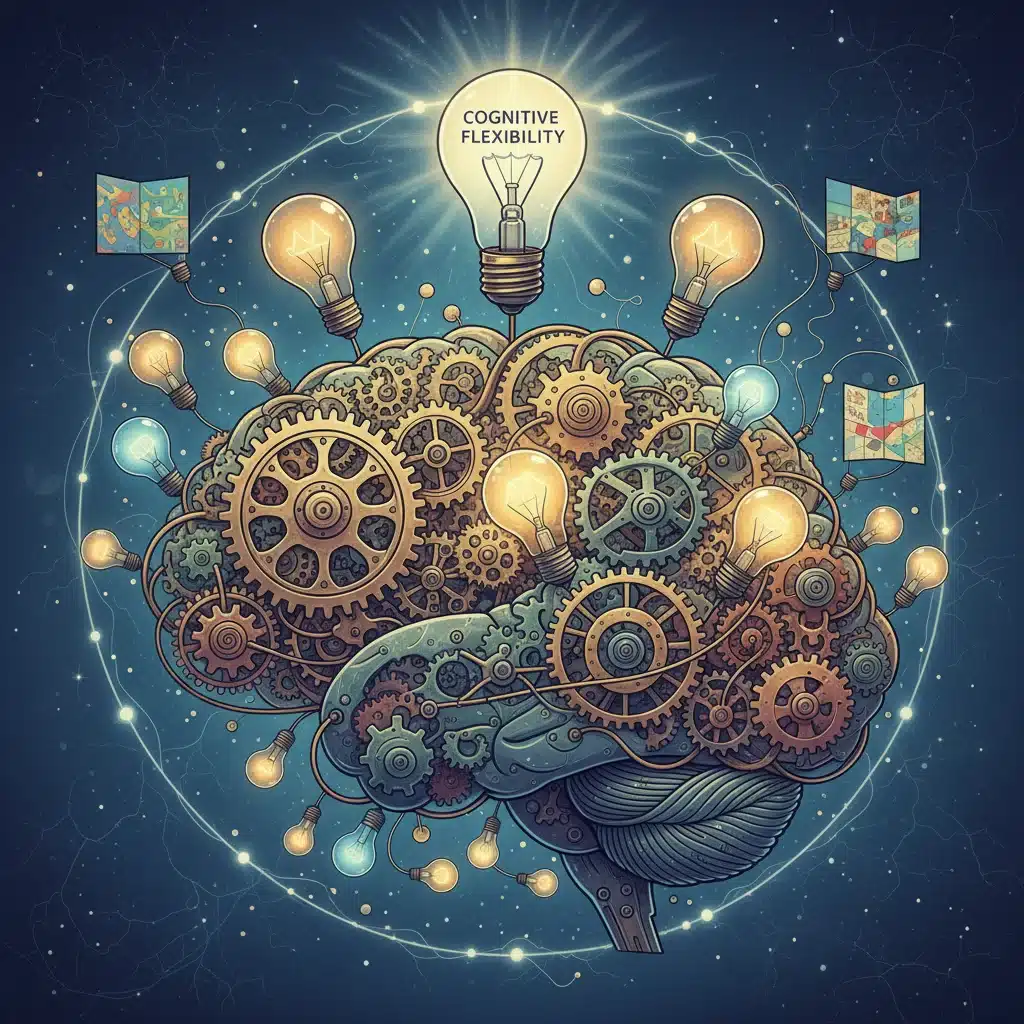
Pillar 3: Developing Cognitive Flexibility and Adaptability
Cognitive flexibility is your brain’s ability to switch between different concepts, adapt to new situations, and think about multiple concepts simultaneously. It’s the opposite of rigid thinking. Adaptability is the behavioral manifestation of this flexibility – your ability to adjust your plans, behaviors, and emotions in response to new or changing circumstances.
Actionable Strategies:
- Practice Scenario Planning: For personal and professional goals, consider different potential futures (best-case, worst-case, most likely) and how you would respond to each.
- Embrace Experimentation: Don’t be afraid to try new approaches, even if they might fail. View failures as learning opportunities rather than setbacks.
- Challenge Your Assumptions: Regularly question the underlying assumptions behind your decisions and beliefs. What if they were wrong?
- Mindfulness and Meditation: These practices can improve attentional control and emotional regulation, which are crucial for cognitive flexibility.
- Seek Novel Experiences: Travel, try new hobbies, or engage in activities that push you outside your comfort zone. These experiences build mental agility.
By actively training your brain to be more flexible, you equip yourself with a powerful tool for navigating uncertainty and fostering a genuinely future-proof mindset.
Pillar 4: Cultivating Emotional Intelligence and Self-Awareness
In a world of increasing complexity and rapid change, emotional intelligence (EQ) becomes paramount. The ability to understand and manage your own emotions, as well as perceive and influence the emotions of others, is crucial for effective collaboration, leadership, and personal well-being. Self-awareness is the foundation of EQ.
Actionable Strategies:
- Practice Self-Reflection: Regularly take time to reflect on your thoughts, feelings, and reactions to events. Journaling can be a powerful tool for this.
- Seek Feedback: Ask trusted friends, family, or colleagues for honest feedback on your behavior and how you impact others.
- Develop Empathy: Actively try to understand situations from another person’s perspective. Ask open-ended questions and listen without judgment.
- Manage Stress: Develop healthy coping mechanisms for stress, as high stress can impair emotional regulation and decision-making.
- Practice Active Listening: Pay full attention when others are speaking, not just waiting for your turn to talk.
A high EQ ensures that even as external circumstances shift, your internal compass remains steady, enabling you to maintain strong relationships and make sound decisions – a hallmark of a mature future-proof mindset.
Pillar 5: Building a Robust Personal and Professional Network
No one thrives in isolation, especially in a rapidly changing world. Your network is your net worth, not just financially, but in terms of knowledge, support, and opportunities. A diverse and robust network provides different perspectives, early insights into trends, and potential collaborations that can accelerate your personal development.

Actionable Strategies:
- Actively Nurture Relationships: Don’t just collect contacts; invest time in building genuine relationships. Offer help, share resources, and stay in touch.
- Seek Diverse Connections: Connect with people across different industries, age groups, and cultural backgrounds. This broadens your perspective and exposes you to new ideas.
- Join Professional Communities: Participate in online forums, professional organizations, and local meetups related to your interests and career goals.
- Be a Connector: Introduce people who could benefit from knowing each other. This builds goodwill and strengthens your network.
- Attend Conferences and Workshops: These are excellent opportunities to learn and meet like-minded individuals.
A strong network acts as an early warning system and a support system, invaluable assets for anyone aiming to cultivate a truly future-proof mindset.
Implementing Your Future-Proof Mindset Plan: A Roadmap to 2026
Now that you understand the pillars, it’s time to create a personalized roadmap to embed this future-proof mindset into your daily life by 2026.
Phase 1: Self-Assessment and Vision (Next 3 Months)
- Current State Analysis: Honestly assess your strengths and weaknesses across the five pillars. Where do you excel? Where do you need significant improvement?
- Vision 2026: Envision what your ideal future-proof self looks like in 2026. What skills do you possess? How do you react to challenges? What kind of impact are you making?
- Identify Key Learning Areas: Based on your vision, pinpoint 1-2 critical skills or mindset shifts you need to prioritize.
- Set SMART Goals: Create Specific, Measurable, Achievable, Relevant, and Time-bound goals for the next three months related to your chosen learning areas.
Phase 2: Active Skill Building and Habit Formation (Next 12 Months)
- Consistent Learning Routine: Integrate daily or weekly learning into your schedule. Treat it as non-negotiable.
- Experimentation and Application: Actively seek opportunities to apply your new knowledge and skills. Take on new projects, volunteer, or start a side hustle.
- Feedback Loops: Regularly seek feedback on your progress and adjust your approach. Don’t be afraid to pivot if something isn’t working.
- Network Expansion: Make conscious efforts to expand your network by attending events, reaching out to new people, and nurturing existing connections.
- Mindfulness Practice: Incorporate mindfulness or meditation into your routine to enhance self-awareness and cognitive flexibility.
Phase 3: Integration and Continuous Evolution (Leading up to 2026 and Beyond)
- Regular Review: Quarterly, review your progress against your 2026 vision. What have you achieved? What needs refinement?
- Anticipatory Scanning: Make it a habit to regularly scan for emerging trends in your industry and beyond. Read futurist reports, follow thought leaders.
- Mentorship and Coaching: Consider seeking a mentor or coach who can provide guidance and accountability as you continue to evolve your mindset.
- Teach and Share: One of the best ways to solidify your learning and contribute to your network is by sharing your knowledge and insights with others.
- Embrace Discomfort: Continuously seek out situations that push you slightly outside your comfort zone. This is where true growth occurs and solidifies your future-proof mindset.
The Journey of a Future-Proof Mindset: Never-Ending Growth
Crafting a future-proof mindset is not a destination; it’s a continuous journey of growth, adaptation, and evolution. By 2026, those who have consciously cultivated this mindset will not only be well-equipped to navigate the challenges of a rapidly changing world but will also be positioned to seize its myriad opportunities. They will be the innovators, the leaders, and the resilient individuals who shape the future rather than being shaped by it.
Start today. Embrace curiosity, commit to lifelong learning, cultivate flexibility, strengthen your emotional intelligence, and build meaningful connections. Your future self, come 2026, will thank you for the investment you make in developing a truly robust and resilient future-proof mindset.