Future of Work: Hybrid, AI & Automation by 2028 (US Insights)

The Future of Work in the U.S.: 4 Predictions for Hybrid Models and Automation by 2028 (RECENT UPDATES)
The landscape of employment in the United States is undergoing a profound transformation. What was once considered speculative is now becoming a tangible reality, shaped by technological advancements, societal shifts, and evolving employee expectations. As we inch closer to 2028, understanding the predominant forces at play is not merely academic; it is crucial for businesses, policymakers, and individual workers alike to prepare for the seismic changes ahead. This article delves into four critical predictions that will define the future of work in the U.S., with a particular focus on the pervasive influence of hybrid models and the accelerating pace of automation.
The COVID-19 pandemic acted as an unprecedented catalyst, accelerating trends that were already nascent. Remote work, once a niche benefit, became a necessity, forcing companies to rapidly adapt their operational structures and rethink the very essence of the workplace. This rapid shift paved the way for hybrid work models, a blend of in-office and remote work that offers flexibility and autonomy. Simultaneously, advancements in artificial intelligence (AI) and automation continue to reshape job functions, demanding new skills and creating entirely new industries. These intertwined forces are not just changing where we work, but how we work, what work we do, and who does it.
As we explore these predictions for the future of work in the U.S. by 2028, we aim to provide a comprehensive overview of the challenges and opportunities that lie ahead. From the continued evolution of the hybrid workplace to the ethical considerations of pervasive AI, and from the burgeoning gig economy to the imperative of continuous reskilling, the journey to 2028 promises to be dynamic and transformative.
Let’s dive into the specifics of these predictions and understand their implications for the American workforce.
Prediction 1: The Hybrid Work Model Becomes the Dominant Standard, Not an Anomaly
The transition to remote work during the pandemic demonstrated both its feasibility and its benefits. Companies discovered that productivity could be maintained, and in some cases even enhanced, while employees enjoyed greater flexibility and a better work-life balance. However, the complete absence of in-person interaction also highlighted the importance of physical presence for fostering company culture, spontaneous collaboration, and mentorship. This realization has solidified the hybrid work model as the pragmatic middle ground, poised to become the dominant standard for a significant portion of the U.S. workforce by 2028.
The Evolution of Hybrid Work
Initially, hybrid work was often a reactive response, a patchwork solution to immediate challenges. By 2028, we anticipate a much more refined and intentionally designed hybrid ecosystem. This will involve:
- Structured Flexibility: Instead of ad-hoc arrangements, companies will implement clear policies regarding in-office days, remote work days, and core collaboration times. This structure will aim to maximize the benefits of both models while minimizing potential drawbacks like communication silos or feelings of isolation.
- Technology-Enabled Seamlessness: Investment in advanced collaboration tools, virtual reality (VR) and augmented reality (AR) for meetings, and intelligent office spaces will be paramount. These technologies will aim to create an equitable experience for both in-office and remote employees, ensuring everyone has equal access to information, discussions, and opportunities.
- Reimagined Office Spaces: Physical offices will transform from rows of individual desks to vibrant hubs for collaboration, innovation, and social connection. They will feature more meeting rooms, flexible workstations, quiet zones for focused work, and enhanced amenities to entice employees to commute. The office will become a destination for specific activities, rather than a default location.
- Leadership Adaptation: Managers will need to be proficient in leading distributed teams, focusing on outcomes rather than presenteeism. Training in empathetic leadership, digital communication strategies, and fostering psychological safety in a hybrid environment will be critical for success.
Impact on the American Workforce and Economy
The widespread adoption of hybrid work will have far-reaching implications for the future of work in the U.S.:
- Geographic Redistribution: Employees will have greater freedom to live outside expensive urban centers, leading to a revitalization of suburban and rural communities. This could alleviate housing pressures in major cities and distribute economic growth more broadly across the country.
- Talent Pool Expansion: Companies will no longer be limited by geographic proximity when hiring, enabling them to tap into a wider, more diverse talent pool. This could lead to increased innovation and competitiveness.
- New Business Opportunities: The hybrid model will spur growth in industries supporting remote work, such as home office furniture, collaboration software, cybersecurity, and local community services in newly populated areas.
- Challenges for Equity: Ensuring equitable opportunities and career progression for both in-office and remote employees will be a persistent challenge. Companies will need to actively combat proximity bias and develop fair performance evaluation systems.
Prediction 2: AI and Automation Will Fundamentally Reshape Job Roles, Not Just Eliminate Them
The narrative around AI and automation often oscillates between utopian visions of enhanced productivity and dystopian fears of mass job displacement. The reality by 2028 will likely be more nuanced: AI and automation will fundamentally reshape existing job roles, augmenting human capabilities and creating new types of work, rather than simply eliminating jobs wholesale.
AI as an Augmentation Tool
By 2028, AI will be deeply integrated into routine tasks across almost every industry. This means:
- Automating Repetitive Tasks: AI will handle data entry, scheduling, basic customer service inquiries, report generation, and other repetitive, rule-based tasks. This frees up human employees to focus on more complex, creative, and strategic endeavors.
- Enhanced Decision-Making: AI-powered analytics will provide deeper insights, helping professionals in fields like finance, healthcare, and marketing make more informed decisions. For example, AI can analyze vast datasets to identify market trends or diagnose diseases with greater accuracy.
- Personalized Experiences: AI will drive personalized learning, customer service, and even healthcare, leading to more efficient and tailored outcomes.
- New Job Categories: The development, deployment, maintenance, and ethical oversight of AI systems will create entirely new job categories, such as AI trainers, ethicists, data scientists, prompt engineers, and AI-powered automation specialists.
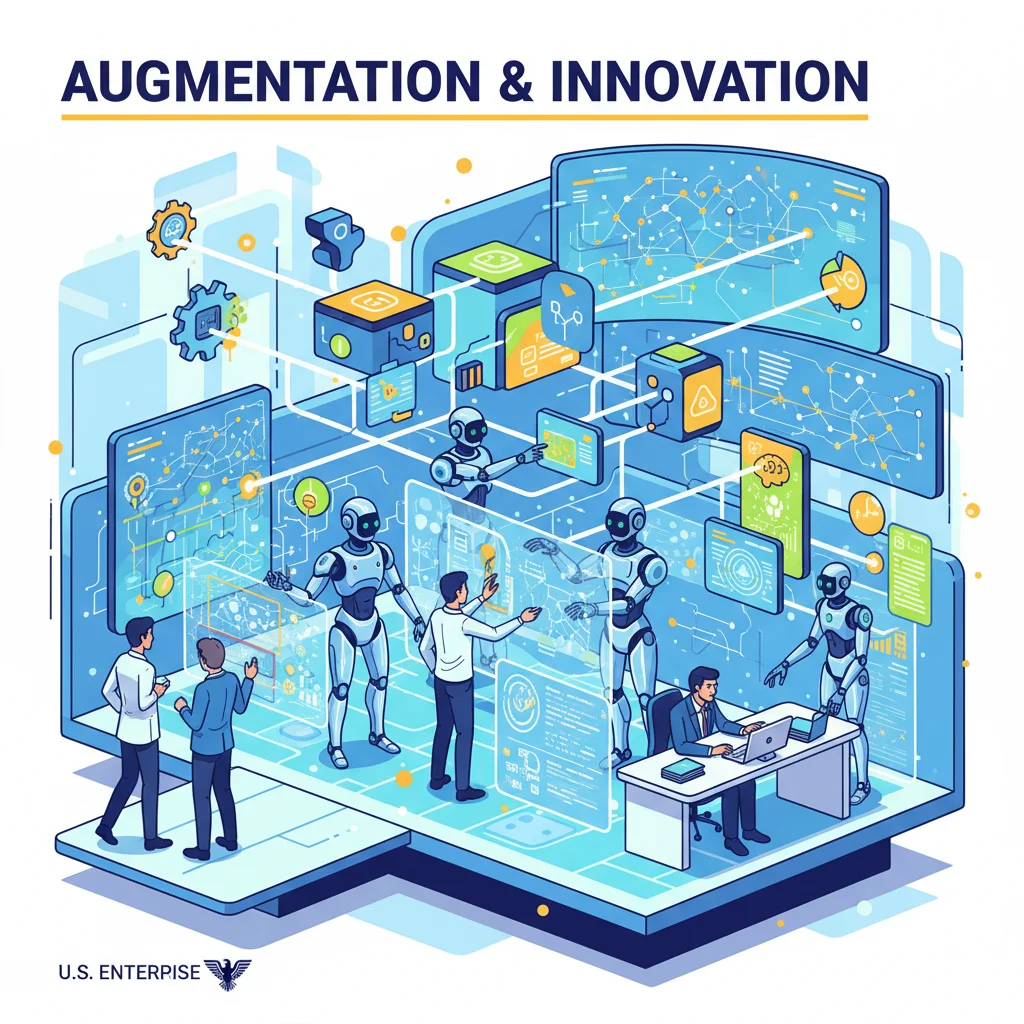
The focus will shift from ‘human vs. machine’ to ‘human + machine’. The future of work in the U.S. will demand a workforce adept at leveraging AI tools to enhance their own productivity and problem-solving abilities.
Impact on Skills and Training
This integration of AI and automation necessitates a significant shift in the skills required for the workforce:
- Soft Skills Reign Supreme: Skills that are inherently human – creativity, critical thinking, emotional intelligence, complex problem-solving, collaboration, and adaptability – will become more valuable than ever. These are precisely the areas where AI struggles to replicate human nuance.
- Digital Literacy and AI Fluency: A basic understanding of AI concepts, how to interact with AI tools, and how to interpret AI outputs will become a fundamental requirement across many roles.
- Continuous Reskilling and Upskilling: The pace of technological change means that lifelong learning will not be optional. Educational institutions and employers will need to collaborate on robust reskilling and upskilling programs to equip the workforce with the necessary competencies.
- Ethical Considerations: As AI becomes more pervasive, understanding its ethical implications, bias detection, and responsible deployment will be crucial for a wide range of professionals.
Businesses that invest in their employees’ development and embrace AI as a tool for augmentation will be best positioned to thrive in this evolving landscape.
Prediction 3: The Gig Economy and Freelance Workforce Will Continue to Expand Significantly
While traditional full-time employment remains a cornerstone of the American economy, the gig economy and the freelance workforce have been steadily growing, and this trend is projected to accelerate significantly by 2028. Driven by technological platforms, a desire for greater autonomy, and companies seeking flexible talent, this shift will redefine employment relationships and offer new avenues for work.
Drivers of Gig Economy Growth
Several factors contribute to the anticipated expansion of the freelance and gig workforce:
- Platform Proliferation: The continued rise of digital platforms that connect freelancers with clients (e.g., Upwork, Fiverr, Toptal) makes it easier for individuals to find project-based work and for businesses to source specialized talent on demand.
- Demand for Specialized Skills: As technology evolves rapidly, companies often need specialized skills for short-term projects without the commitment of a full-time hire. Freelancers provide this agility.
- Worker Preference: Many workers, particularly younger generations, value flexibility, autonomy, and the ability to choose their projects and work schedules. The gig economy offers this level of control.
- Cost-Effectiveness for Businesses: For certain roles and projects, hiring freelancers can be more cost-effective than full-time employees, reducing overheads like benefits and office space.
Implications for the Workforce and Social Safety Nets
The growth of the gig economy presents both opportunities and challenges for the future of work in the U.S.:
- Increased Entrepreneurship: More individuals will become independent contractors, essentially running their own micro-businesses, fostering a culture of entrepreneurship.
- Income Volatility: While offering flexibility, gig work can also lead to income instability and a lack of traditional benefits like health insurance, retirement plans, and paid time off.
- Policy and Regulatory Evolution: Governments and policymakers will face increasing pressure to adapt labor laws, tax regulations, and social safety nets to better support independent workers. Discussions around portable benefits (benefits that follow the worker, not the employer) will become more prominent.
- New Support Services: A growing ecosystem of services catering to freelancers will emerge, including specialized financial planning, insurance products, co-working spaces, and professional development resources.
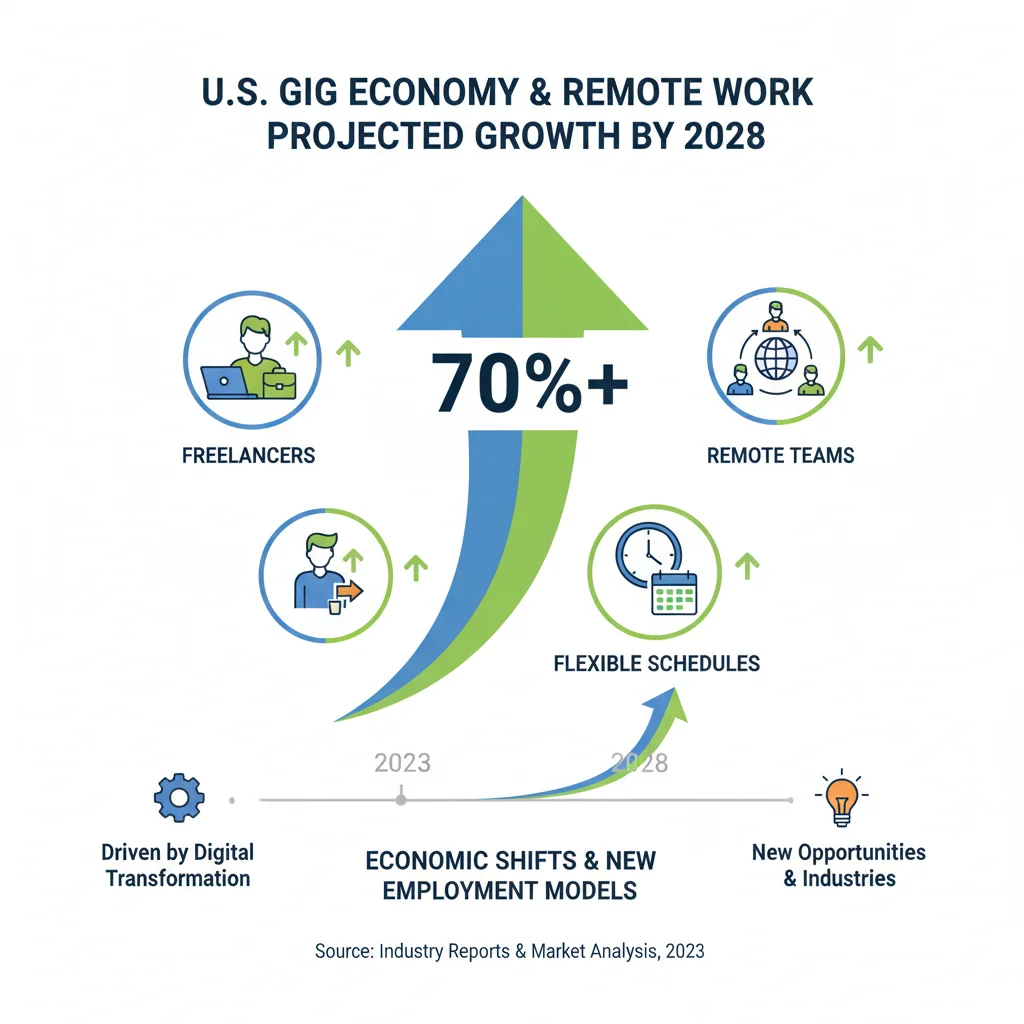
By 2028, the U.S. will likely see a more formalized and integrated gig economy, with clearer pathways for independent contractors and potentially more robust support structures to address their unique needs.
Prediction 4: Continuous Reskilling and Upskilling Become Non-Negotiable for Career Longevity
In an era defined by rapid technological change and evolving job markets, the concept of a static career path is becoming obsolete. By 2028, continuous reskilling and upskilling will transition from a desirable trait to an absolute necessity for career longevity and relevance in the U.S. workforce. The half-life of skills is shrinking, meaning that what is learned today may be outdated in a few years.
The Imperative of Lifelong Learning
This prediction is driven by several interconnected factors:
- Accelerated Technological Advancement: The rapid pace of innovation, particularly in AI, automation, and data science, constantly introduces new tools, methodologies, and platforms that require new skills to master.
- Job Role Evolution: As AI augments human tasks, the nature of many jobs will change. Employees will need to adapt to these new responsibilities and acquire the skills to work alongside intelligent systems.
- Economic Volatility: Global economic shifts and unforeseen events can quickly alter industry demands, making adaptability and the ability to pivot to new roles critical.
- Increased Competition: A globalized and digitally connected workforce means competition for jobs can come from anywhere. Those who continuously update their skills will have a significant competitive advantage.
Strategies for Fostering a Learning Culture
To meet this challenge, both individuals and organizations must embrace a culture of continuous learning:
- Individual Responsibility: Workers must take proactive ownership of their professional development, identifying skill gaps and seeking out learning opportunities. This includes formal education, online courses, certifications, and peer-to-peer learning.
- Employer-Led Initiatives: Companies will need to invest heavily in internal training programs, tuition reimbursement, and partnerships with educational institutions. Creating dedicated learning and development budgets and time allocations for employees to learn will be crucial.
- Government and Educational Partnerships: Public-private partnerships will be vital to develop accessible and affordable pathways for reskilling, especially for those in industries most affected by automation. Community colleges, vocational schools, and online learning platforms will play an increasingly important role.
- Focus on Transferable Skills: While technical skills are important, developing strong foundational skills like critical thinking, communication, collaboration, and adaptability will enable workers to transition more easily between roles and industries.
By 2028, organizations that actively promote and facilitate continuous learning will not only retain top talent but also build a resilient and innovative workforce capable of navigating the complexities of the future of work in the U.S.
Overcoming Challenges and Embracing Opportunities in the Future of Work
While these predictions paint a picture of a dynamic and evolving workplace, it’s important to acknowledge the inherent challenges that accompany such significant transformations. The shift to hybrid models, the integration of AI, the expansion of the gig economy, and the imperative for continuous learning all present complex hurdles that will require strategic foresight and collaborative solutions.
Addressing Digital Divide and Equity
One of the foremost challenges in the future of work in the U.S. is ensuring that these advancements do not exacerbate existing inequalities. The digital divide – the gap between those with access to modern information and communications technology and those without – could widen if not proactively addressed. Access to reliable internet, suitable technology, and digital literacy training will be crucial for all segments of the population to participate meaningfully in hybrid work and AI-driven economies. Policies aimed at universal broadband access and digital inclusion programs will be more important than ever.
Furthermore, ensuring equitable opportunities within hybrid and AI-augmented workplaces is paramount. This means actively combating biases in AI algorithms, creating inclusive remote work policies, and ensuring that reskilling initiatives reach underserved communities. Companies must be intentional about fostering diversity, equity, and inclusion in their future work strategies.
Navigating the Psychological Impact
The rapid changes in how and where people work can also have significant psychological impacts. Hybrid work, while offering flexibility, can sometimes lead to feelings of isolation for remote workers or burnout for those struggling to balance home and office life. The constant pressure to reskill can also be stressful. Employers will need to prioritize employee well-being, offering robust mental health support, promoting work-life integration, and fostering a culture of empathy and understanding. Creating clear boundaries between work and personal life, even in flexible environments, will be essential.
Policy and Regulatory Frameworks
As the nature of work evolves, so too must the policy and regulatory frameworks that govern it. Governments will face the complex task of updating labor laws to accommodate the nuances of hybrid work, the gig economy, and AI’s impact on employment. This includes:
- Defining Employee vs. Contractor: Clarifying the legal distinctions to ensure fair treatment and benefits.
- Data Privacy and AI Ethics: Developing regulations around the ethical use of AI in hiring, performance management, and surveillance.
- Portable Benefits: Exploring mechanisms for benefits like health insurance and retirement savings to be portable for gig workers.
- Workplace Safety in Remote Settings: Adapting occupational health and safety standards for home offices.
These policy discussions will require broad stakeholder engagement, including businesses, labor unions, technology experts, and civil society organizations, to create frameworks that foster innovation while protecting workers.
The Role of Education and Training Institutions
Educational institutions, from K-12 to universities and vocational schools, have a critical role to play in preparing the next generation for the future of work in the U.S. This involves:
- Curriculum Reform: Integrating digital literacy, computational thinking, and soft skills development into curricula at all levels.
- Industry Partnerships: Collaborating with businesses to understand future skill demands and develop relevant training programs.
- Flexible Learning Models: Offering more online, hybrid, and micro-credentialing options to facilitate lifelong learning for adults.
- Career Guidance: Providing students with up-to-date information about emerging job roles and career pathways in an AI-driven economy.
By proactively adapting their offerings, educational institutions can become pivotal engines for workforce development and economic resilience.
Conclusion: Preparing for a Dynamic Future Work US Landscape
The future of work in the U.S. by 2028 is not a distant concept but an imminent reality shaped by the four predictions we’ve explored: the dominance of hybrid models, the fundamental reshaping of roles by AI and automation, the continued expansion of the gig economy, and the non-negotiable imperative of continuous reskilling. These forces are converging to create a work environment that is more flexible, more technologically integrated, and more demanding of human adaptability than ever before.
For businesses, this means embracing strategic planning that prioritizes technological investment, talent development, and organizational agility. It requires fostering a culture of innovation, empathy, and lifelong learning. For individual workers, it means taking proactive steps to cultivate new skills, embrace digital tools, and develop the uniquely human attributes that AI cannot replicate. For policymakers, it necessitates thoughtful and adaptive regulations that support economic growth while ensuring worker protection and social equity.
The journey to 2028 will undoubtedly present its share of challenges, from navigating ethical dilemmas in AI to addressing potential widening of social inequalities. However, it also presents immense opportunities: for greater productivity, enhanced work-life balance, expanded talent pools, and the creation of entirely new industries and job roles. By understanding these predictions and proactively preparing for them, the United States can harness the transformative power of these trends to build a more resilient, innovative, and equitable future of work.
The time to prepare for this dynamic future is now. Engage with these trends, invest in continuous learning, and foster collaborative environments to thrive in the evolving American workplace.