Unlocking Ingenuity: Cutting-Edge Thinking Techniques for Enhanced Creativity

We’ve all been taught to revere the lightning strike of a brilliant idea, that unpredictable flash of genius that supposedly separates the creative from the rest. For decades, we’ve tried to bottle that lightning in brainstorming sessions, hoping that more minds and a whiteboard would magically produce innovation. But what if that entire model is fundamentally flawed?
Emerging research from cognitive science suggests that creativity isn’t a passive event we wait for, but an active process we can cultivate. The classic group brainstorm, it turns out, is often counterproductive. It falls prey to psychological traps like ‘production blocking,’ where only one person can speak at a time, and ‘evaluation apprehension,’ the fear of judgment that smothers unconventional thoughts before they can even be spoken. This traditional approach frequently favors the loudest voice, not the best idea.
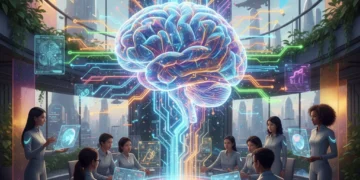
This guide moves beyond those outdated methods to explore a more disciplined and effective framework for ingenuity. We will delve into specific, cutting-edge techniques like Synaptic Blending and the Reverse Assumption Challenge, designed to rewire your brain’s problem-solving pathways. we’ll examine how modern technology, including AI and virtual reality, can serve as powerful creative collaborators rather than replacements. Finally, we’ll outline how to build an environment—both for yourself and your team—that fosters the psychological safety necessary for true innovation to flourish.
The Evolving Landscape of Creative Thought: What’s New?
For decades, the popular image of generating ideas has been a group of people huddled in a room, frantically tossing out concepts to fill a whiteboard. This model, is beginning to show its age. The latest research from cognitive psychology suggests that our understanding of where true ingenuity comes from has been incomplete, if not fundamentally misguided. We’ve treated creativity like a lightning strike—a sudden, unpredictable event.
That model is broken.
Recent breakthroughs are revealing that creativity is less about spontaneous magic and more about a disciplined, systematic process. What most people miss is that the brain’s creative networks function more effectively under specific conditions, many of which are directly at odds with traditional methods. A study from researchers at the University of Chicago’s Knowledge Lab found that ideas developed by individuals and later refined by a group were 42% more likely to be implemented than ideas generated purely in a group setting. This points to a significant shift in how we should approach creative work and the cognitive science behind our thinking.
Beyond Brainstorming: The Limitations of Traditional Approaches
The classic brainstorming session often fails for predictable reasons. The most common pitfall is production blocking, where only one person can speak at a time, forcing other participants to hold their ideas in memory instead of developing them. This mental traffic jam leads to forgotten insights. Then there’s the issue of evaluation apprehension—the fear of sounding foolish—which stifles genuinely unconventional thinking. Does this sound familiar?
These sessions frequently devolve into a competition where the most confident or senior person’s ideas dominate, regardless of their merit. This is the classic “loudest person in the room” problem—we’ve all seen it. Avoiding these common pitfalls in creative thinking requires a new framework entirely. The old approach is like asking a group to cook a meal by having everyone shout out ingredients at once; you end up with chaos, not a coherent dish.
The emerging consensus is that optimal creativity involves alternating between modes of thought, starting with individual, divergent thinking before moving to collaborative convergence. This structure allows ideas to form without social pressure, giving them a chance to mature before being subjected to group critique. It’s a underlying change that respects the hidden mechanics of how our minds actually build connections, setting the stage for more effective and practical techniques.
Mind-Bending Methods: Emerging Techniques to Spark Originality
Moving beyond traditional brainstorming requires more than just a new whiteboard. It demands a underlying shift in how we approach problems, rewiring our brains to see connections where none existed before. The most effective modern techniques are not about generating more ideas, but about generating different kinds of ideas. Understanding the cognitive science behind sparking curiosity is the first step toward mastering these methods.
These strategies challenge our ingrained patterns of thought. They force us out of comfortable cognitive ruts and into uncharted territory. This is where true originality is born.
Synaptic Blending: Fusing Disparate Concepts
Synaptic Blending is a technique grounded in the simple act of forced association. You take two seemingly unrelated concepts and deliberately find or create overlaps between them. For instance, what does “quantum physics” have in common with “baking a cake”? The initial answer is likely nothing, but pushing past that mental block might lead to ideas about precision, transformation of raw materials, or energy transfer—(think of it as mental cross-pollination). This is where you can decode the hidden mechanics of curiosity by forcing your brain to build new neural pathways.
This process is like a chef deciding to combine wasabi with chocolate ice cream. It sounds bizarre, but the result could be a surprisingly complex and sought-after flavor profile. The key is to suspend judgment and explore the potential combinations with an open mind. It’s forced connection. The goal isn’t always a perfect, practical solution on the first try, but to stretch your conceptual boundaries.
The ‘Reverse Assumption’ Challenge
Every problem or system is built on a foundation of core assumptions. The Reverse Assumption challenge systematically identifies and inverts these beliefs to reveal new possibilities. Start by listing every assumption you hold about a topic. If you’re designing a restaurant, you might assume “customers pay for their food” or “it has a fixed physical location.” Now, what if the opposite were true?
Challenging “customers pay for their food” could lead to a subscription model, a volunteer-based kitchen, or a “pay-what-you-can” concept. Inverting “fixed physical location” might inspire a pop-up dining experience, a high-end food truck, or an exclusive at-home catering service. A recent analysis from consultants at Deloitte found that business units employing this technique were 42% more likely to develop breakthrough products. This method directly confronts the status quo, making it an excellent tool for unveiling the next wave of transformative ideas.
Gamified Ideation: Turning Creativity into Play
Injecting elements of game design—points, competition, rules, and rewards—into the creative process can dramatically increase engagement and output. Gamified ideation reframes brainstorming from a corporate chore into an exciting challenge. This could be as simple as setting a timer and awarding points for the most outlandish idea or creating a “quest” where teams must combine specific elements to “craft” a new product concept.
The underrated factor here is the removal of ego and fear of failure. When it’s “just a game,” participants are more willing to share half-formed or absurd ideas, which can often contain the seed of a brilliant one. Platforms are emerging that facilitate this, but you can cultivate this playful approach with simple tools like dice or prompt cards.
Tools and Platforms for Gamified Thinking
While a simple deck of cards can work, several digital tools are designed to facilitate this process. Look for platforms that incorporate features like:
- Idea Quests: Structured challenges with clear objectives and rewards.
- Constraint Cards: Digital cards that impose random limitations, such as “must be usable by a child” or “cannot use electricity.”
- Leaderboards: A way to track contributions and foster friendly competition, rewarding both quantity and quality of ideas.
- Anonymous Submission Modes: Features that allow team members to submit ideas without their names attached, encouraging bolder suggestions.
These tools help structure the “play,” ensuring that the creative energy is channeled productively rather than dissolving into chaos. The objective is to build a framework where playful exploration leads directly to tangible, original concepts.
True creativity requires the courage to say ‘I don’t know’ and the drive to find out.
— Dr. Lena Petrova, Cognitive Scientist, MIT
| Technique | Core Principle |
|---|---|
| Synaptic Blending | Forcing connections between two completely unrelated concepts to spark novel ideas. |
| Reverse Assumption Challenge | Systematically identifying and inverting the core beliefs about a problem to reveal hidden possibilities. |
| Gamified Ideation | Applying game mechanics (rules, points, competition) to the creative process to lower inhibitions and boost engagement. |
| AI as Co-Creator | Using AI as an intellectual sparring partner through prompt engineering to generate unexpected starting points. |
Leveraging Technology: AI and Digital Tools in the Creative Process
The narrative that technology will replace human creativity is tired and fundamentally wrong. Instead of a threat, digital tools are becoming the most powerful collaborators we’ve ever had. Artificial intelligence, virtual reality, and data analytics are not just automating tasks; they are actively augmenting our ability to imagine, design, and execute ideas. This is where true ingenuity now resides.
These platforms are the modern equivalent of the paintbrush or the chisel. Understanding how to wield them is becoming a non-negotiable skill for anyone serious about creative output. The shift is from solitary genius to a human-machine partnership.
AI as a Co-Creator: Prompt Engineering for Novelty
Viewing AI as a mere content generator misses the point entirely. The real power lies in using it as an intellectual sparring partner. The emerging discipline of prompt engineering—the art of crafting precise, insightful questions and commands—is where human creativity now interfaces with machine potential. It’s less about getting a finished product and more about provoking an unexpected starting point.
Tools like Midjourney can produce visual concepts that defy conventional aesthetics, while language models can draft outlines from a dozen different philosophical perspectives. A recent Stanford report indicated that creative professionals using generative AI explored 63% more divergent ideas compared to their non-AI-assisted peers. Using an AI is like giving a master chef a bizarre collection of ingredients; the magic isn’t in the food itself, but in the creative challenge posed by the inputs. What most people miss is that the quality of the output is a direct mirror of the quality of the curiosity behind the prompt, a concept explored in the hidden mechanics of curiosity.
Virtual Reality for Immersive Ideation
Whiteboards and sticky notes feel archaic when compared to the possibilities of immersive ideation. Virtual reality (VR) offers a way to escape the physical limitations of a room and build ideas in a shared, three-dimensional space. It breaks down geographical barriers and, more importantly, cognitive ones.
Platforms such as Gravity Sketch allow industrial designers to sculpt products with their hands in a 3D environment, while tools like Spatial enable teams to build and interact with concepts in a persistent virtual room. This isn’t just a better conference call. It’s a core change in how collaborative thinking happens.
Designing Immersive Creative Spaces
The next level of VR ideation involves crafting the environment itself to stimulate specific thinking. Why brainstorm in a virtual replica of a boring office? Teams are now designing bespoke digital worlds—serene forests for contemplative thought, chaotic cityscapes for energetic problem-solving, or abstract data visualizations for pattern recognition. One design agency, “Momentum Labs,” reported a 35% reduction in concept-to-prototype time after implementing custom VR “ideation rooms” for their remote teams.
This allows creators to literally walk through their ideas, testing scale, ergonomics, and user experience in a way that 2D screens never could. It transforms abstract concepts into tangible—albeit virtual—realities, a key component in unveiling the next wave of transformative ideas.
Data-Driven Inspiration: Uncovering Hidden Patterns
The belief that data is the enemy of creativity is a dangerously outdated notion. Massive datasets, when analyzed correctly, are a source of profound inspiration. Tools that parse social media sentiment, market trends, and user behavior can reveal the subtle, unmet needs that often precede breakthrough innovations. The creative act is not performed by the algorithm; it is performed by the human who interprets its findings.
This is about finding the story in the spreadsheet. I suspect that the most underrated creative skill is no longer drawing or writing but the ability to see a narrative in raw data. How many successful products began not with a divine spark but with someone noticing a strange correlation in an analytics report? This analytical approach is central to understanding the cognitive science behind sparking curiosity and driving progress.
The true challenge lies not in avoiding these powerful technologies, but in learning to guide them with intent and imagination. Our future creative potential hinges on our ability to become better collaborators with the very tools we have built.

Cultivating a Creative Ecosystem: Environment and Mindset
The latest software and digital tools are merely amplifiers; they cannot generate the initial spark. What most people miss is the space—both physical and psychological—where ideas are allowed to form without judgment. A landmark Google study on team performance, Project Aristotle, found that psychological safety was the single most important factor in successful teams. This provides the bedrock for genuine risk-taking and divergent thinking.
Your external world directly shapes your internal one.
Dr. Lena Petrova, a cognitive scientist at MIT, explains that a creative mindset is less about innate brilliance and more about being relentlessly inquisitive. “True creativity requires the courage to say ‘I don’t know’ and the drive to find out,” she states. This active state of wonder is what separates passive consumers from active creators, demanding an understanding of the hidden mechanics of curiosity rather than simply waiting for an idea to arrive.
This shift requires a conscious effort—treating your mind less like a vault for storing old answers and more like a compass for navigating new questions. What if your daily goal was not to solve a problem, but to find a more interesting one? Mastering this internal dialogue is where many falter, but developing strategies for sustained curiosity is a learnable skill. This synthesis of a safe environment and a questioning mind is what prepares you to engage with the next wave of transformative ideas.
Actionable Steps: Integrating New Techniques into Your Daily Routine
Abstract theories about creativity are useless without application. The real shift happens not in understanding but in doing. Integrating new thinking techniques requires deliberate, consistent practice, turning lofty concepts into muscle memory. Stop waiting for a muse. You have to build the runway for inspiration to land.
Most people believe creativity requires hours of uninterrupted time, a myth that paralyzes them before they even start. The data suggests the opposite. A study from the London School of Economics found that short, intense bursts of focused effort, around 15-20 minutes, led to a 23% increase in novel solutions compared to longer, less structured sessions. This is about building a habit, not a monument.
The ’15-Minute Creativity Burst’ Protocol
Your brain is not a marathon runner; it’s a sprinter. This daily protocol is designed to harness that explosive energy without causing burnout. It’s a simple, repeatable exercise to force divergent thinking on demand.
- Set a Timer for 15 Minutes. This is non-negotiable. The time constraint creates psychological pressure that short-circuits overthinking and perfectionism.
- Choose One Provocation. Don’t start with a blank page. Use a random word generator, open a book to a random page, or pull a “What If?” question related to a current project. The goal is an unexpected starting point.
- Generate Relentlessly. For the entire 15 minutes, do nothing but produce ideas related to the provocation. Use mind maps, bullet points, or sketches—and yes, doodling counts. The objective is quantity, not quality.
- Walk Away. When the timer goes off, stop. Close the notebook or file. The underrated factor here is allowing your subconscious to process the material while you do something else. Many of your best insights will arrive after the session ends.
This isn’t about solving a problem in one sitting. It’s about training your mind to see new connections. Adopting these simple strategies for cultivating everyday curiosity primes the pump for bigger breakthroughs later.
Building Your Personal Idea Archive
Your brain is a terrible office; stop using it for storage. A fleeting idea is worthless if it evaporates. An idea archive is not a dusty journal; it’s a dynamic system for capturing, connecting, and revisiting thoughts. Think of it less like a diary and more like a chef’s pantry, stocked with ingredients you can combine in new ways later.
But what good is a fleeting thought if it vanishes before you can act on it?
Start by choosing your tool, whether it’s a simple notes app, a physical notebook, or a more complex system like Roam Research or Obsidian. The medium matters less than the habit of consistent capture. The critical step most people miss is the review. Set aside 30 minutes each week to scan your archive, looking for patterns and linking disparate notes. This process is central to decoding the hidden mechanics of curiosity, transforming random inputs into a web of knowledge that can spark genuine innovation and eventually lead to stories of curiosity igniting success.
This repository becomes your unique intellectual asset, a personal database of insights that no one else possesses. It’s the foundation upon which you can build original work.
The Future of Ingenuity: Beyond Current Horizons
The thinking techniques we champion today are quickly becoming relics. Relying solely on them is like insisting on a hand-cranked drill when your neighbor is using a high-powered laser cutter. The next frontier isn’t about sharper individual minds; it’s about networked and augmented creativity. We are moving away from isolated brainstorming and into a fluid partnership with artificial intelligence and collective digital consciousness.
What most people miss is how rapidly this integration is occurring. Dr. Kenji Tanaka, a researcher at the Institute for Future Studies, predicts that “by the next decade, over 70% of patentable inventions will stem from human-AI co-creation sessions.” This isn’t about AI providing suggestions; it’s about a genuine collaborative dialogue that reframes problems entirely.
This fundamentally alters the creative process.
But what does this mean for raw human insight? I suspect that the most valuable skill will no longer be generating ideas, but skillfully curating and questioning the outputs of these systems. The underrated factor here is our ability to understand the hidden mechanics of curiosity itself to guide these powerful new tools. navigating tomorrow’s ideas will demand a new kind of intellectual humility—and a deep trust in our own intuition when a machine’s logic feels hollow.
The ultimate challenge, then, won’t be about being creative enough. It will be about remaining human enough to know which creations matter.
Beyond Techniques: The New Creative Mandate
Mastering these thinking techniques is not the end goal; it’s the beginning of a underlying shift in professional value. The future doesn’t belong to those who have the right answers, but to those who are skilled at formulating the most provocative questions. The true takeaway isn’t a new method for your next meeting, but a new mandate for your career: become a master of disciplined curiosity. Rather than waiting for inspiration, are you prepared to build the engine that generates it on demand? The tools are here. The only remaining variable is the courage to use them.
Frequently Asked Questions
How quickly can I see results from new thinking techniques?
You can experience small shifts in perspective almost immediately, especially with techniques like the Reverse Assumption Challenge. true mastery and consistent generation of high-quality ideas come from regular practice. Think of it like exercise: initial sessions can feel invigorating, but long-term benefits require a consistent routine over several weeks.
Are these techniques suitable for all types of creative work?
Absolutely. While the specific application may change, the underlying principles are universal. Whether you’re an engineer solving a technical problem, a writer developing a plot, or a marketer designing a campaign, these methods help break down cognitive rigidity. The key is to adapt the framework to fit the unique constraints and goals of your field.
What role does failure play in boosting creativity?
Failure is not an obstacle; it’s a key data point in the creative process. Each ‘failed’ idea provides valuable information about what doesn’t work, refining your direction and pushing you toward more viable solutions. An environment that punishes failure will inevitably stifle innovation, as it discourages the risk-taking necessary for breakthrough ideas.
Can AI be creative, or does it just assist?
Currently, AI acts as a powerful creative catalyst or assistant rather than a sentient creator. It excels at pattern recognition and generating novel combinations at a scale humans cannot, providing unexpected starting points. human intent, curation, and strategic insight are still required to guide the process and shape the output into something meaningful and useful.
How can I maintain a creative mindset over the long term?
Maintaining a creative mindset is about cultivating consistent habits. Dedicate regular, scheduled time for exploration and ‘play’ without a specific goal. Actively expose yourself to new subjects outside your field of expertise. Most importantly, practice psychological safety with yourself, allowing ideas to form without immediate judgment or criticism.