Mastering Brainstorming: The 6-Step Guide to Innovation in 2026

In an increasingly competitive and rapidly evolving global landscape, the ability to innovate is not just an advantage; it’s a necessity. Businesses, organizations, and even individuals are constantly seeking new ways to solve problems, create value, and stay ahead of the curve. At the heart of this innovation lies effective brainstorming sessions – structured yet free-flowing environments designed to generate a wealth of ideas. But how do you ensure these sessions are truly productive and not just a time sink? This comprehensive 6-step practical guide will walk you through the process of conducting highly effective brainstorming sessions, geared towards fostering groundbreaking innovation in 2026 and beyond.
Many people associate brainstorming with a chaotic free-for-all, where ideas are thrown around without much direction. While spontaneity is crucial, true effectiveness comes from a well-defined structure and a clear purpose. We’re moving past the days of aimless ideation. In 2026, effective brainstorming sessions are strategic tools, meticulously planned and executed to yield tangible results. This guide will equip you with the knowledge and tools to transform your brainstorming efforts into powerful engines of creativity and problem-solving.
Step 1: Define Your Objective and Scope – The Foundation of Effective Brainstorming Sessions
The first and arguably most critical step in any successful brainstorming endeavor is to clearly define your objective. Without a precise goal, your session will lack focus and direction, leading to scattered ideas and wasted time. Before gathering your team, ask yourself: What specific problem are we trying to solve? What opportunity are we trying to capitalize on? What outcome do we hope to achieve?
For instance, instead of a vague objective like ‘improve marketing,’ aim for something specific such as ‘develop three innovative marketing campaigns to increase Gen Z engagement by 20% in Q3 2026.’ This specificity provides a clear target for all participants, ensuring that all ideas generated are relevant and actionable. The objective should be SMART: Specific, Measurable, Achievable, Relevant, and Time-bound.
Once your objective is clear, define the scope. What are the boundaries of the problem or opportunity? Are there any constraints (budget, resources, time) that need to be considered? Communicating these parameters upfront helps to manage expectations and steer the ideation process within realistic bounds. This initial clarity is the bedrock upon which truly effective brainstorming sessions are built.
Consider the desired output of the session. Are you looking for a list of raw ideas, a prioritized list of solutions, or a detailed plan for a specific initiative? Knowing the desired output will influence the techniques you use and how you structure the subsequent steps. This preparatory phase is not a mere formality; it sets the stage for a highly productive and impactful session, ensuring that every minute spent is a step towards meaningful innovation.
Step 2: Assemble the Right Team – Diversity Drives Innovation
The composition of your brainstorming team can significantly impact the quality and diversity of ideas generated. A homogeneous group, while potentially efficient, often suffers from groupthink, leading to a narrow range of solutions. To foster true innovation, you need a diverse mix of perspectives, experiences, and expertise.
Think beyond departmental silos. Invite individuals from different teams, roles, and even external stakeholders if appropriate. A marketing specialist might offer a consumer-centric view, while an engineer might provide insights into technical feasibility. Someone from a completely unrelated field could bring a fresh, unbiased perspective that challenges assumptions. Aim for a mix of introverts and extroverts, analytical thinkers and creative visionaries.
The ideal team size for effective brainstorming sessions is typically between 5 and 10 people. Too small, and you might lack sufficient diversity; too large, and it can become unwieldy, with some voices being drowned out. The facilitator’s role becomes even more crucial with a diverse group, ensuring that everyone feels comfortable contributing and that all ideas are respected.
Crucially, ensure that all participants understand the objective and their role in the session. Provide them with any relevant pre-reading or context well in advance. This allows them to come prepared, having already begun to mentally chew on the problem, leading to richer and more thoughtful contributions during the session itself. The right team, adequately prepared, is a powerful force for innovation.
Step 3: Choose the Right Environment and Tools – Fostering Creativity
The physical or virtual environment in which your brainstorming session takes place can have a profound impact on creativity and collaboration. A drab, uninspiring room is unlikely to spark groundbreaking ideas. Conversely, a stimulating and comfortable space can encourage openness and imaginative thinking.
For in-person sessions, choose a location away from daily distractions. A dedicated meeting room is good, but a creative space with whiteboards, natural light, and comfortable seating is even better. Provide plenty of supplies: sticky notes, markers, flip charts, and perhaps even some creative toys or objects to stimulate thought. Consider breaking away from traditional conference room setups; standing sessions or informal lounge areas can promote more dynamic interaction.
In 2026, virtual and hybrid effective brainstorming sessions are increasingly common. Leverage digital tools designed for collaborative ideation, such as Miro, Mural, or Google Jamboard. These platforms offer virtual whiteboards, sticky notes, voting features, and templates that mimic in-person brainstorming, allowing geographically dispersed teams to collaborate seamlessly. Ensure all participants have access to the necessary technology and are comfortable using it.
Regardless of the setting, establish a judgment-free zone. Emphasize that all ideas are welcome, no matter how wild or unconventional they may seem. Create an atmosphere of psychological safety where participants feel empowered to share without fear of criticism or ridicule. This psychological safety is paramount for unlocking true creative potential and is a hallmark of truly effective brainstorming sessions.
Step 4: Facilitate the Session Effectively – Guiding the Creative Flow
A skilled facilitator is the lynchpin of an effective brainstorming session. Their role is not to generate ideas but to guide the process, ensure equal participation, and keep the session focused on the objective. This requires a delicate balance of structure and flexibility.
Start by clearly restating the objective and the ground rules. Emphasize the ‘quantity over quality’ principle during the ideation phase – the goal is to generate as many ideas as possible, deferring judgment until later. Encourage wild ideas; sometimes the most outlandish concepts can spark truly innovative, feasible solutions.
Employ various brainstorming techniques to keep energy levels high and diverse ideas flowing. Some popular methods include:
- Free Association: Simply letting ideas flow freely, building on previous suggestions.
- Round Robin: Each participant shares one idea in turn, ensuring everyone contributes.
- Brainwriting: Participants write down ideas individually before sharing, which can be particularly effective for introverts.
- SCAMPER: A checklist of prompts (Substitute, Combine, Adapt, Modify, Put to another use, Eliminate, Reverse) to stimulate new ideas.
- Mind Mapping: Visually organizing ideas and their connections, often starting from a central theme.
The facilitator should actively listen, ask open-ended questions, and gently steer the conversation back to the objective if it veers off course. They should also be mindful of group dynamics, ensuring dominant personalities don’t monopolize the discussion and quieter voices are encouraged to speak. Timeboxing each activity can help maintain momentum and prevent sessions from dragging. A well-facilitated session feels dynamic, productive, and inclusive, leading to a rich harvest of ideas.
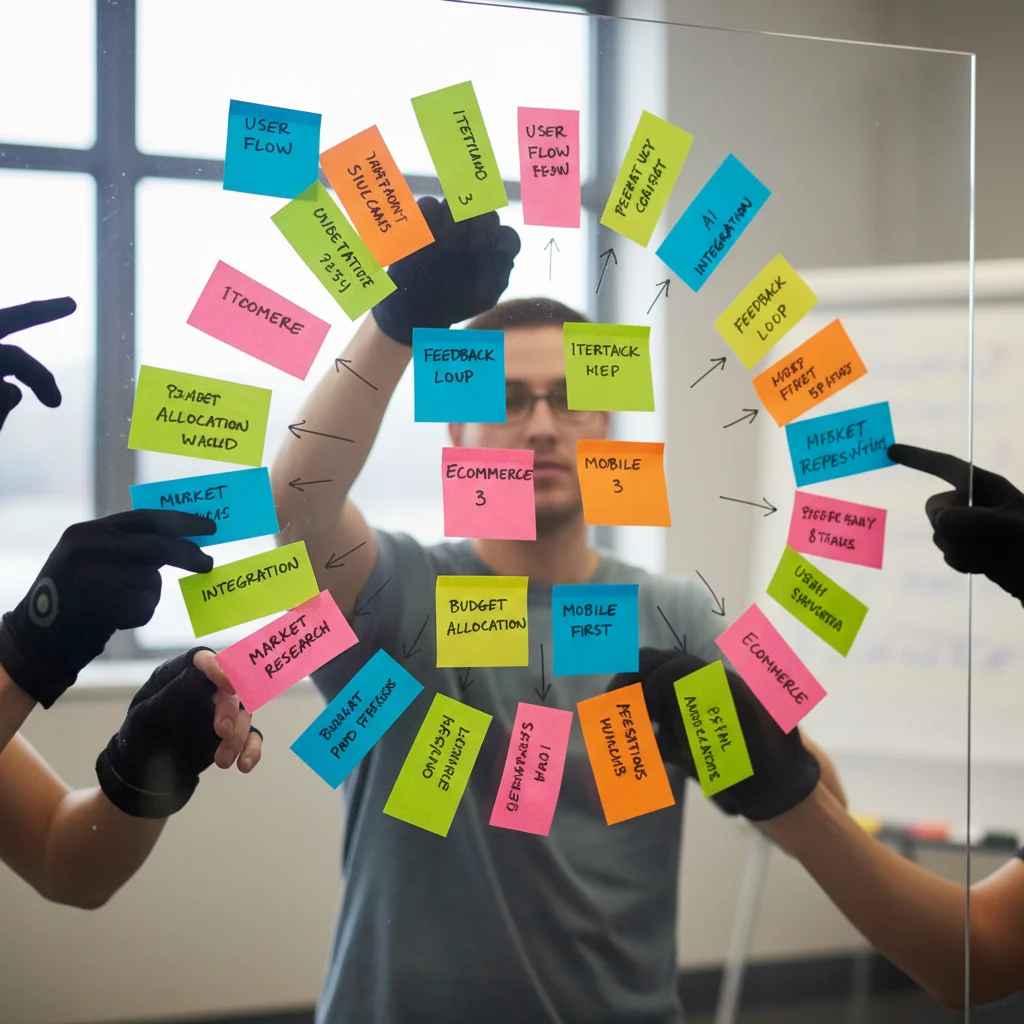
Step 5: Organize, Categorize, and Prioritize Ideas – Making Sense of the Output
Once the ideation phase is complete, you’ll likely have a large, sometimes overwhelming, collection of ideas. The next crucial step is to bring order to this creative chaos. This involves organizing, categorizing, and prioritizing the ideas to identify the most promising ones.
Begin by grouping similar ideas. Look for common themes, patterns, or underlying concepts. Use affinity mapping, where you physically or digitally group sticky notes or ideas that relate to each other. Give each group a descriptive name. This process helps to consolidate redundant ideas and provides a high-level overview of the types of solutions generated.
After categorization, it’s time to evaluate and prioritize. This is where judgment, which was deferred during ideation, comes into play. Develop clear criteria for evaluation based on your initial objective and scope. These criteria might include:
- Feasibility: Can this idea actually be implemented with available resources?
- Impact: How significant would the positive outcome be if this idea were realized?
- Originality/Innovation: How unique or novel is this idea?
- Alignment: Does this idea align with our strategic goals and values?
- Risk: What are the potential downsides or challenges associated with this idea?
Encourage the team to vote on their favorite ideas using dot voting or other prioritization techniques. This democratic approach ensures that the most compelling ideas, based on the established criteria, rise to the top. The goal is not to discard ideas entirely but to identify the ones with the highest potential for further development. This structured approach is what distinguishes truly effective brainstorming sessions from mere idea dumps.
Step 6: Develop Action Plans and Follow Through – Translating Ideas into Innovation
The most brilliant ideas generated during a brainstorming session are worthless if they aren’t acted upon. The final, and arguably most important, step is to translate the prioritized ideas into concrete action plans and ensure diligent follow-through. This is where innovation truly takes root.
For each selected idea, develop a preliminary action plan. This should outline:
- Specific Next Steps: What needs to happen immediately to move this idea forward?
- Responsible Parties: Who is accountable for each next step?
- Deadlines: When should these steps be completed?
- Required Resources: What resources (budget, personnel, tools) are needed?
Assigning clear ownership and timelines ensures accountability and prevents ideas from languishing. Schedule follow-up meetings to track progress, discuss challenges, and make necessary adjustments. Celebrate small wins along the way to maintain momentum and recognize the team’s efforts. This reinforces a culture of innovation and demonstrates that their contributions are valued.
It’s also important to remember that not every idea will succeed, and that’s perfectly acceptable. The process of experimentation, learning from failures, and iterating is a critical part of innovation. Document the outcomes of your chosen ideas, whether successful or not, to inform future effective brainstorming sessions and refine your innovation process. Continuous improvement in your brainstorming approach will lead to increasingly impactful results over time.

Beyond the 6 Steps: Cultivating a Culture of Continuous Innovation
While these six steps provide a robust framework for conducting effective brainstorming sessions, true innovation stems from a deeper organizational commitment. It’s about cultivating a culture where creativity is encouraged, experimentation is embraced, and continuous learning is the norm. Here are some additional considerations for 2026 and beyond:
Embrace AI-Assisted Brainstorming
In 2026, artificial intelligence is no longer a futuristic concept but a powerful tool that can augment human creativity. AI-powered platforms can help generate initial prompts, analyze vast datasets for inspiration, identify emerging trends, and even suggest novel combinations of ideas. While AI shouldn’t replace human intuition and collaboration, it can serve as a valuable co-pilot, expanding the scope and depth of your brainstorming efforts. Integrating AI tools effectively requires understanding their strengths and limitations, using them to enhance rather than dictate the creative process.
Foster Psychological Safety Consistently
The concept of psychological safety extends far beyond the brainstorming room. For truly effective brainstorming sessions to thrive, team members must feel safe to express unconventional ideas, admit mistakes, and challenge the status quo without fear of negative repercussions in their day-to-day work. Leaders play a crucial role in modeling this behavior, demonstrating openness to new ideas, and actively soliciting diverse opinions. When psychological safety is deeply embedded in the organizational culture, brainstorming becomes a natural extension of daily operations, not just a periodic event.
Regularly Review and Refine Your Process
Just as your business needs to innovate, so too does your approach to innovation. After each brainstorming session, take time to reflect on what worked well and what could be improved. Gather feedback from participants. Were the objectives clear? Was the facilitation effective? Did the tools support the process? By continuously reviewing and refining your brainstorming methodology, you ensure that your effective brainstorming sessions remain relevant, engaging, and highly productive in a constantly changing environment. This iterative approach to process improvement is key to sustaining long-term innovation.
Connect Brainstorming to Strategic Goals
Brainstorming should never be an isolated activity. It must be intrinsically linked to your organization’s overarching strategic goals and vision. Before initiating a session, consider how the ideas generated will contribute to larger objectives. This strategic alignment ensures that your creative efforts are always channeled towards outcomes that truly matter, adding significant value to the business. When everyone understands the ‘why’ behind the brainstorming, their engagement and the quality of ideas will naturally increase, leading to more impactful and effective brainstorming sessions.
Celebrate and Share Successes (and Learn from Failures)
Visibility and recognition are powerful motivators. When an idea generated in a brainstorming session successfully translates into a new product, service, or process, celebrate it! Share the story of its journey from concept to reality, highlighting the contributions of the team. This not only boosts morale but also inspires future creative endeavors. Equally important is to learn from ideas that don’t pan out. Analyze why they failed, extract valuable insights, and integrate these learnings into your future brainstorming efforts. This culture of learning and continuous improvement is vital for sustained innovation.
Conclusion: Unleashing Your Team’s Innovative Potential in 2026
In the dynamic landscape of 2026, the ability to generate fresh, impactful ideas is more critical than ever. By following this 6-step practical guide, you can transform your brainstorming efforts from often-frustrating exercises into powerful engines of innovation. From defining a clear objective and assembling a diverse team to facilitating effectively, organizing ideas, and diligently following through, each step plays a vital role in unlocking your team’s collective creative genius.
Remember, effective brainstorming sessions are not just about generating a single ‘big idea.’ They are about cultivating an environment where ideas can flourish, where diverse perspectives are valued, and where the journey from concept to implementation is supported. Embrace the tools and techniques outlined here, adapt them to your unique context, and commit to continuous improvement. By doing so, you will empower your team to consistently deliver groundbreaking solutions, drive meaningful change, and secure a competitive edge in the years to come. Start implementing these strategies today and witness the transformative power of truly effective brainstorming sessions.