Future-Proof Your Career: Essential Skills for U.S. Workforce Adaptation by 2029
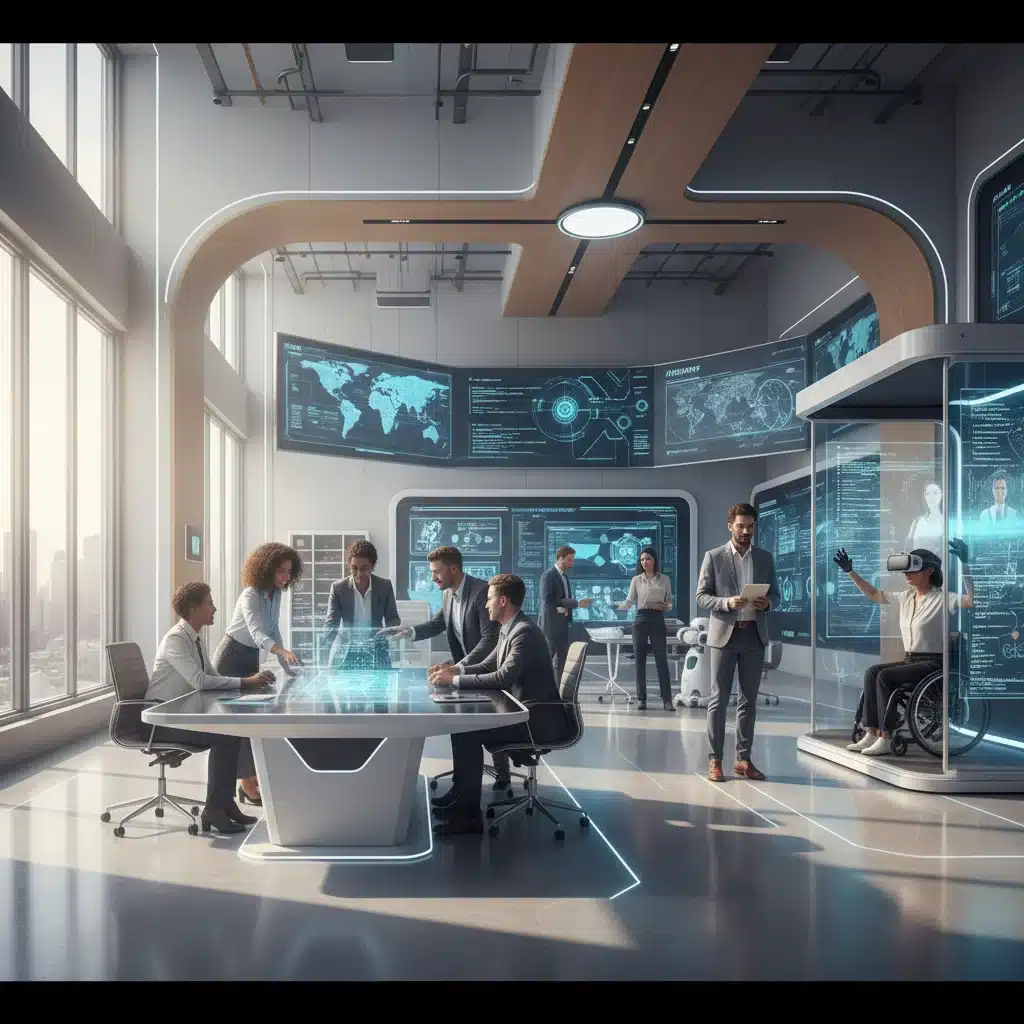
Future-Proof Your Career: Essential Skills for U.S. Workforce Adaptation by 2029 (Practical Solutions)
The landscape of the U.S. workforce is undergoing an unprecedented transformation. Driven by rapid technological advancements, evolving economic models, and shifting societal expectations, the skills that guaranteed success in the past are no longer sufficient for the future. As we approach 2029, the imperative to future-proof career skills becomes not just a strategic advantage but a fundamental necessity for every professional. This comprehensive guide will delve into the three essential skill sets that will define adaptability and success in the coming years, offering practical, actionable solutions for individuals and organizations alike.
The concept of ‘future-proofing’ isn’t about predicting the exact jobs of tomorrow, but rather equipping oneself with a robust set of adaptable competencies that transcend specific roles and industries. It’s about building resilience, fostering continuous learning, and embracing change as an opportunity for growth. The U.S. Bureau of Labor Statistics, along with numerous other economic forecasts, consistently points to a future where automation, artificial intelligence, and global interconnectedness will reshape virtually every sector. This isn’t a distant threat but a present reality, and those who proactively cultivate the right skills will be best positioned to thrive.
Understanding the forces at play is the first step. Automation, for instance, isn’t just taking over manual labor; it’s increasingly impacting white-collar tasks that are repetitive or data-driven. This elevates the demand for uniquely human skills – those that machines cannot easily replicate. Furthermore, the gig economy, remote work, and hybrid models are becoming mainstream, demanding greater self-management, communication, and technological proficiency. Therefore, the focus shifts from purely technical knowledge to a blend of cognitive, social, and digital capabilities that enable individuals to navigate complexity, innovate, and collaborate effectively in dynamic environments. Our exploration of future-proofing career skills will highlight these critical areas.
The Shifting Sands: Why Your Current Skillset Might Not Be Enough
Before diving into the core skills, it’s crucial to acknowledge the accelerating pace of change. What was considered a cutting-edge skill five years ago might now be foundational, or even obsolete. The half-life of skills is shrinking, meaning that the period during which a skill remains relevant and valuable is becoming shorter. This phenomenon necessitates a paradigm shift from a ‘learn once, apply always’ mindset to one of perpetual learning and adaptation. Employers are no longer just looking for what you know today, but how quickly you can learn, unlearn, and relearn for tomorrow.
The Impact of Automation and AI
Artificial Intelligence (AI) and automation are not merely buzzwords; they are transformative technologies fundamentally altering job descriptions. While concerns about job displacement are valid, a more nuanced perspective reveals that AI often augments human capabilities rather than entirely replacing them. However, this augmentation requires humans to adapt. Tasks involving routine data entry, basic analysis, or predictable decision-making are increasingly being handled by algorithms. This frees up human workers to focus on higher-order tasks that require creativity, critical judgment, strategic thinking, and emotional intelligence – precisely the areas we will explore for future-proofing career skills.
Globalized and Interconnected Work Environments
The U.S. workforce operates within a global context. Supply chains are international, teams are often distributed across different continents, and markets are interconnected. This globalized environment demands a new set of communication and collaboration skills, including cultural intelligence, cross-cultural communication, and the ability to leverage digital tools for seamless remote interaction. Understanding global trends and their local implications is also becoming increasingly vital for strategic decision-making in any industry.
The Rise of the Gig Economy and Flexible Work
The traditional 9-to-5 office job is no longer the sole model. The gig economy is expanding, offering flexibility but also demanding greater entrepreneurial spirit, self-discipline, and the ability to manage one’s own career path. Even within traditional employment, flexible work arrangements, including remote and hybrid models, are becoming commonplace. This requires employees to be more self-directed, technologically adept, and effective communicators across various digital platforms. The ability to manage your own learning and development is paramount in this evolving landscape, reinforcing the need to future-proof career skills proactively.
Skill 1: Digital Fluency and Data Literacy
In an increasingly digital world, being merely ‘computer literate’ is no longer enough. Digital fluency goes beyond basic software operation; it encompasses a deep understanding of digital tools, platforms, and data, and the ability to leverage them effectively for problem-solving, communication, and innovation. Data literacy, a critical component of digital fluency, is the ability to read, work with, analyze, and communicate with data. It means understanding what data can tell you, how to interpret it, and how to use it to make informed decisions.
What is Digital Fluency?
Digital fluency involves:
- Advanced Software Proficiency: Beyond Microsoft Office, this includes familiarity with collaboration tools (e.g., Slack, Asana, Trello), cloud computing platforms (e.g., AWS, Azure, Google Cloud), CRM systems, and specialized industry software.
- Cybersecurity Awareness: Understanding basic cybersecurity principles to protect data and systems, both personally and professionally.
- Digital Communication & Collaboration: Mastering virtual meeting platforms, project management software, and asynchronous communication tools to work effectively in distributed teams.
- Understanding Emerging Technologies: A foundational grasp of AI, machine learning, blockchain, and IoT, even if not directly working with them, to understand their impact on your industry and role.
- Adaptability to New Technologies: The ability to quickly learn and adopt new digital tools and systems as they emerge.
What is Data Literacy?
Data literacy entails:
- Data Interpretation: The ability to understand charts, graphs, and statistical reports, and to draw meaningful conclusions from them.
- Data Analysis Basics: Familiarity with basic analytical techniques and tools (e.g., Excel for data manipulation, basic SQL, or business intelligence dashboards like Tableau or Power BI).
- Data-Driven Decision Making: Using insights derived from data to inform strategies, solve problems, and identify opportunities.
- Ethical Data Use: Understanding the privacy, security, and ethical implications of collecting and using data.
Practical Solutions for Developing Digital Fluency and Data Literacy:
- Online Courses and Certifications: Platforms like Coursera, edX, Udacity, and LinkedIn Learning offer numerous courses in data science fundamentals, digital marketing, cloud computing, and specific software proficiencies. Look for certifications from reputable institutions or tech companies.
- Hands-on Projects: Apply your learning by working on personal projects, volunteering for data-related tasks at work, or participating in hackathons. Practical application solidifies theoretical knowledge.
- Stay Updated with Industry News: Regularly read tech blogs, industry journals, and news outlets that cover digital trends and data analytics.
- Seek Mentorship: Connect with colleagues or professionals who are proficient in digital and data skills. Their guidance can be invaluable.
- Embrace New Tools at Work: Actively volunteer to learn and utilize new digital tools introduced in your workplace.

Skill 2: Critical Thinking and Complex Problem-Solving
In a world awash with information and increasingly complex challenges, the ability to think critically and solve intricate problems is paramount. Machines can process vast amounts of data, but humans excel at contextualizing information, identifying underlying issues, and devising creative, nuanced solutions that often require judgment, intuition, and an understanding of human behavior. These are core components of future-proofing career skills.
What is Critical Thinking?
Critical thinking is the objective analysis and evaluation of information in order to form a judgment. It involves:
- Active Observation: Paying close attention to details and patterns.
- Information Evaluation: Discerning credible sources from unreliable ones, identifying biases, and assessing the relevance and accuracy of information.
- Logical Reasoning: Drawing sound conclusions from evidence, identifying fallacies, and constructing coherent arguments.
- Questioning Assumptions: Challenging conventional wisdom and exploring alternative perspectives.
- Metacognition: Thinking about your own thinking process to improve its effectiveness.
What is Complex Problem-Solving?
Complex problem-solving is the ability to tackle novel, ill-defined problems where there is no obvious solution. It involves:
- Problem Identification: Clearly defining the root cause of a problem, rather than just addressing symptoms.
- Solution Generation: Brainstorming diverse and innovative solutions, often requiring creative thinking.
- Solution Evaluation: Assessing the feasibility, potential impact, and risks of various solutions.
- Implementation and Monitoring: Putting solutions into practice and tracking their effectiveness, making adjustments as needed.
- Systems Thinking: Understanding how different parts of a system interact and how a change in one area might affect others.
Practical Solutions for Developing Critical Thinking and Complex Problem-Solving:
- Engage in Deliberate Practice: Actively seek out complex problems in your work or daily life. Don’t shy away from challenges; embrace them as opportunities to hone these skills.
- Ask Probing Questions: Adopt a ‘5 Whys’ approach to get to the root cause of issues. Question assumptions, data, and conclusions.
- Seek Diverse Perspectives: Discuss problems with people from different backgrounds or disciplines. This broadens your understanding and uncovers new angles.
- Practice Structured Problem-Solving Frameworks: Learn methodologies like Design Thinking, SWOT analysis, or the SCAMPER technique. These provide a roadmap for tackling complex issues.
- Read Widely and Deeply: Engage with complex texts, philosophical arguments, and analytical articles that challenge your thinking.
- Debate and Argumentation: Participate in debates or discussions where you must articulate and defend your viewpoints, while also respectfully considering opposing arguments.
Skill 3: Emotional Intelligence (EQ) and Interpersonal Communication
As automation handles more routine tasks, the demand for uniquely human attributes like empathy, collaboration, and effective communication skyrockets. Emotional intelligence (EQ) – the ability to understand and manage one’s own emotions, and to perceive and influence the emotions of others – combined with strong interpersonal communication, forms the bedrock of effective teamwork, leadership, and customer relations. These are indispensable elements for future-proofing career skills in any human-centric role.
What is Emotional Intelligence?
Emotional intelligence comprises several key components:
- Self-Awareness: Understanding your own emotions, strengths, weaknesses, values, and goals, and recognizing their impact on others.
- Self-Regulation: Managing your own emotions and impulses, adapting to change, and maintaining integrity.
- Motivation: Being driven to achieve for personal and professional reasons, with optimism and resilience.
- Empathy: Understanding and sharing the feelings of others, showing compassion, and reading non-verbal cues.
- Social Skills: Building rapport, influencing others, managing conflict, collaborating effectively, and leading teams.
What is Interpersonal Communication?
Interpersonal communication refers to the process by which people exchange information, feelings, and meaning through verbal and non-verbal messages. It includes:
- Active Listening: Fully concentrating on what is being said rather than just passively hearing the message.
- Clear and Concise Expression: Articulating ideas, instructions, and feedback effectively, both orally and in writing.
- Non-Verbal Communication: Understanding and using body language, facial expressions, and tone of voice appropriately.
- Conflict Resolution: Mediating disagreements, finding common ground, and fostering positive outcomes.
- Feedback Delivery: Giving and receiving constructive feedback in a way that promotes growth and understanding.
Practical Solutions for Developing Emotional Intelligence and Interpersonal Communication:
- Practice Self-Reflection: Journaling, meditation, or simply taking time to reflect on your emotions and reactions can enhance self-awareness.
- Seek and Act on Feedback: Ask trusted colleagues or mentors for honest feedback on your communication style and emotional responses. Be open to constructive criticism.
- Observe Others: Pay attention to how emotionally intelligent individuals handle situations, manage conflict, and communicate effectively.
- Develop Active Listening Skills: Practice truly listening without interrupting, asking clarifying questions, and summarizing to ensure understanding.
- Read Literature and Watch Films: Engage with stories that explore complex human emotions and relationships to build empathy.
- Practice Empathy: Make a conscious effort to put yourself in others’ shoes before reacting. Consider their perspectives and feelings.
- Join Public Speaking or Communication Groups: Organizations like Toastmasters International provide excellent platforms for improving verbal communication and leadership skills.
- Conflict Resolution Training: Many workplaces offer workshops on conflict management. These skills are invaluable for navigating interpersonal dynamics.

Integrating These Skills for Holistic Career Growth
While we’ve discussed these three skill sets individually, their true power lies in their synergy. Digital fluency allows you to access and process information efficiently, while critical thinking enables you to analyze that information, identify patterns, and formulate solutions. Emotional intelligence and strong communication then ensure those solutions are effectively conveyed, gaining buy-in and fostering collaborative implementation within a team or organization. To truly future-proof career skills, a balanced development across all three areas is essential.
The Continuous Learning Mindset
The common thread running through all these recommendations is the importance of a continuous learning mindset. The world of work will continue to evolve, and the most successful professionals will be those who view learning not as a finite process, but as an ongoing journey. This means:
- Curiosity: Maintaining an insatiable desire to learn new things and understand how the world works.
- Adaptability: Being open to new ideas, technologies, and ways of working.
- Resilience: The ability to bounce back from setbacks and learn from failures.
- Proactivity: Taking initiative to seek out learning opportunities rather than waiting for them to be assigned.
Organizational Role in Fostering Future-Proofing Career Skills
It’s not solely the individual’s responsibility to cultivate these skills. Organizations also play a pivotal role in creating an environment that encourages and supports continuous learning and development. Companies that invest in their employees’ skill development will not only retain top talent but also build a more agile and resilient workforce capable of navigating future challenges.
Strategies for Organizations:
- Invest in Training and Development Programs: Offer workshops, online courses, and certification programs that focus on digital fluency, critical thinking, and emotional intelligence.
- Create a Culture of Learning: Encourage knowledge sharing, mentorship programs, and provide dedicated time for employees to engage in learning activities.
- Promote Internal Mobility: Allow employees to move between departments or roles to gain diverse experiences and develop new skills.
- Leverage Technology for Learning: Utilize learning management systems (LMS) and AI-powered personalized learning paths.
- Foster Psychological Safety: Create an environment where employees feel safe to experiment, make mistakes, and learn from them without fear of retribution.
- Recognize and Reward Skill Development: Acknowledge and incentivize employees who actively work to enhance their future-proofing career skills.
Conclusion: Your Roadmap to 2029 and Beyond
The U.S. workforce of 2029 will be vastly different from today’s. The professionals who thrive in this new era will be those who have proactively invested in developing a robust portfolio of adaptable skills. Digital fluency and data literacy will enable you to navigate and leverage the technological landscape. Critical thinking and complex problem-solving will empower you to tackle unprecedented challenges with innovation and insight. And emotional intelligence combined with strong interpersonal communication will ensure you can collaborate effectively, lead empathetically, and build meaningful relationships in an increasingly interconnected world.
The journey to future-proof career skills is ongoing, demanding dedication, curiosity, and a commitment to lifelong learning. Start today by assessing your current strengths and identifying areas for growth within these three essential categories. Seek out learning opportunities, apply your new knowledge in practical settings, and actively engage with your professional community. By embracing this proactive approach, you won’t just adapt to the future; you’ll shape it, ensuring your career remains resilient, rewarding, and impactful for years to come.
The time to act is now. The future of work isn’t coming; it’s already here. Equip yourself with these essential skills, and confidently stride into the opportunities that await.