Mastering Task Prioritization: Your Eisenhower Matrix Guide for 2026 Success
In the relentless march towards 2026, the demands on our time and attention seem to multiply exponentially. We are constantly bombarded with emails, notifications, deadlines, and an endless stream of responsibilities, both professional and personal. In this whirlwind of activity, it’s easy to feel overwhelmed, to lose sight of what truly matters, and to find ourselves constantly reacting to urgent demands rather than proactively shaping our future. The key to navigating this complexity, to achieving sustained success, and to maintaining mental well-being lies in one critical skill: effective task prioritization. And when it comes to mastering task prioritization, few tools are as powerful, intuitive, and enduring as the Eisenhower Matrix.
The Eisenhower Matrix, also known as the Urgent/Important Matrix, is a simple yet profound framework developed by Dwight D. Eisenhower, the 34th President of the United States. Eisenhower, a man renowned for his exceptional productivity and leadership, famously said, "I have two kinds of problems: the urgent and the important. The urgent are not important, and the important are never urgent." While this statement might be a slight oversimplification, it encapsulates the core principle behind his approach to decision-making and time management. This matrix helps you categorize tasks based on their urgency and importance, allowing you to focus your energy on what will yield the most significant results and avoid getting bogged down by trivial distractions.
Understanding the Core of the Eisenhower Matrix Prioritization
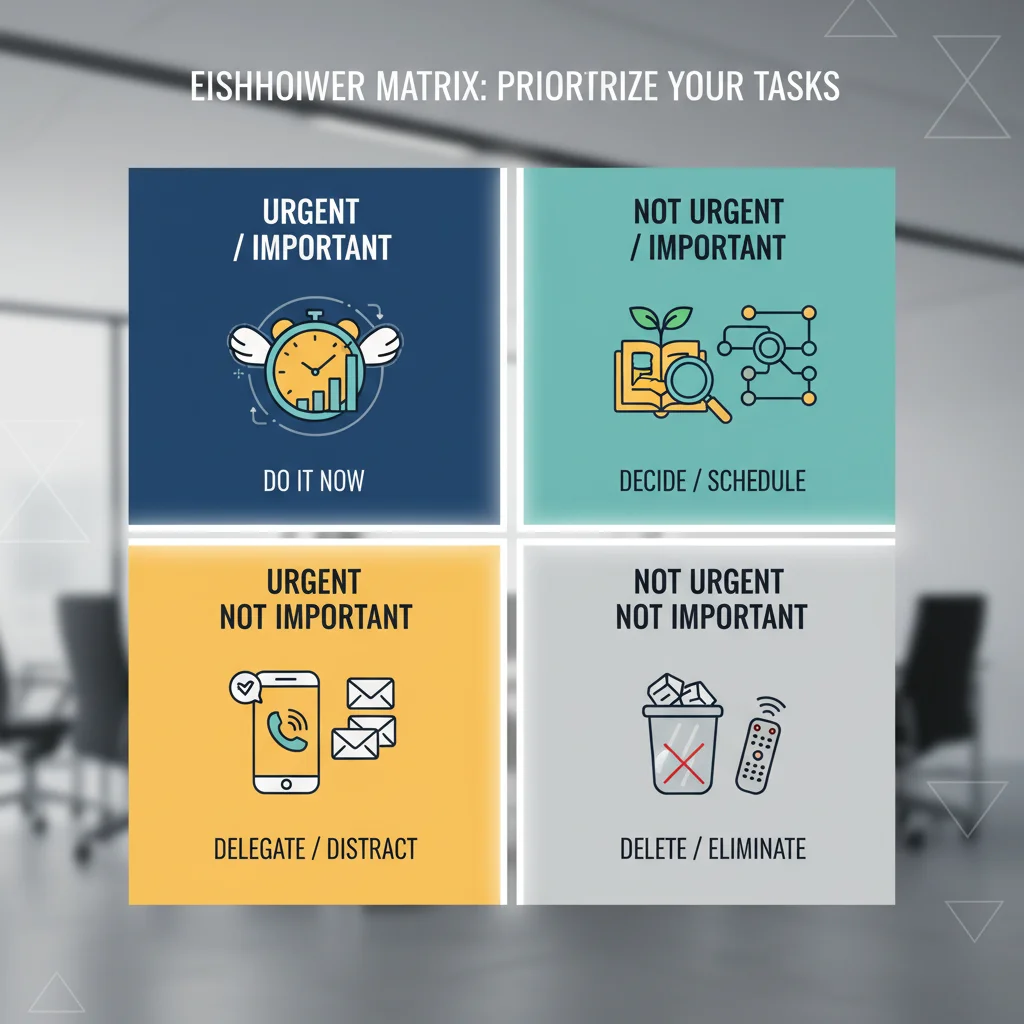
To truly leverage the Eisenhower Matrix for your 2026 success, you must first grasp its fundamental components. The matrix is divided into four quadrants, each representing a different combination of urgency and importance. Let’s break down what each quadrant signifies:
Quadrant 1: Urgent and Important (Do)
These are your crises, pressing deadlines, and critical problems that require immediate attention. Think of a project nearing its final deadline, an unexpected client emergency, or a sudden health issue. These tasks demand your full focus and cannot be postponed. While it’s impossible to eliminate all tasks from this quadrant, a well-managed life and career aim to minimize their occurrence by proactively addressing important tasks before they become urgent. Spending too much time in this quadrant leads to stress, burnout, and a feeling of constantly putting out fires.
Quadrant 2: Not Urgent and Important (Schedule)
This is the quadrant of strategic planning, relationship building, personal development, and long-term goal achievement. Examples include planning for future projects, exercising, spending quality time with loved ones, learning new skills, or conducting preventative maintenance. These tasks are crucial for your long-term success and well-being, but they don’t have an immediate deadline. They are often the easiest to postpone because they don’t scream for attention. However, consistently dedicating time to Quadrant 2 activities is the hallmark of highly effective individuals. This is where true growth, innovation, and proactive problem-solving happen.
Quadrant 3: Urgent and Not Important (Delegate)
These tasks often appear urgent because someone else’s deadline or expectation is driving them, but they don’t contribute significantly to your own goals or priorities. Think of certain emails, interruptions, some meetings that could have been an email, or requests that can be handled by others. These tasks are often distractions that prevent you from focusing on what’s truly important. The best approach for Quadrant 3 tasks is to delegate them if possible, or politely decline if they don’t align with your objectives. Learning to say "no" is a critical skill for managing this quadrant.
Quadrant 4: Not Urgent and Not Important (Eliminate)
This quadrant is the realm of time-wasters, distractions, and activities that offer little to no value. Examples include excessive social media scrolling, endless trivial conversations, or tasks that are simply procrastination disguised as productivity. These activities drain your energy and time without contributing to any meaningful outcome. The goal for Quadrant 4 tasks is simple: eliminate them entirely or drastically reduce the time spent on them. They are the biggest culprits in hindering your progress and should be ruthlessly cut from your schedule.
Why Eisenhower Matrix Prioritization is Essential for 2026 Success
As we look towards 2026, the landscape of work and life continues to evolve at a rapid pace. The ability to effectively prioritize tasks is no longer a luxury; it’s a necessity for thriving in a complex world. Here’s why embracing Eisenhower Matrix Prioritization will be a game-changer for you:
- Clarity and Focus: In a world of constant noise, the matrix provides a crystal-clear framework for identifying what truly deserves your attention. It helps you cut through the clutter and focus on high-impact activities.
- Reduced Stress and Overwhelm: By systematically organizing your tasks, you gain a sense of control. Knowing exactly what to work on next, and why, significantly reduces anxiety and the feeling of being constantly behind.
- Increased Productivity and Efficiency: By prioritizing important tasks over merely urgent ones, you ensure that your efforts are directed towards achieving meaningful goals, leading to greater output and better results.
- Better Decision-Making: The matrix forces you to evaluate tasks critically. Is this truly important? Does it align with my long-term objectives? This structured approach leads to more informed and strategic decisions.
- Proactive vs. Reactive Living: Shifting your focus to Quadrant 2 tasks allows you to be proactive, anticipating challenges, planning for the future, and investing in your growth, rather than constantly reacting to unforeseen problems.
- Achieve Long-Term Goals: The Eisenhower Matrix is an excellent tool for breaking down large goals into manageable, prioritized steps, ensuring consistent progress towards your aspirations for 2026 and beyond.
Implementing the Eisenhower Matrix: A Practical Guide for 2026
Now that you understand the "why," let’s dive into the "how." Here’s a step-by-step guide to effectively implement the Eisenhower Matrix Prioritization in your daily life and work for 2026:
Step 1: List All Your Tasks
Before you can prioritize, you need to know what you’re dealing with. Take out a pen and paper, open a digital document, or use a task management app. List every single task, responsibility, idea, and commitment that comes to mind. Don’t filter or judge at this stage – just get everything out of your head. This brain dump is crucial for gaining a comprehensive overview of your workload.
Step 2: Evaluate Urgency and Importance for Each Task
Go through your list, task by task, and ask yourself two critical questions:
- Is this task Urgent? Does it require immediate attention? Is there a looming deadline? Will there be negative consequences if I don’t do it right now?
- Is this task Important? Does it contribute to my long-term goals, values, or mission? Does it have a significant impact on my personal or professional life? Does it lead to positive outcomes?
Be honest with your assessment. Sometimes, tasks feel urgent because we’ve procrastinated, or they’re important to someone else but not to our own objectives.
Step 3: Place Tasks into the Appropriate Quadrant
Based on your answers to the urgency and importance questions, place each task into one of the four quadrants. You can draw the matrix on paper, use a whiteboard, or utilize digital tools designed for this purpose. The visual representation helps solidify your understanding of where each task stands.

Step 4: Act on Your Quadrants
This is where the magic happens. Once your tasks are categorized, you have a clear action plan:
- Quadrant 1 (Urgent & Important): DO immediately. These are your top priorities. Tackle them head-on.
- Quadrant 2 (Not Urgent & Important): SCHEDULE for later. Block out specific time slots in your calendar for these critical tasks. This is where proactive work happens.
- Quadrant 3 (Urgent & Not Important): DELEGATE if possible. If you can’t delegate, consider if you can automate or streamline the task. If not, address them quickly and efficiently to free up time for Quadrant 1 and 2.
- Quadrant 4 (Not Urgent & Not Important): ELIMINATE or minimize. These are distractions. Be ruthless in cutting them out of your schedule.
Step 5: Review and Adapt Regularly
The Eisenhower Matrix isn’t a one-and-done exercise. Your priorities will shift, new tasks will emerge, and some tasks will move between quadrants. Make it a habit to review your matrix daily, weekly, or at the start of each major project. This regular review ensures that your focus remains aligned with your goals for 2026.
Common Pitfalls and How to Avoid Them
While the Eisenhower Matrix is powerful, its effectiveness depends on proper application. Be aware of these common pitfalls:
- Mislabeling "Urgent": Many tasks feel urgent but aren’t. A ringing phone might feel urgent, but answering it might not be important if you’re in the middle of a critical Quadrant 2 task. Learn to distinguish between true urgency and perceived urgency.
- Neglecting Quadrant 2: This is the most common mistake. Because Quadrant 2 tasks don’t have immediate deadlines, they are easily pushed aside by urgent demands. Consistently scheduling and protecting time for these tasks is paramount.
- Fear of Delegation: Some people struggle with delegating, believing it’s faster to do it themselves or that no one else can do it as well. Overcoming this fear is crucial for freeing up your time for higher-value work.
- Lack of Elimination: It can be hard to let go of tasks, even if they’re clearly Quadrant 4. Be honest with yourself about what truly adds value and be willing to cut out the rest.
- Over-Categorization: Don’t spend too much time agonizing over which quadrant a task belongs to. The goal is clarity and action, not perfect categorization. If a task feels like it could fit two, choose the one that drives the most effective action.
Advanced Strategies for Eisenhower Matrix Prioritization in 2026
Once you’ve mastered the basics, consider these advanced strategies to further amplify your productivity with the Eisenhower Matrix:
Integrate with Goal Setting
Connect your Eisenhower Matrix directly to your 2026 goals. Before categorizing a task, ask: "How does this task contribute to my overarching objectives for the year?" This ensures that your "important" tasks are truly aligned with what you want to achieve.
Time Blocking for Quadrant 2
Don’t just schedule Quadrant 2 tasks; time block them. Dedicate specific, uninterrupted blocks of time in your calendar for strategic work, planning, personal development, and relationship building. Treat these blocks as non-negotiable appointments.
Batching Quadrant 3 Tasks
For urgent but not important tasks that you can’t delegate, consider batching them. Set aside a specific time each day or week to handle all emails, phone calls, or minor administrative tasks at once. This minimizes context-switching and allows you to focus on more important work during other times.
The "Two-Minute Rule" for Quick Wins
If a task takes less than two minutes to complete, do it immediately, regardless of its quadrant. This prevents small tasks from piling up and becoming overwhelming, freeing up mental bandwidth for bigger priorities.
Utilize Digital Tools
There are numerous apps and software designed to help you implement the Eisenhower Matrix. Tools like Trello, Asana, Monday.com, or even simple digital whiteboards can be customized to reflect the four quadrants, making it easier to visualize and manage your tasks.
Regular "Not-To-Do" List Creation
Beyond identifying what to eliminate, actively create a "not-to-do" list. These are activities, habits, or distractions you intentionally commit to avoiding. This reinforces your focus on important tasks and helps you steer clear of time-wasting activities.
Delegate Effectively
If you have direct reports or team members, learn to delegate effectively. Provide clear instructions, set expectations, and empower your team. This not only frees up your time but also develops their skills and fosters a more efficient team environment.
Success Stories: Real-World Impact of Eisenhower Matrix Prioritization
The principles of the Eisenhower Matrix have been adopted by countless successful individuals and organizations. From startup founders juggling multiple roles to corporate executives managing complex projects, the framework provides a universal language for productivity. For example, consider a marketing manager who was constantly swamped with client requests (Urgent/Not Important) and last-minute campaign changes (Urgent/Important). By consciously scheduling time for strategic content planning and team training (Not Urgent/Important), they reduced the number of urgent crises and improved overall campaign quality. Similarly, a student struggling with academic deadlines found that by scheduling study time for major assignments well in advance (Not Urgent/Important) and delegating minor group project tasks (Urgent/Not Important), they alleviated stress and achieved better grades.
The beauty of the Eisenhower Matrix lies in its adaptability. Whether you’re planning your day, your week, your month, or even your entire year for 2026, the principles remain the same. It encourages a shift from simply being busy to being productive, from reacting to being proactive, and from feeling overwhelmed to feeling in control.

The Future of Productivity: Beyond 2026 with Eisenhower Matrix
As we advance into 2026 and beyond, the demands for our attention will only intensify. Artificial intelligence, automation, and ever-present connectivity will continue to reshape our work and personal lives. In this dynamic environment, the ability to discern between what is truly important and what is merely urgent will become an even more critical differentiator. The Eisenhower Matrix is not just a tool for today; it’s a foundational skill for future success.
By consistently applying Eisenhower Matrix Prioritization, you cultivate self-awareness, discipline, and strategic thinking. You learn to protect your most valuable resource – your time and energy – and direct it towards activities that generate the greatest value and fulfillment. This proactive approach not only leads to professional achievements but also contributes significantly to personal well-being, allowing for more time for hobbies, family, and self-care.
Conclusion: Your Roadmap to a Highly Productive 2026
The journey to a highly productive and successful 2026 begins with a clear understanding of your priorities. The Eisenhower Matrix offers a robust, time-tested framework to help you gain that clarity. By diligently categorizing your tasks into the four quadrants – Do, Schedule, Delegate, and Eliminate – you empower yourself to make intentional choices about how you spend your precious time and energy.
Embrace the discipline of regularly reviewing and adapting your matrix. Be vigilant in identifying and eliminating distractions. Be courageous in delegating tasks that don’t require your unique skills. Most importantly, commit to consistently investing in Quadrant 2 activities – the "Not Urgent and Important" tasks that fuel your growth, build your relationships, and pave the way for long-term success. Make Eisenhower Matrix Prioritization a cornerstone of your productivity strategy, and watch as 2026 unfolds into a year of unparalleled achievement, reduced stress, and profound personal and professional satisfaction. Start today, and take control of your time, your tasks, and your future.