Creative Problem Solving: 8 Stages for U.S. Professionals in 2026

In the rapidly evolving landscape of 2026, the ability to creatively solve problems is no longer a mere advantage for U.S. professionals; it is an absolute necessity. From disruptive technologies to shifting market demands and complex global challenges, organizations are constantly seeking individuals who can not only identify issues but also conceptualize and implement innovative, effective solutions. This deep dive into the 8 stages of creative problem-solving offers a robust framework designed to empower you, the modern U.S. professional, to navigate ambiguity, spark ingenuity, and drive impactful results.
Creative problem-solving is more than just brainstorming; it’s a structured yet flexible approach that combines analytical rigor with imaginative thinking. It’s about moving beyond conventional solutions to discover novel and superior pathways forward. For businesses, this translates into enhanced competitiveness, increased efficiency, and sustained growth. For individuals, it means greater career resilience, leadership potential, and personal fulfillment. Let’s embark on this journey to master the critical stages that transform an abstract idea into a tangible, positive impact.
Stage 1: Problem Identification and Definition – The Foundation of "Creative Problem Solving Stages"
The first and arguably most crucial step in any creative problem-solving endeavor is to accurately identify and define the problem. Without a clear understanding of what you’re trying to solve, any subsequent efforts will be misdirected and inefficient. In 2026, problems often present themselves as symptoms rather than root causes, requiring a keen eye and analytical mind to peel back the layers.
Understanding the "What" and "Why"
Many professionals jump straight into solutions without fully grasping the problem. This stage demands a pause, a deep breath, and a thorough investigation. Ask yourself:
- What exactly is the problem? Can it be broken down into smaller, more manageable components?
- Who is affected by this problem, and how?
- When did this problem start, and what are its historical patterns?
- Where does this problem manifest most acutely?
- Why is this problem occurring? What are the underlying causes, not just the表面 symptoms?
Techniques like the "5 Whys" can be incredibly effective here. By repeatedly asking "why," you can drill down from a symptom to its ultimate root cause. For example, if sales are declining (symptom), you might ask: "Why are sales declining?" (Because customer engagement is low). "Why is customer engagement low?" (Because our marketing messages aren’t resonating). "Why aren’t they resonating?" (Because we haven’t updated our target audience personas in three years). This iterative questioning helps uncover the true challenge.
Framing the Problem Statement
Once you’ve thoroughly investigated, articulate the problem in a clear, concise, and unbiased problem statement. A well-crafted problem statement should be:
- Specific: Avoid vague language.
- Measurable: Can you quantify the impact of the problem?
- Achievable: Is it a problem that can realistically be addressed?
- Relevant: Does solving this problem align with organizational goals?
- Time-bound: Are there deadlines or timeframes associated with its resolution?
Consider framing it as a question that invites creative solutions, such as "How might we…?" For instance, instead of "Sales are down," try "How might we increase customer engagement to boost quarterly sales by 15% within the next six months?" This rephrasing immediately shifts the mindset from complaint to opportunity, setting the stage for effective creative problem-solving.
Stage 2: Information Gathering and Analysis – Fueling Your "Creative Problem Solving Stages"
With a well-defined problem, the next step is to gather all relevant information. This stage is about understanding the context, constraints, and potential avenues for solutions. In 2026, data is abundant, but discerning useful information from noise is a critical skill for U.S. professionals.
Diverse Data Sources
Look beyond the obvious. Information can come from various sources:
- Internal Data: Sales reports, customer feedback, operational metrics, employee surveys, past project reviews.
- External Data: Market research, industry trends, competitor analysis, academic studies, expert opinions, government reports.
- Human Resources: Conduct interviews with stakeholders, customers, employees, and subject matter experts. Their perspectives can provide invaluable qualitative insights that data alone cannot offer.
- Observational Research: Sometimes, simply observing the problem in its natural environment can reveal critical details.
Analytical Techniques
Once data is collected, it needs to be analyzed to extract meaning and identify patterns. Useful analytical techniques include:
- SWOT Analysis: Identifying Strengths, Weaknesses, Opportunities, and Threats related to the problem.
- Root Cause Analysis: Building on the "5 Whys" from Stage 1, using tools like fishbone diagrams (Ishikawa diagrams) to map out potential causes.
- Trend Analysis: Looking for patterns and trajectories in data over time.
- Gap Analysis: Comparing the current state with the desired state to identify discrepancies.
- Stakeholder Mapping: Understanding who is affected by the problem and who holds influence over potential solutions.
The goal here is not just to collect data, but to synthesize it into actionable insights that will inform the ideation process. This comprehensive understanding ensures that your creative problem-solving efforts are grounded in reality and evidence.
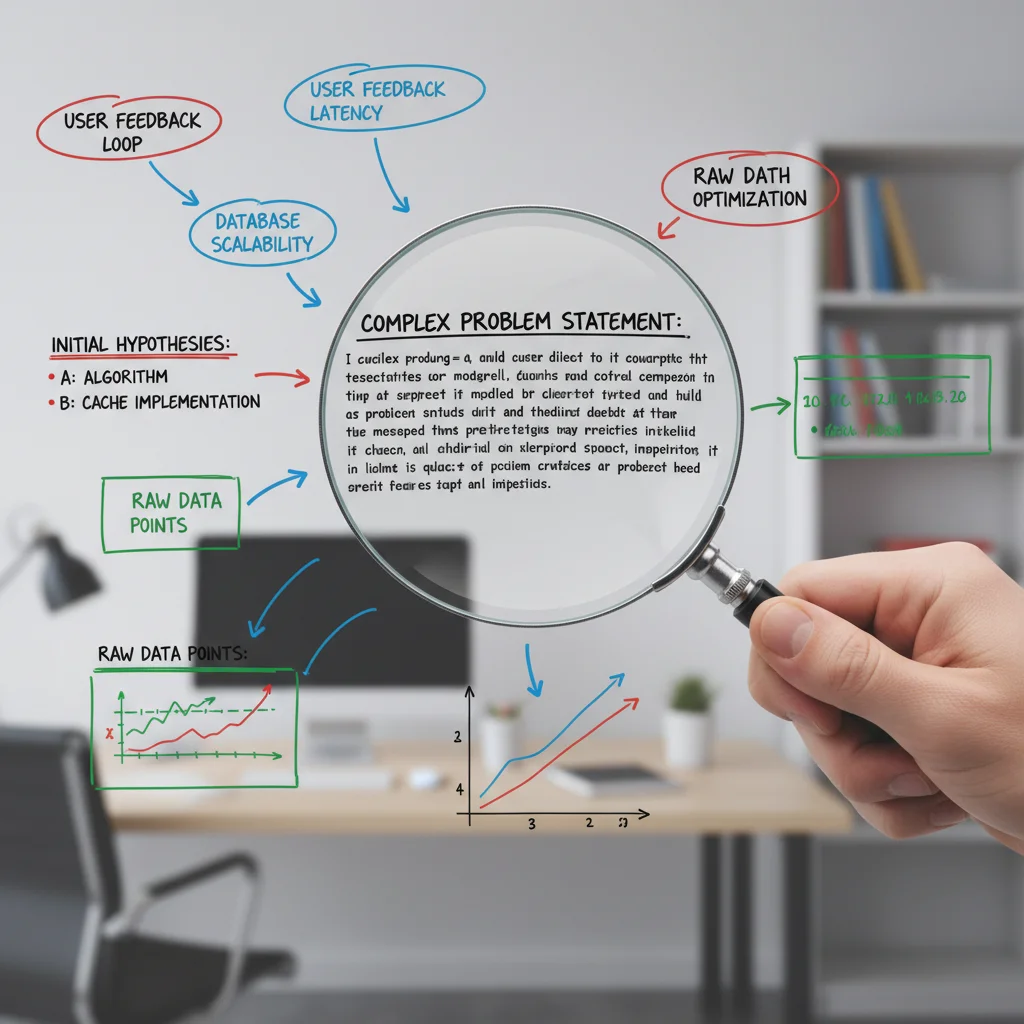
Stage 3: Ideation and Brainstorming – Unleashing Creativity in "Creative Problem Solving Stages"
This is where the "creative" aspect of creative problem-solving truly shines. With a clear problem and robust information, it’s time to generate as many potential solutions as possible, without judgment or premature evaluation. The objective is quantity over quality at this stage.
Cultivating a Creative Environment
For effective ideation, foster an environment that encourages divergent thinking:
- No Bad Ideas: Emphasize that all ideas are welcome, no matter how outlandish they may seem initially. This reduces self-censorship.
- Quantity over Quality: Encourage participants to generate as many ideas as possible. A large pool increases the chances of finding truly innovative solutions.
- Build on Others’ Ideas: Encourage participants to "yes, and…" rather than "yes, but…" This collaborative approach can lead to more sophisticated solutions.
- Diversity of Thought: Include individuals from different departments, backgrounds, and levels of experience to bring varied perspectives.
Popular Ideation Techniques
Several techniques can facilitate effective brainstorming:
- Traditional Brainstorming: A classic method where a group freely shouts out ideas, often recorded on a whiteboard.
- Brainwriting: Participants write down ideas individually for a set period, then pass their papers to others to add more ideas or build upon existing ones. This reduces groupthink and ensures quieter members contribute.
- Mind Mapping: Start with the central problem and branch out with related ideas, keywords, and concepts, forming a visual network of thoughts.
- SCAMPER Method: A checklist of prompts to stimulate new ideas: Substitute, Combine, Adapt, Modify (Magnify, Minify), Put to another use, Eliminate, Reverse (Rearrange).
- Design Thinking Exercises: Empathy mapping, user journey mapping, and "how might we" statements can help generate user-centric solutions.
The key here is to suspend judgment and allow for free-flowing thought. The more diverse and numerous the ideas, the better the chances of stumbling upon a truly groundbreaking solution.
Stage 4: Idea Evaluation and Selection – Refining the "Creative Problem Solving Stages"
After generating a multitude of ideas, the next challenge is to sift through them and select the most promising ones. This stage shifts from divergent thinking to convergent thinking, focusing on practicality, feasibility, and potential impact.
Establishing Evaluation Criteria
Before diving into evaluation, define clear criteria against which each idea will be measured. These criteria should align with the problem statement and organizational goals. Examples include:
- Feasibility: Can this idea be implemented with available resources (time, budget, personnel, technology)?
- Impact: How effectively does this idea solve the problem? What is the potential return on investment (ROI) or benefit?
- Innovation: How novel or unique is the idea? Does it offer a competitive advantage?
- Scalability: Can the solution be expanded or adapted for future needs?
- Risk: What are the potential downsides or risks associated with implementing this idea?
- Alignment: Does the idea align with the company’s values and strategic objectives?
Techniques for Evaluation
- Dot Voting: Each participant gets a set number of "dots" (stickers or marks) to place on their favorite ideas, quickly highlighting popular choices.
- Impact/Effort Matrix: Plotting ideas on a grid with ‘impact’ on one axis and ‘effort’ on the other. This helps prioritize high-impact, low-effort solutions.
- Pros and Cons List: A straightforward method to weigh the advantages and disadvantages of each idea.
- SCAMPER (Revisited): Sometimes, applying SCAMPER again to a selected idea can refine it further or merge it with another.
- Weighted Scoring: Assigning a numerical weight to each evaluation criterion and then scoring each idea against these criteria to get an objective ranking.
It’s important to remain objective during this stage and avoid personal biases. The goal is to identify one or a few "best fit" solutions that have the highest potential for success and impact.
Stage 5: Solution Development and Prototyping – Bringing "Creative Problem Solving Stages" to Life
Once the most promising idea (or ideas) has been selected, the next step is to develop it into a concrete solution. This often involves creating prototypes or pilot programs to test its viability.
Detailed Planning
Develop a clear plan for the chosen solution. This includes:
- Defining Scope: What exactly will the solution entail? What are its boundaries?
- Resource Allocation: What resources (budget, personnel, technology) are needed?
- Timeline: What are the key milestones and deadlines?
- Roles and Responsibilities: Who is responsible for what aspects of the solution’s development and implementation?
- Success Metrics: How will you measure the success of the solution? These should tie back to the problem statement.
Prototyping and Testing
Prototyping is crucial for several reasons:
- Early Feedback: It allows for testing and gathering feedback before significant investment.
- Risk Reduction: Identifies flaws and potential challenges early on, making it cheaper and easier to iterate.
- Clarification: Helps stakeholders visualize and understand the solution better.
Prototypes don’t have to be perfect; they just need to be sufficient to test key assumptions. This could be a wireframe for a new app, a mock-up of a new product, a role-play of a new process, or a small-scale pilot program. Gather feedback from target users and stakeholders, and be prepared to iterate based on their input. This iterative process is a hallmark of effective creative problem-solving.
Stage 6: Implementation – Executing the "Creative Problem Solving Stages"
With a well-developed and tested solution, it’s time for full-scale implementation. This stage requires careful project management, communication, and adaptability.
Project Management Best Practices
Successful implementation relies on solid project management:
- Clear Communication: Keep all stakeholders informed about progress, challenges, and changes.
- Task Delegation: Ensure tasks are clearly assigned and individuals understand their responsibilities.
- Resource Management: Monitor budget, time, and personnel to stay on track.
- Risk Management: Continuously identify and mitigate potential risks that could derail implementation.
- Change Management: For solutions that involve significant changes to processes or culture, develop a strategy to manage resistance and facilitate adoption.
Overcoming Implementation Hurdles
Even the best solutions can face resistance. Be prepared for:
- Resistance to Change: Address concerns, provide training, and communicate the benefits clearly.
- Resource Constraints: Be flexible and creative in finding alternative resources or adjusting the scope if necessary.
- Unexpected Issues: No plan is perfect. Maintain an agile mindset to adapt to unforeseen challenges.
The implementation phase is often the longest and most challenging, but with diligent execution and a proactive approach to problem-solving within this stage, the potential for success is greatly increased.
Stage 7: Monitoring and Evaluation – Measuring Impact in "Creative Problem Solving Stages"
Implementation is not the end goal; understanding the solution’s effectiveness is. This stage involves continuously monitoring the solution’s performance and evaluating its impact against the predefined success metrics.
Key Performance Indicators (KPIs)
Refer back to the success metrics established in Stage 5. These should be quantifiable and directly related to the problem you set out to solve. Examples include:
- Financial Metrics: Revenue growth, cost savings, profit margins.
- Operational Metrics: Efficiency gains, error rates, production output.
- Customer Metrics: Customer satisfaction scores (CSAT), net promoter scores (NPS), retention rates.
- Employee Metrics: Employee engagement, productivity, turnover rates.
Feedback Loops and Data Collection
Establish mechanisms for ongoing data collection and feedback:
- Regular Reporting: Set up dashboards and reports to track KPIs.
- Surveys and Interviews: Gather qualitative feedback from users and stakeholders.
- Performance Reviews: Periodically assess the solution’s performance against its objectives.
The data collected here provides crucial insights into whether the solution is achieving its intended purpose. It also highlights any unintended consequences, positive or negative.
Stage 8: Adaptation and Iteration – Continuous Improvement in "Creative Problem Solving Stages"
The final stage recognizes that creative problem-solving is rarely a linear process. Based on the monitoring and evaluation, it’s often necessary to adapt, refine, or even redefine the solution. This embrace of continuous improvement is vital in 2026’s dynamic environment.
Learning from Experience
Use the data and feedback from Stage 7 to:
- Identify What Worked Well: Document successes and best practices.
- Pinpoint Areas for Improvement: Where did the solution fall short? What could be done better?
- Understand Unintended Consequences: Address any new problems or issues that arose from the solution.
Iterative Refinement
This stage often circles back to earlier stages of the creative problem-solving process:
- Refine the Solution: Make adjustments based on feedback and performance data. This could involve minor tweaks or significant overhauls.
- Re-ideate: If the initial solution proved ineffective, parts of the problem might need to be revisited, or new solutions might need to be brainstormed.
- Scale Up or Down: If the solution is highly successful, consider scaling it to other areas. If it’s underperforming, consider scaling it back or phasing it out.
- Document Lessons Learned: Create a knowledge base of insights gained from the entire process to inform future problem-solving efforts.
This iterative loop ensures that solutions remain relevant, effective, and optimized over time. It transforms problem-solving from a one-off event into an ongoing cycle of innovation and adaptation.

Integrating "Creative Problem Solving Stages" into Organizational Culture
For U.S. professionals in 2026, merely understanding these eight stages isn’t enough; the principles of creative problem-solving must be woven into the fabric of daily operations and organizational culture. This requires a commitment from leadership and a willingness to empower employees at all levels.
Leadership Buy-in and Support
Leaders play a pivotal role in fostering a culture of creative problem-solving:
- Champion Innovation: Actively encourage and reward creative thinking and risk-taking.
- Allocate Resources: Provide the necessary time, budget, and tools for employees to engage in problem-solving activities.
- Lead by Example: Demonstrate creative problem-solving in their own decision-making processes.
- Create Psychological Safety: Ensure employees feel safe to propose unconventional ideas and even fail fast, without fear of retribution.
Training and Development
Investing in training programs that teach these creative problem-solving stages and associated techniques is crucial. Workshops on design thinking, lateral thinking, critical analysis, and collaborative tools can significantly enhance the workforce’s capabilities. Continuous learning ensures that skills remain sharp and relevant in an ever-changing professional landscape.
Cross-functional Collaboration
Breaking down silos and encouraging cross-functional teams to tackle complex problems can lead to richer insights and more holistic solutions. Different departments bring unique perspectives and expertise, which are invaluable during the ideation and development phases. Platforms and processes that facilitate seamless collaboration are essential for professionals in 2026.
Embracing Failure as a Learning Opportunity
Not every creative solution will be a resounding success, and that’s okay. A culture that views "failure" as a valuable learning opportunity rather than a setback encourages experimentation and resilience. Analyzing what went wrong, identifying lessons learned, and applying those insights to future endeavors is a core component of the iterative process and strengthens the overall creative problem-solving muscle of an organization.
Leveraging Technology for Enhanced Creative Problem Solving
In 2026, technology is an indispensable ally in creative problem-solving. AI-powered analytics can accelerate data gathering and analysis (Stage 2), identifying patterns and insights that human eyes might miss. Collaboration platforms facilitate seamless ideation and feedback across distributed teams (Stages 3 & 4). Virtual reality (VR) and augmented reality (AR) can be used for advanced prototyping and simulation (Stage 5), allowing for immersive testing of solutions before physical implementation. Automation tools can streamline implementation processes (Stage 6), freeing up human capital for more strategic tasks. Finally, sophisticated data visualization and reporting tools provide real-time monitoring and evaluation (Stage 7), enabling rapid adaptation and iteration (Stage 8). U.S. professionals must stay abreast of these technological advancements and integrate them strategically into their problem-solving toolkit.
Conclusion: The Future is Built on "Creative Problem Solving Stages"
The journey through the 8 stages of creative problem-solving – from meticulous problem identification to continuous adaptation – provides a robust roadmap for U.S. professionals navigating the complexities of 2026 and beyond. This isn’t just about finding answers; it’s about cultivating a mindset of curiosity, resilience, and innovation that transforms challenges into opportunities.
By consciously applying these creative problem-solving stages, you can:
- Enhance Your Professional Value: Become an indispensable asset to your organization by consistently delivering innovative solutions.
- Drive Organizational Growth: Contribute to your company’s competitiveness and adaptability in a dynamic market.
- Foster Personal Development: Strengthen your critical thinking, creativity, and leadership skills.
- Create Meaningful Impact: Develop solutions that genuinely address needs and create positive change.
Embrace these stages, practice them diligently, and watch as your ability to tackle complex problems with creativity and confidence grows exponentially. The future belongs to those who can not only see the problems but also envision and execute the solutions. Start mastering your creative problem-solving stages today, and position yourself as a leader in tomorrow’s world.