Master the Two-Minute Rule: Boost Productivity & Reclaim Your Time

Master the Two-Minute Rule: Boost Productivity & Reclaim Your Time
Are you constantly feeling overwhelmed by an ever-growing to-do list? Do small tasks pile up, creating mental clutter and hindering your ability to focus on bigger, more important projects? If so, you’re not alone. In our fast-paced world, it’s easy for minor chores, quick emails, and brief administrative duties to accumulate, leading to procrastination and a pervasive sense of being perpetually behind. But what if there was a simple, yet incredibly powerful, strategy to combat this common problem? Enter the two-minute rule productivity principle – a game-changing approach that promises to transform your daily routine, eliminate procrastination, and ultimately, reclaim precious hours of your week.
The two-minute rule productivity concept, popularized by productivity guru David Allen in his best-selling book ‘Getting Things Done,’ is elegantly simple: If a task takes less than two minutes to complete, do it immediately. Don’t defer it. Don’t add it to a list. Just get it done. This seemingly minor adjustment to your workflow can have a profound impact, not just on your productivity, but on your overall mental well-being and sense of control over your day.
In this comprehensive guide, we’ll delve deep into the practical application of the two-minute rule productivity. We’ll explore its psychological underpinnings, provide a wealth of real-world examples, and offer actionable strategies to seamlessly integrate this powerful habit into your personal and professional life. By the end of this article, you’ll be equipped with the knowledge and motivation to leverage the two-minute rule and experience a significant boost in your efficiency and peace of mind.
Understanding the Core Principle of the Two-Minute Rule Productivity
At its heart, the two-minute rule productivity is about breaking the cycle of procrastination and minimizing decision fatigue. Think about it: every time you encounter a small task – like answering a quick message, putting away a dish, or filing a document – you face a micro-decision. Should I do it now? Should I add it to my list? Is it important enough? These tiny decisions, repeated dozens of times throughout the day, drain your mental energy and contribute to a feeling of being constantly overwhelmed.
The rule bypasses this decision-making process entirely. By establishing a clear, non-negotiable threshold (two minutes), you eliminate the internal debate. If it’s under two minutes, the answer is always ‘do it now.’ This instant action prevents tasks from accumulating, reduces mental load, and creates a virtuous cycle of accomplishment.
Why Two Minutes? The Psychology Behind the Rule
The ‘two-minute’ timeframe isn’t arbitrary. It’s a sweet spot that balances immediate action with realistic expectations. Most truly small tasks, such as:
- Responding to a simple email
- Putting a dirty mug in the dishwasher
- Jotting down a quick idea
- Picking up an item from the floor
- Making a quick phone call to confirm an appointment
- Deleting spam emails
- Watering a small plant
- Signing a document
…can indeed be completed within this short window. Tasks that take longer are usually more complex and require focused time, making them suitable for scheduled blocks in your calendar rather than immediate interruption. The magic of two minutes lies in its ability to feel manageable and non-intrusive, yet highly effective in preventing task build-up.
Psychologically, completing these small tasks provides a series of mini-victories throughout your day. Each completed item releases a small burst of dopamine, the ‘feel-good’ neurotransmitter, which reinforces the positive behavior and motivates you to tackle the next task. This positive feedback loop is crucial for building and sustaining new habits, making the two-minute rule productivity not just a hack, but a powerful habit-forming strategy.
Practical Applications of the Two-Minute Rule in Daily Life
Integrating the two-minute rule productivity into your daily routine requires a conscious shift in mindset and a willingness to act immediately. Here’s how you can apply it across various aspects of your life:
At Work: Boosting Professional Efficiency
The workplace is a prime environment for the two-minute rule to shine. Consider these common scenarios:
- Email Management: Instead of letting quick emails sit in your inbox, respond immediately if the reply takes less than two minutes. This prevents your inbox from becoming a daunting monster.
- Document Filing: After using a document, file it away instantly. Don’t leave it on your desk to create clutter.
- Scheduling Quick Meetings: If you need to schedule a brief check-in with a colleague, send the calendar invite right away.
- Returning Phone Calls: If a voicemail is short and requires a quick callback, dial immediately.
- Organizing Your Desk: Take two minutes at the end of your workday to tidy your immediate workspace, setting you up for a fresh start the next morning.
- Updating Status Reports: If a minor update is needed on a project tracking system, do it as soon as the information is available.
- Approving Small Requests: If a colleague needs a quick sign-off on something minor, approve it without delay.
- Prepping for the Next Task: Before starting a new major task, spend two minutes ensuring all necessary tools, files, or information are readily accessible.
By consistently applying the two-minute rule productivity at work, you’ll notice a significant reduction in mental overhead, a cleaner workspace, and a more responsive and efficient professional persona.
At Home: Streamlining Household Chores
The home front is another battleground for accumulating small tasks. The two-minute rule can be a powerful ally:
- Kitchen Clean-up: After making a snack, wash the plate immediately. Don’t leave it in the sink.
- Putting Away Items: When you take something out (e.g., a book, a remote, a coat), put it back in its designated place right after you’re done using it.
- Mail Sorting: As soon as you bring in the mail, sort it. Discard junk, open bills, and place important items where they belong.
- Quick Tidy-ups: Before leaving a room, take two minutes to put away any stray items or fluff cushions.
- Wiping Surfaces: After brushing your teeth, quickly wipe down the bathroom counter.
- Organizing Shoes: When you take off your shoes, put them in the shoe rack instead of leaving them by the door.
- Charging Devices: Plug in your phone or laptop immediately when the battery is low, rather than waiting for it to die.
- Packing Lunches: If you’re preparing dinner, take two minutes to also pack a simple lunch for the next day.
Imagine your home being perpetually tidier and more organized, simply by addressing these small tasks as they arise. This consistent action prevents a mountain of chores from forming, making larger cleaning efforts less daunting.
Personal Life: Enhancing Well-being and Organization
Beyond work and home, the two-minute rule productivity can positively impact your personal life:
- Responding to Texts/Messages: A quick reply to a friend or family member takes seconds and prevents a backlog of communication.
- Scheduling Appointments: If you get a reminder for an annual check-up, call to schedule it right away.
- Planning Your Day: Take two minutes each evening to jot down your top 3 priorities for the next day.
- Hydration: Refill your water bottle as soon as it’s empty.
- Quick Stretches: If you’ve been sitting for a while, take two minutes to do some light stretches.
- Mindfulness Moment: When you feel stressed, take two minutes to practice deep breathing or a quick meditation.
- Emptying the Trash: If a small bin is full, take it out immediately.
- Reviewing Finances: Take two minutes to quickly check your bank balance or review recent transactions.
By applying the two-minute rule productivity across all facets of your life, you build a habit of immediate action, reducing stress and fostering a greater sense of control and accomplishment.
Overcoming Challenges and Common Misconceptions
While the two-minute rule productivity is straightforward, implementing it consistently can come with its own set of challenges. It’s important to address these and clarify common misconceptions to ensure long-term success.
The Definition of ‘Two Minutes’ – It’s a Guideline, Not a Strict Law
One common pitfall is getting too caught up in the exact ‘two-minute’ timing. The duration is a guideline, not a rigid stopwatch measurement. The spirit of the rule is to identify tasks that are so small and quick that deferring them creates more friction and mental load than simply doing them. If a task takes 30 seconds, 1 minute, or even 3 minutes, but still feels like a ‘quick win’ that prevents future hassle, it generally falls under the umbrella of the two-minute rule productivity.
The goal is not to become a slave to a timer, but to cultivate a mindset of immediate action for minor tasks. If you find yourself constantly debating whether something is ‘exactly two minutes,’ you’re missing the point. Err on the side of doing it.
Distinguishing Between Small Tasks and Distractions
Another challenge is differentiating between a legitimate ‘two-minute task’ and a potential distraction. For example, checking social media might take two minutes, but it rarely falls under the category of a productive task that needs immediate completion. The rule applies to tasks that move you forward, however incrementally, or prevent future problems. It’s not an excuse for procrastination disguised as ‘being productive.’
Ask yourself: Does this task contribute to my goals, maintain order, or relieve future stress? If the answer is yes, and it’s quick, do it. If it’s merely a time-filler or a diversion, it’s best to avoid it during focused work periods.
Building the Habit: Consistency is Key
Like any new habit, integrating the two-minute rule productivity takes practice and consistency. You won’t become a master overnight. There will be times you forget, or tasks will slip through the cracks. Don’t get discouraged. The key is to:
- Start Small: Pick one area (e.g., email, kitchen) to consciously apply the rule for a week.
- Be Mindful: Catch yourself when you’re about to defer a small task and consciously choose to do it.
- Celebrate Small Wins: Acknowledge each time you successfully apply the rule. This reinforces the positive behavior.
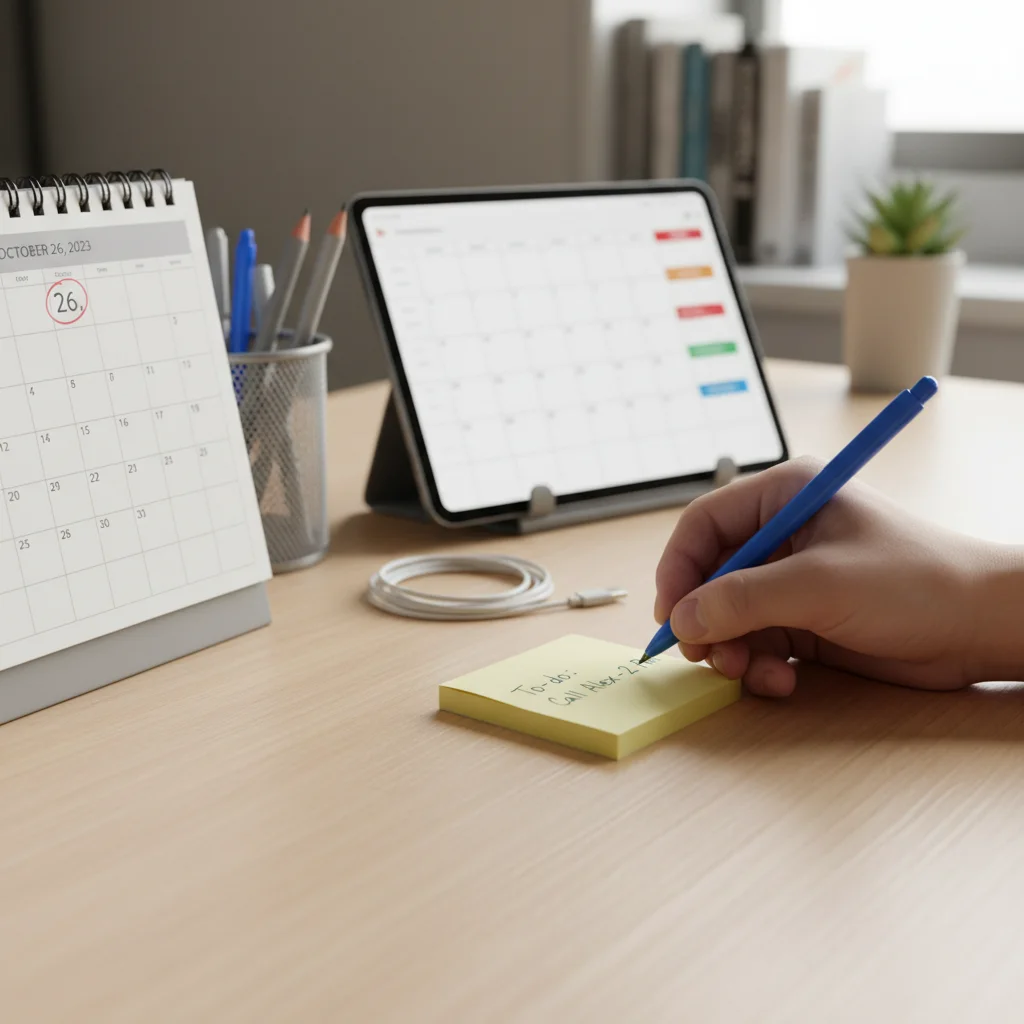
- Use Reminders: Set a subtle reminder (e.g., a sticky note, a desktop background) to ‘Do it now if it takes < 2 min.’
Over time, the immediate action will become second nature, requiring less conscious effort and becoming an ingrained part of your routine. This is where the true power of the two-minute rule productivity lies.
The Long-Term Benefits of the Two-Minute Rule
While the immediate benefits of tackling small tasks are apparent, the long-term impact of consistently applying the two-minute rule productivity extends far beyond just a tidier desk or a clearer inbox. It cultivates a mindset that fosters greater overall efficiency and well-being.
Reduced Procrastination and Increased Momentum
One of the most significant long-term benefits is the drastic reduction in procrastination. By eliminating the ‘small stuff’ as it arises, you prevent it from snowballing into overwhelming mountains. This creates a continuous flow of accomplishment, building momentum that can then be channeled into larger, more complex projects. When you’re not constantly battling a backlog of minor duties, your mental energy is freed up for deeper, more meaningful work.
Lower Stress and Mental Clutter
The mental burden of unfinished tasks, no matter how small, is considerable. Each unread email, unfiled document, or unwashed dish represents an open loop in your mind. These open loops consume cognitive resources, contributing to stress, anxiety, and a feeling of being perpetually behind. The two-minute rule productivity systematically closes these loops, reducing mental clutter and creating a sense of calm and control. This reduction in cognitive load allows for clearer thinking and improved focus.

Enhanced Focus and Concentration
When your environment is organized and your mental space isn’t cluttered with pending minor tasks, your ability to focus on high-priority work dramatically improves. You’re less likely to be interrupted by a nagging thought about that quick email you need to send or the bill you need to pay. The two-minute rule productivity creates a foundation of order that supports deeper concentration and more effective work sessions.
Increased Self-Efficacy and Confidence
Every time you successfully apply the two-minute rule, you reinforce your belief in your ability to get things done. These consistent small victories build self-efficacy and confidence. You begin to see yourself as someone who takes action, who is organized, and who is in control of their responsibilities. This positive self-perception can spill over into other areas of your life, empowering you to tackle bigger challenges with greater assurance.
More Time for High-Impact Work and Leisure
By preventing the accumulation of small tasks, you effectively ‘save’ time that would otherwise be spent dealing with a large, daunting backlog. This reclaimed time isn’t just about efficiency; it’s about freedom. You can allocate this extra time to high-impact work that truly moves the needle, strategic planning, creative endeavors, or simply enjoying more leisure time without the guilt of unfinished business looming over you. The two-minute rule productivity is not just about doing more; it’s about doing the right things more efficiently, so you have more time for what truly matters.
Integrating the Two-Minute Rule with Other Productivity Techniques
The beauty of the two-minute rule productivity is its versatility. It doesn’t need to be your sole productivity strategy; rather, it complements and enhances other popular methods. Here’s how it can work in synergy:
Two-Minute Rule and ‘Getting Things Done’ (GTD)
As mentioned, the two-minute rule is a cornerstone of David Allen’s GTD methodology. In GTD, after capturing all your ‘stuff,’ you process it by asking: ‘What’s the next action?’ If that next action takes less than two minutes, you ‘Do It’ immediately. This prevents small items from cluttering your ‘Next Actions’ lists and keeps your system lean and effective. The two-minute rule productivity is the first filter for your inbox and your life.
Two-Minute Rule and Time Blocking/Pomodoro Technique
When you’re in a dedicated time block or a Pomodoro session, you want to minimize interruptions. The two-minute rule helps here by ensuring that before you even start a focused block, you’ve cleared out any lingering, quick tasks. If a new two-minute task arises during a focused session, you can quickly decide if it truly needs immediate attention (and can be done within a few seconds) or if it can wait until your next break or a dedicated ‘two-minute task’ slot. This prevents minor tasks from derailing your deep work.
Two-Minute Rule and Prioritization Matrices (e.g., Eisenhower Matrix)
When categorizing tasks as Urgent/Important, Urgent/Not Important, etc., the two-minute rule productivity often applies to tasks that might fall into the ‘Urgent, Not Important’ quadrant, or even some ‘Not Urgent, Not Important’ tasks that are quick to clear. By handling these immediately, you prevent them from becoming ‘Urgent and Important’ due to neglect. It’s a proactive filter that ensures only genuinely complex or time-consuming tasks make it to the more involved prioritization stages.
Two-Minute Rule and Batching
While the two-minute rule advocates for immediate action, it can also work with batching for certain types of tasks. For example, if you have several two-minute emails, you might still batch them together for a quick 10-minute email processing session. However, the rule still applies to individual emails within that batch – if one takes less than two minutes to reply, you still deal with it then and there, rather than letting it linger. It’s about preventing singular quick tasks from being deferred indefinitely.
Common Pitfalls to Avoid When Implementing the Two-Minute Rule
While the two-minute rule productivity is powerful, some common errors can diminish its effectiveness. Being aware of these can help you maintain consistency and maximize its benefits.
Getting Bogged Down by the Timer
As mentioned earlier, don’t obsess over the exact two-minute mark. If you find yourself constantly checking the clock or debating if a task is 1:50 or 2:10, you’re missing the spirit of the rule. The intention is to identify tasks that are so quick they don’t warrant being added to a list. Focus on the ‘quick win’ aspect rather than precise timing.
Using It as an Excuse for Multitasking
The two-minute rule is about single-tasking a very short item, not about context-switching every two minutes. If you’re in the middle of deep work and a two-minute task pops into your head, critically assess if it truly needs immediate attention or if it can wait until your next scheduled break. Constant context switching, even for small tasks, can be detrimental to focus on larger projects.
Letting Two-Minute Tasks Expand
Be vigilant about ‘scope creep.’ A task that starts as a two-minute email reply can quickly turn into a 15-minute research expedition if you’re not careful. Stick to the core task. If it starts to expand beyond the quick-win threshold, stop, capture the larger task, and schedule it for a dedicated time.
Applying It to Tasks That Aren’t Truly ‘Quick Wins’
Not every small task is a two-minute task. Some tasks require a specific tool, information, or context that isn’t immediately available. Trying to force these into the two-minute rule can lead to frustration and incomplete work. Be honest about what truly fits the criteria.
Forgetting to Reintegrate After Interruptions
Life happens, and sometimes you’ll be interrupted by a genuine urgent item. After dealing with the interruption, consciously bring yourself back to the two-minute rule mindset. Don’t let one deviation derail your entire day’s commitment to the rule.
Conclusion: Unlock Your Productivity Potential with the Two-Minute Rule
The two-minute rule productivity is more than just a simple hack; it’s a philosophy for proactive living. By consistently tackling small tasks as they arise, you don’t just clear your to-do list; you clear your mind, build momentum, and cultivate a powerful habit of immediate action. This simple shift can dramatically reduce stress, eliminate procrastination, and free up valuable time and mental energy for the tasks that truly matter.
Imagine a day where your inbox is always manageable, your workspace is consistently tidy, and the nagging feeling of ‘things left undone’ is significantly diminished. This isn’t a pipe dream; it’s the tangible outcome of embracing the two-minute rule productivity. It empowers you to take control of the small details, which in turn, gives you greater control over your entire day.
Start today. Identify one small task that will take you less than two minutes to complete, and just do it. Experience that small burst of accomplishment. Then, look for the next one. With consistent practice, the two-minute rule will become an indispensable tool in your productivity arsenal, helping you to achieve more, stress less, and ultimately, reclaim hours of your week. The power to transform your productivity is literally just two minutes away.