Master the Pomodoro Technique: Boost Focus & Productivity

Master the Pomodoro Technique: Boost Focus & Productivity
In an increasingly distracted world, where notifications constantly vie for our attention and the line between work and personal life blurs, finding effective strategies to maintain focus and maximize productivity is more crucial than ever. Enter the Pomodoro Technique Productivity method, a deceptively simple yet profoundly powerful time management system that has helped millions worldwide reclaim their attention and achieve their goals with greater efficiency. If you’ve ever felt overwhelmed by your to-do list, struggled with procrastination, or found yourself constantly context-switching, the Pomodoro Technique might just be the game-changer you’ve been looking for.
This comprehensive guide will delve deep into the principles of the Pomodoro Technique, exploring its origins, core components, and how you can implement it to transform your work habits. We’ll cover everything from setting up your first Pomodoro session to advanced tips for optimizing the technique for your specific needs, ensuring you can harness its full potential to boost your focus and significantly enhance your overall productivity. Prepare to discover how 25-minute deep work sprints can lead to 2x efficiency and a calmer, more controlled approach to your daily tasks.
What is the Pomodoro Technique? A Brief History and Core Principles
The Pomodoro Technique was developed in the late 1980s by Francesco Cirillo, then a university student struggling with focus and distractions. Frustrated by his inability to concentrate on his studies, Cirillo sought a way to improve his productivity. He settled on a simple kitchen timer, shaped like a tomato (hence the name ‘Pomodoro,’ which is Italian for tomato), and committed to working for short, focused bursts. This humble experiment laid the foundation for one of the most widely adopted time management strategies today.
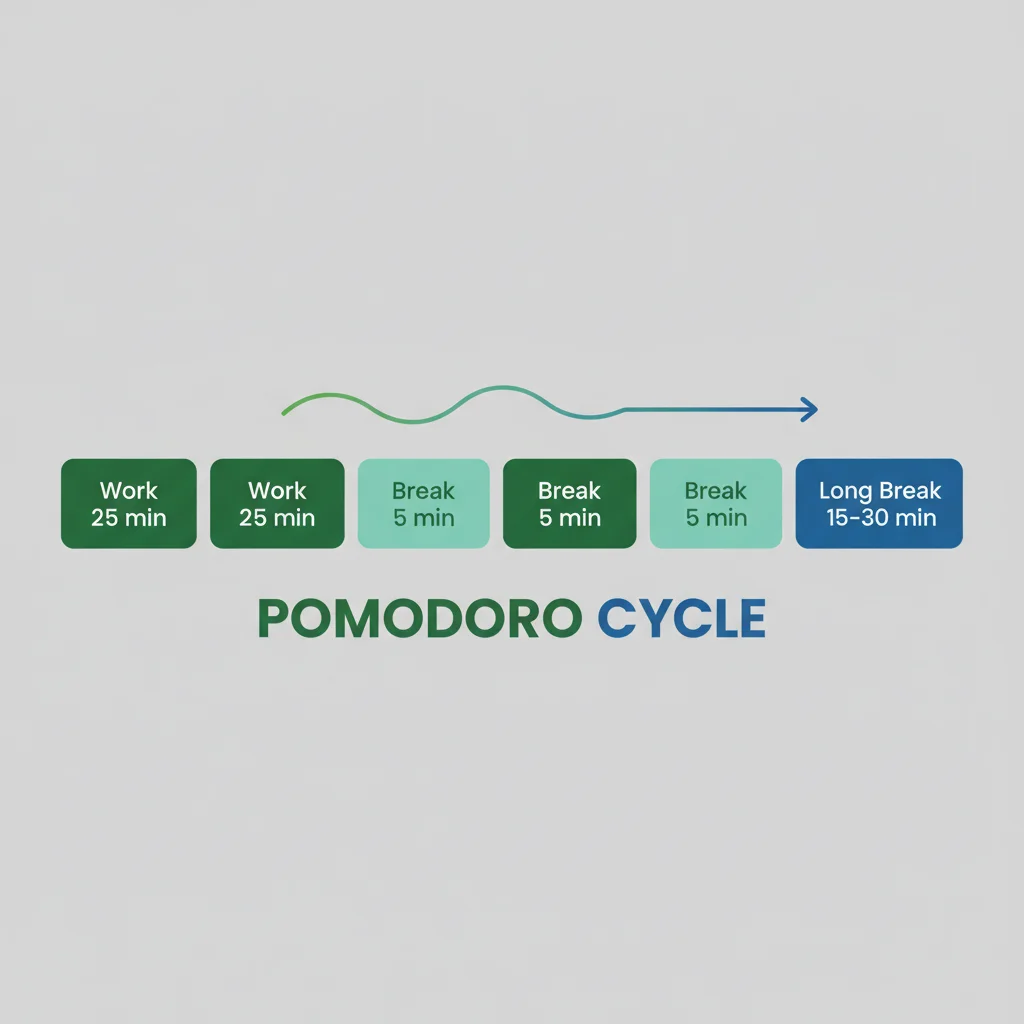
The core principle behind the Pomodoro Technique Productivity method is surprisingly straightforward: break down your work into focused intervals, typically 25 minutes in length, separated by short breaks. Each 25-minute interval is known as a ‘Pomodoro.’ After completing four Pomodoros, you take a longer break. This structured approach helps in several ways:
- Reduces Distractions: By committing to a short, defined period of intense focus, you train your brain to resist interruptions.
- Combats Procrastination: The idea of starting a 25-minute task feels less daunting than tackling a large, undefined project.
- Improves Focus: Regular short breaks prevent mental fatigue and help maintain high levels of concentration throughout the day.
- Enhances Awareness: It provides a clear picture of how much time you’re actually spending on tasks, leading to better planning and estimation.
- Boosts Motivation: Successfully completing each Pomodoro provides a sense of accomplishment, fueling motivation for the next.
The beauty of the Pomodoro Technique lies in its simplicity and adaptability. It doesn’t require complex software or expensive tools; a simple timer and a commitment to focused work are all you need to get started.
Getting Started: The Five Steps of the Pomodoro Technique
Implementing the Pomodoro Technique Productivity method is a straightforward process that can be broken down into five easy steps. Consistency is key, so try to stick to these steps initially before considering any customizations.
Step 1: Choose a Task to Work On
Before you even touch a timer, identify the single most important task or a small group of related tasks you want to accomplish. This could be writing a section of a report, coding a specific feature, studying a chapter, or even cleaning a particular area of your home. The goal is to have a clear objective for your upcoming 25-minute sprint. Avoid multitasking; the essence of the Pomodoro Technique is singular focus.
Step 2: Set Your Timer for 25 Minutes
This is where the ‘Pomodoro’ begins. Grab your kitchen timer, use a dedicated Pomodoro app, or even a simple phone timer. Set it for 25 minutes. This commitment to a fixed, short period is crucial. The ticking sound of a physical timer can even serve as a gentle reminder to stay focused.

Step 3: Work on Your Task Until the Timer Rings
During this 25-minute period, dedicate your entire attention to the chosen task. This means no checking emails, no social media, no answering non-urgent phone calls, and no getting up for snacks. If an urgent thought or another task pops into your head, quickly jot it down on a piece of paper (Cirillo calls this the ‘interruptions log’) and immediately return to your current Pomodoro. The idea is to defer distractions, not eliminate them entirely. Train yourself to ignore everything else until the timer sounds. This uninterrupted focus is where the magic of deep work happens.
Step 4: Take a Short Break (5 Minutes)
Once the timer rings, stop working immediately. Even if you’re in the middle of a sentence or a complex thought, take your break. This short, 5-minute break is vital for mental recovery. Use this time to step away from your work. Stretch, walk around, grab a glass of water, look out the window, or do some light exercise. Avoid activities that engage your brain heavily, like checking social media or emails, as these can negate the restorative effects of the break. The goal is to clear your mind and rest your eyes and brain before the next sprint.
Step 5: After Four Pomodoros, Take a Longer Break (15-30 Minutes)
Repeat steps 2-4 three more times. After you’ve completed four Pomodoros (and three short breaks in between), it’s time for a longer break. This extended break, typically 15 to 30 minutes, is essential for preventing burnout and allowing your brain to truly rest and consolidate information. Use this time to relax, perhaps have a snack, take a short walk, or engage in a non-work-related activity that you enjoy. This longer respite recharges your mental batteries, preparing you for another set of focused Pomodoro Technique Productivity cycles.
Optimizing Your Pomodoro Technique: Advanced Tips and Strategies
While the basic steps of the Pomodoro Technique Productivity method are simple, there are numerous ways to optimize it to fit your unique work style and challenges. Once you’ve mastered the fundamentals, consider these advanced tips:
Handling Interruptions Effectively
One of the biggest challenges to deep work is interruptions. The Pomodoro Technique provides a structured way to deal with them:
- Internal Interruptions (e.g., ‘I should check my email’): If a non-urgent thought or task comes to mind, quickly write it down on a ‘to-do later’ list or an ‘interruptions log.’ Then, immediately return your focus to the current Pomodoro. Address these items during your breaks or schedule them for a future Pomodoro.
- External Interruptions (e.g., a colleague asks a question): If it’s truly urgent and cannot wait 25 minutes, pause your Pomodoro, address the interruption, and then decide whether to restart the current Pomodoro or continue from where you left off. If it’s not urgent, politely ask the person to wait until your break, or schedule a time to discuss it later. Communication is key here; let others know you’re using a focus technique.
By consciously acknowledging and deferring interruptions, you train your brain to maintain focus, strengthening your ability to concentrate.
Adjusting Pomodoro Lengths (with caution)
While 25 minutes is the standard, it’s not a rigid rule. Some find 25 minutes too short, especially for tasks requiring longer setup times, while others might find it too long for tasks demanding extreme concentration. You can experiment with slightly longer (e.g., 30-40 minutes) or shorter (e.g., 15-20 minutes) Pomodoros. However, be cautious: making them too long defeats the purpose of frequent breaks for mental refreshment, and making them too short might lead to inefficient context-switching. The key is to find a length that allows for deep focus without leading to burnout.
Planning Your Day with Pomodoros
Before you start your workday, take a few minutes to plan out your Pomodoros. Identify your top 3-5 tasks for the day and estimate how many Pomodoros each might require. This planning phase helps in:
- Prioritization: Ensures you’re working on the most important tasks.
- Realistic Expectations: Helps you understand what you can realistically achieve in a day.
- Motivation: Provides a clear roadmap and a sense of progress as you check off completed Pomodoros.
You can use a simple notebook, a whiteboard, or a digital planning tool to map out your Pomodoro schedule.
Batching Similar Tasks
To maximize efficiency, try to group similar tasks into single Pomodoros. For example, dedicate one Pomodoro solely to answering emails, another to phone calls, and another to creative writing. This reduces cognitive load from switching between different types of tasks and allows you to get into a flow state more easily for specific activities.
Using the Breaks Wisely
The breaks are just as important as the work periods. Don’t underestimate their power. Instead of using breaks to check social media or other distracting activities, engage in truly restorative behaviors:
- Movement: Stand up, stretch, walk a short distance.
- Hydration: Drink water or a non-caffeinated beverage.
- Mindfulness: Take a few deep breaths, look out the window, or practice a short meditation.
- Disconnect: Step away from your screen and give your eyes a rest.
Effective breaks prevent fatigue and help you return to your next Pomodoro feeling refreshed and ready to focus.
Tracking Your Progress
Keep a simple log of your completed Pomodoros. This can be as basic as a tally mark in a notebook or using a dedicated app. Tracking your progress offers several benefits:
- Motivation: Seeing your cumulative effort can be incredibly motivating.
- Insight: Helps you understand how long various tasks actually take, leading to better future estimations.
- Accountability: Encourages you to stick to the technique and be more mindful of your time.
Over time, this data can provide valuable insights into your personal productivity patterns and help you refine your Pomodoro strategy.
Common Pitfalls and How to Avoid Them
While the Pomodoro Technique Productivity method is highly effective, there are common mistakes people make when implementing it. Being aware of these can help you avoid them and get the most out of the technique:
1. Not Sticking to the Timer
The most common pitfall is ignoring the timer. When the timer rings, stop immediately. Don’t tell yourself, "Just one more minute" or "I’m almost done." This undermines the discipline the technique aims to build. Stopping promptly, even mid-sentence, reinforces the commitment to the structure and ensures you get your much-needed break.
2. Skipping Breaks or Making Them Too Short
Breaks are not optional; they are integral to the technique’s success. Skipping breaks or shortening them leads to mental fatigue and burnout. Remember, the breaks are for mental recovery, not for squeezing in more work. Treat your breaks as sacred.
3. Using Breaks for Distracting Activities
As mentioned earlier, using breaks to check social media, emails, or engage in other mentally demanding tasks defeats the purpose. These activities don’t allow your brain to rest. Instead, they often lead to more mental clutter and make it harder to refocus on your next Pomodoro. Opt for genuinely restorative activities.
4. Trying to Multitask During a Pomodoro
The core of the Pomodoro Technique is singular focus. Trying to juggle multiple tasks within a 25-minute sprint will dilute your attention and reduce the effectiveness of the deep work period. Stick to one primary task or a very closely related set of sub-tasks per Pomodoro.
5. Not Planning Tasks Clearly
Starting a Pomodoro without a clear idea of what you want to achieve can lead to wasted time and frustration. Before you set the timer, ensure your task is well-defined and achievable within the 25-minute window. If a task is too big, break it down into smaller, manageable sub-tasks.
6. Being Too Rigid with the Schedule
While structure is important, life happens. Don’t let the Pomodoro Technique become another source of stress. If an unexpected, truly urgent interruption occurs, handle it. You can then choose to restart the current Pomodoro, or simply acknowledge it as a disrupted Pomodoro and move on. The goal is to improve productivity and well-being, not to adhere to a rigid, unyielding schedule at all costs.
7. Forgetting to Log Progress
Initially, tracking your Pomodoros might seem like an extra step, but it provides invaluable data. Forgetting to log your progress means losing insights into your work patterns, task estimation accuracy, and overall productivity trends. Make logging a quick, consistent habit.
Integrating the Pomodoro Technique with Other Productivity Tools and Methods
The Pomodoro Technique Productivity method is highly versatile and can be effectively combined with other popular productivity frameworks and tools to create a personalized system that works best for you.
GTD (Getting Things Done) and Pomodoro
David Allen’s GTD methodology focuses on capturing all tasks, clarifying them, organizing them, reflecting on them, and engaging with them. The Pomodoro Technique fits perfectly into the ‘Engage’ phase of GTD. Once you’ve clarified and organized your tasks using GTD principles, you can use Pomodoros to execute them with singular focus. For instance, when you’re working on your ‘Next Actions’ list, you can assign Pomodoros to each action, ensuring dedicated attention to completion.
Eisenhower Matrix and Pomodoro
The Eisenhower Matrix helps you prioritize tasks based on urgency and importance. Once you’ve identified your ‘Do First’ (urgent and important) tasks, the Pomodoro Technique becomes an excellent tool for tackling these high-priority items with intense focus, ensuring they get the dedicated attention they require.
Task Management Apps and Pomodoro Timers
Many digital task management apps (e.g., Todoist, Trello, Asana, Notion) can be integrated with Pomodoro timers. Some apps even have built-in Pomodoro functionalities. This allows you to keep your to-do lists organized and then use a timer to execute tasks directly from your list. Dedicated Pomodoro apps (like Forest, Focus Keeper, or Marinara Timer) offer additional features like tracking, customizable sounds, and analytics.
Mind Mapping and Pomodoro
Before diving into a complex project, use mind mapping to break it down into smaller, manageable components. Once you have a clear structure, you can then assign Pomodoros to work on specific branches or sections of your mind map, ensuring a structured approach to large tasks.
Deep Work Principles and Pomodoro
Cal Newport’s concept of ‘Deep Work’ emphasizes focused, uninterrupted work on a single task that pushes your cognitive capabilities. The Pomodoro Technique is essentially a structured way to practice deep work. The 25-minute sprints are designed to create an environment conducive to deep concentration, while the breaks prevent mental exhaustion, allowing for sustained deep work throughout the day.
Beyond the Desk: Applying Pomodoro to Daily Life
While often associated with office or study environments, the Pomodoro Technique Productivity framework is incredibly versatile and can be applied to almost any aspect of your daily life where focus and efficiency are desired.
Household Chores
Facing a mountain of laundry, a messy kitchen, or a cluttered garage? Break down these daunting tasks into 25-minute Pomodoros. Dedicate one Pomodoro to folding laundry, another to washing dishes, and perhaps two to organizing a specific cabinet. The short bursts make tedious chores feel more manageable, and the breaks provide a welcome respite.
Learning New Skills
Whether you’re learning a new language, practicing a musical instrument, or mastering a new software, the Pomodoro Technique can be a powerful ally. Dedicate 25-minute sessions to focused practice or study, followed by a short break. This consistent, structured approach to learning helps in better information retention and skill development.
Fitness and Exercise
Struggling to commit to a workout? Use the Pomodoro method. Dedicate a 25-minute Pomodoro to intense exercise, followed by a 5-minute cool-down or rest. This can make workouts seem less intimidating and help you push through with focused effort. You could even use it for specific exercise types, like a 25-minute run or a 25-minute strength training circuit.
Creative Projects
Writers, artists, musicians, and designers often face creative blocks or struggle with sustained focus. The Pomodoro Technique can help. Dedicate 25 minutes to pure creative output – writing, sketching, composing – without self-editing or distractions. Use the breaks to clear your mind or jot down new ideas for the next session. This structured approach can help overcome procrastination and maintain steady creative flow.
Reading and Personal Development
Want to read more books or dedicate time to personal growth? Set a Pomodoro for reading. Twenty-five minutes of focused reading can get you through several pages, and consistency builds up quickly. Use the short breaks to reflect on what you’ve read or make notes.
The key is to remember that the Pomodoro Technique is a tool for managing attention and energy. By applying its principles to various aspects of your life, you can cultivate a more disciplined approach to tasks, reduce mental fatigue, and ultimately achieve a greater sense of accomplishment and control over your time.
The Psychological Benefits of Consistent Pomodoro Use
Beyond the immediate gains in efficiency, consistent application of the Pomodoro Technique Productivity method offers several profound psychological benefits that contribute to overall well-being and sustained productivity.
Reduces Burnout and Mental Fatigue
The structured breaks are the unsung heroes of the Pomodoro Technique. By forcing you to step away from your work every 25 minutes (and longer after four cycles), the technique prevents the cumulative mental fatigue that often leads to burnout. These regular pauses allow your brain to rest, process information, and recharge, ensuring you can sustain high levels of focus for longer periods throughout the day.
Enhances Self-Discipline and Willpower
Every time you resist the urge to check a notification during a Pomodoro, or stop working precisely when the timer rings, you are exercising and strengthening your self-discipline. Over time, this consistent practice builds willpower, making it easier to ignore distractions and stay committed to your tasks, not just during Pomodoros but in all areas of your life.
Boosts Sense of Accomplishment and Motivation
Breaking large tasks into smaller, manageable 25-minute chunks makes them less daunting. Each completed Pomodoro provides a small, immediate win, triggering a sense of accomplishment. These regular feelings of success act as powerful motivators, encouraging you to tackle the next Pomodoro and maintain momentum throughout your workday. This positive feedback loop is crucial for sustained productivity.
Improves Time Awareness and Estimation Skills
By consistently working in timed intervals and tracking your Pomodoros, you develop a much clearer understanding of how long tasks actually take. This improved time awareness helps you to:
- Plan more realistically: You’ll become better at estimating the time required for future tasks.
- Identify time sinks: You’ll notice where your time is genuinely going and where you might be getting sidetracked.
- Reduce procrastination: The ’25 minutes’ often feels less intimidating than an open-ended ‘work on project X.’
Cultivates a Mindful Approach to Work
The Pomodoro Technique encourages mindfulness. During each 25-minute sprint, you are fully present with your task, minimizing mental wandering. During breaks, you are encouraged to step away and clear your mind, fostering a sense of being present and intentional with your time. This mindful approach can reduce stress and improve the quality of your work.
Reduces Anxiety and Overwhelm
Facing a massive project or a seemingly endless to-do list can be incredibly anxiety-inducing. The Pomodoro Technique addresses this by providing a clear, structured path forward. By focusing on just the next 25 minutes, the enormity of the task shrinks, making it feel more manageable and less overwhelming. This systematic approach reduces the mental burden and allows for calmer, more focused execution.
Conclusion: Embrace the Power of Focused Sprints
The Pomodoro Technique Productivity method is more than just a time management tool; it’s a philosophy for cultivating deep focus, reducing distractions, and fostering a healthier relationship with your work. By breaking your day into manageable 25-minute sprints, interspersed with crucial breaks, you empower yourself to achieve sustained concentration, combat procrastination, and significantly boost your overall efficiency.
From its humble beginnings with a kitchen timer, this technique has proven its enduring value in a world constantly battling information overload. Whether you’re a student, a professional, a creative, or simply someone looking to gain more control over their daily tasks, the Pomodoro Technique offers a clear, actionable path to enhanced productivity and reduced stress. Embrace the power of these focused sprints, be consistent with your practice, and watch as your ability to concentrate deepens, your output increases, and your sense of accomplishment soars. Start your first Pomodoro today and unlock a more productive, focused, and balanced version of yourself.