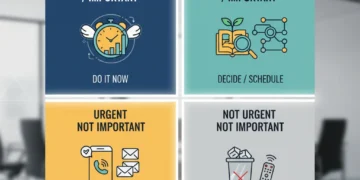
Mastering Time Blocking: A 4-Week Practical Plan to Conquer Procrastination and Meet 2026 Deadlines

Are you constantly battling the clock, feeling overwhelmed by an endless to-do list, or watching deadlines creep closer with a growing sense of panic? If so, you’re not alone. In today’s fast-paced world, effective time management isn’t just a desirable skill; it’s a necessity for professional success and personal well-being. Procrastination, a common adversary, often stems from a lack of clear structure and a feeling of being adrift in a sea of tasks. But what if there was a powerful, yet simple, technique that could transform your approach to productivity, help you conquer procrastination, and ensure you meet your 2026 deadlines with confidence? Enter Time Blocking Plan.
Time blocking is more than just scheduling; it’s a strategic method of carving out specific blocks of time in your calendar for specific tasks or groups of tasks. Instead of just listing what you need to do, you decide *when* you will do it. This proactive approach brings clarity, focus, and a profound sense of control over your day. It turns your vague aspirations into concrete commitments, making procrastination significantly harder to justify.
In this comprehensive guide, we’re not just going to talk about time blocking; we’re going to provide you with a practical, actionable 4-week Time Blocking Plan designed to integrate this powerful technique seamlessly into your life. Whether you’re a student, a busy professional, an entrepreneur, or simply someone looking to reclaim their time, this plan will equip you with the tools and strategies needed to boost your productivity, reduce stress, and ultimately, achieve your ambitious 2026 goals.
We’ll cover everything from understanding the core principles of time blocking to advanced strategies for optimizing your schedule, dealing with interruptions, and building sustainable habits. By the end of this journey, you’ll not only have a robust time blocking system in place but also a newfound mastery over your most precious resource: time. Let’s embark on this transformative journey together and make 2026 your most productive year yet!
Understanding the Power of Time Blocking
Before we dive into the practicalities of our 4-week Time Blocking Plan, it’s crucial to grasp the fundamental philosophy behind time blocking and why it’s so effective. At its heart, time blocking is about intentionality. It forces you to make conscious decisions about how you spend your time, rather than letting your day be dictated by external demands or distractions.
What is Time Blocking?
Imagine your calendar not as a passive record of appointments, but as an active blueprint for your day. Time blocking involves dividing your day into specific blocks of time, with each block dedicated to accomplishing a particular task or set of tasks. During that allocated time, you commit to working only on the designated activity, minimizing distractions and maximizing focus. This is a core tenet of our Time Blocking Plan.
Why is it so Effective?
- Combats Procrastination: When a task has a scheduled slot, it transforms from a vague intention to a concrete appointment. This reduces the mental friction associated with starting tasks, making it harder to put them off.
- Enhances Focus and Reduces Context Switching: By dedicating uninterrupted blocks to single tasks or related tasks, you reduce the cognitive load of switching between different activities. This allows for deeper work and higher-quality output.
- Provides a Realistic View of Your Time: Time blocking reveals how much time you actually have available and helps you set more realistic expectations for what you can achieve in a day or week. This is vital for any effective Time Blocking Plan.
- Reduces Stress and Overwhelm: Knowing exactly what you should be working on at any given moment eliminates decision fatigue and the anxiety of an ever-growing to-do list.
- Protects Your Priorities: Time blocking allows you to proactively schedule time for your most important goals and priorities, ensuring they don’t get sidelined by urgent but less critical tasks.
- Builds Accountability: When you commit a block of time to a task, you create a sense of accountability to yourself, making you more likely to follow through.
The Myth of Multitasking
Many people believe they can effectively juggle multiple tasks simultaneously. However, research consistently shows that true multitasking is a myth. What we perceive as multitasking is actually rapid task-switching, which significantly decreases efficiency, increases errors, and drains cognitive energy. Time blocking, by promoting monotasking, directly counters this detrimental habit and is a cornerstone of our Time Blocking Plan.
By understanding these principles, you’re already laying a strong foundation for success with our Time Blocking Plan. Now, let’s prepare to put this knowledge into action.
Week 1: Foundations & Initial Setup of Your Time Blocking Plan
The first week is all about setting the stage. We’ll focus on understanding your current time usage, defining your priorities, and creating your initial time blocking framework. This foundational work is critical for the long-term success of your Time Blocking Plan.
Step 1: The Time Audit (Days 1-2)
Before you can effectively manage your time, you need to know where it’s currently going. For the next two days, meticulously track every activity you do and how long it takes. Use a simple notebook, a spreadsheet, or an app (like RescueTime or Toggl Track). Be honest with yourself – this is not about judgment, but about awareness.
- Track: Work tasks, meetings, emails, social media, breaks, meals, exercise, personal errands, relaxation, sleep.
- Analyze: At the end of each day, review your log. Where are you spending most of your time? Are there significant time sinks or distractions? Where are your productivity peaks and valleys? This insight is invaluable for building your Time Blocking Plan.
Step 2: Define Your Priorities & Goals (Day 3)
What are your most important goals for the next year, quarter, and especially for the coming weeks? List them out. Then, identify the key tasks that contribute directly to these goals. Distinguish between:
- High-Priority/Deep Work: Tasks that require significant focus and contribute directly to your major goals (e.g., strategic planning, writing a report, coding, creative work).
- Medium-Priority/Shallow Work: Important but less demanding tasks (e.g., responding to emails, administrative tasks, routine meetings).
- Low-Priority/Maintenance: Necessary but non-urgent tasks (e.g., household chores, personal errands, casual browsing).
This clarity will guide your initial Time Blocking Plan.
Step 3: Choose Your Tool (Day 4)
The best tool is the one you’ll actually use. Options include:
- Digital Calendars: Google Calendar, Outlook Calendar, Apple Calendar (highly recommended for their accessibility and reminder features).
- Physical Planners/Notebooks: For those who prefer a tactile experience.
- Dedicated Time Blocking Apps: Fantastical, Sunsama, Clockwise.
For this Time Blocking Plan, we’ll assume you’re using a digital calendar, as it offers the most flexibility for recurring blocks and reminders.
Step 4: Create Your First Time Blocks (Days 5-7)
Now, let’s start blocking! Open your calendar and begin scheduling your week. Don’t aim for perfection; this is an iterative process.
- Fixed Appointments: First, add all your non-negotiable commitments (meetings, appointments, classes).
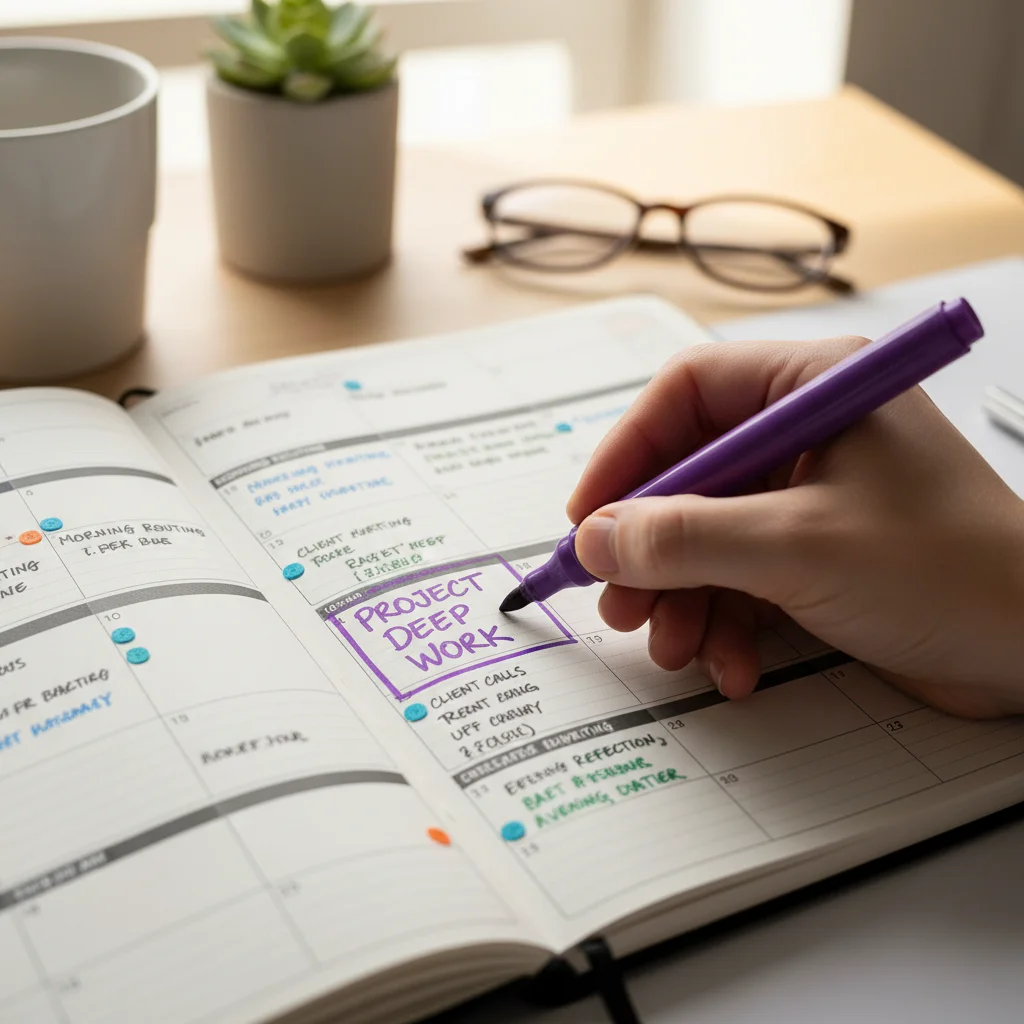
- Deep Work Blocks: Schedule 1-2 blocks (60-90 minutes each) for your highest-priority tasks during your peak productivity times (identified in Step 1). Label them clearly (e.g., "Project X Deep Work").
- Shallow Work/Admin Blocks: Allocate time for emails, administrative tasks, and other routine work. Consider batching these.
- Break & Transition Blocks: Crucial for sustainability! Schedule short breaks (5-15 minutes) every 60-90 minutes, and longer breaks for meals. Include buffer time between tasks or meetings.
- Personal/Self-Care Blocks: Don’t forget exercise, family time, hobbies, and relaxation. These are just as important as work blocks for overall well-being.
- Buffer Block: Schedule a 30-60 minute "flex" block at the end of your day or week for unexpected tasks, spillover work, or planning for the next day/week.
Color-code your blocks for easy visual identification (e.g., red for deep work, blue for meetings, green for personal). This visual cue is a powerful element of your Time Blocking Plan.
Week 2: Refinement & Habit Building with Your Time Blocking Plan
With your initial schedule in place, Week 2 focuses on refining your blocks, addressing common challenges, and beginning to solidify your time blocking habits. This is where your Time Blocking Plan starts to feel more natural.
Step 1: Review and Adjust (Daily)
At the end of each day, review your time blocks. Did you stick to them? Why or why not? Were your estimates accurate? What unexpected events occurred? Adjust your schedule for the following day or week based on these insights. This continuous feedback loop is essential for optimizing your Time Blocking Plan.
Step 2: Tackle Distractions (Days 1-3)
Identify your biggest distractions (e.g., phone notifications, social media, email pings, colleagues). Implement strategies to minimize them during your focused blocks:
- Turn off notifications: Put your phone on silent or ‘Do Not Disturb’.
- Close unnecessary tabs: Use browser extensions to block distracting websites during work blocks.
- Communicate boundaries: Inform colleagues or family about your focus times. Use a "Do Not Disturb" sign if working from home.
- Batch similar tasks: Instead of checking email every 10 minutes, schedule 2-3 specific blocks for email processing.
Step 3: Implement the "Pomodoro Technique" (Days 4-5)
For deep work blocks, consider integrating the Pomodoro Technique: 25 minutes of focused work, followed by a 5-minute break. After four "Pomodoros," take a longer 15-30 minute break. This technique enhances focus and prevents burnout, making your Time Blocking Plan even more effective.
Step 4: Schedule "Unscheduled" Time (Days 6-7)
Paradoxically, scheduling flexibility is crucial. Dedicate a small block of time each day or week for "flex time" or "opportunity blocks." This allows you to handle unexpected tasks, creative bursts, or simply catch up without derailing your entire Time Blocking Plan. It also reduces the pressure to be perfectly productive every single minute.
Week 3: Advanced Strategies & Optimization of Your Time Blocking Plan
By Week 3, you should be feeling more comfortable with the rhythm of time blocking. Now, we’ll introduce advanced techniques to further optimize your schedule and make your Time Blocking Plan a truly powerful asset.
Step 1: Strategic Scheduling of "Energy Blocks" (Days 1-2)
Recall your time audit from Week 1. When are you most energetic and focused? When do you experience dips? Schedule your most demanding, high-priority tasks during your peak energy times. Reserve lower-energy tasks (e.g., administrative work, reading, replying to non-urgent emails) for your dips. Aligning tasks with your natural energy cycles significantly boosts productivity and is a key component of an advanced Time Blocking Plan.
Step 2: Batching and Theming Your Days (Days 3-4)
To further reduce context switching, consider batching similar tasks or theming your days:
- Task Batching: Group similar tasks together (e.g., all client calls on Tuesday morning, all content creation on Thursday afternoon).
- Day Theming: Dedicate entire days to specific types of work (e.g., "Deep Work Monday," "Meeting Tuesday," "Admin Friday"). This strategy is particularly effective for entrepreneurs or those with significant control over their schedule.
Experiment to see what works best for your workflow within your Time Blocking Plan.
Step 3: Handling Interruptions & "Reactive" Tasks (Days 5-7)
Even with perfect planning, interruptions happen. Develop a system for dealing with them:
- The "If-Then" Plan: If an interruption occurs during a focused block, ask yourself: "Is this truly urgent?" If not, defer it to your next "flex time" or "communications block." If it is urgent, quickly resolve it and then immediately return to your scheduled task.
- Dedicated Communication Blocks: Schedule specific times for checking and responding to emails, messages, and calls. Outside these blocks, keep notifications off.
- Delegate or Automate: Can any recurring tasks or interruptions be delegated to someone else or automated with technology?
By proactively addressing interruptions, you maintain the integrity of your Time Blocking Plan.
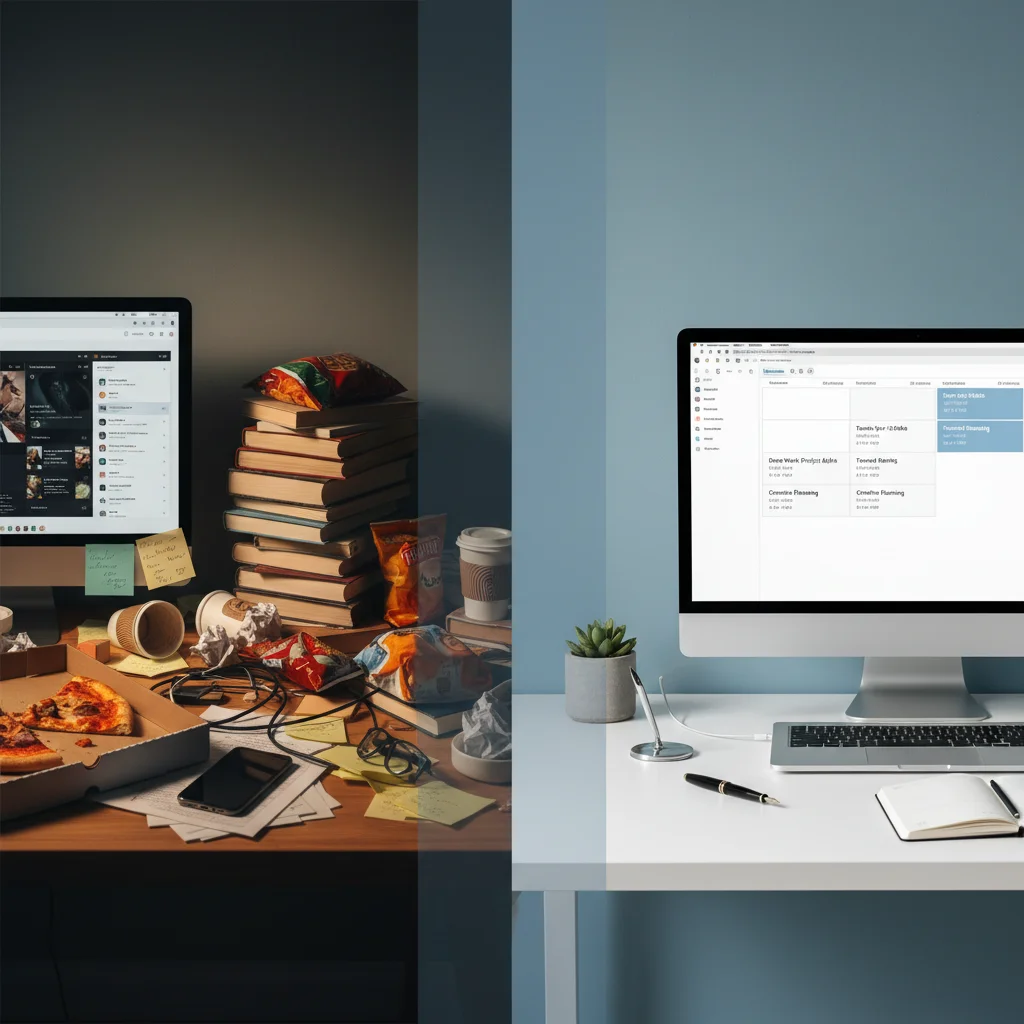
Week 4: Sustaining & Evolving Your Time Blocking Plan
Congratulations! You’ve made significant progress. Week 4 is about solidifying your habits, embracing flexibility, and ensuring your Time Blocking Plan remains a dynamic tool that evolves with your needs.
Step 1: Weekly Review & Planning (Day 1)
Make a weekly review a non-negotiable part of your routine. Dedicate 30-60 minutes, ideally on a Friday afternoon or Sunday evening, to:
- Review the past week: What went well? What didn’t? Why?
- Update your goals: Are your current tasks still aligned with your 2026 objectives?
- Plan the upcoming week: Adjust your time blocks based on new priorities, upcoming deadlines, and lessons learned. This proactive planning is the secret sauce to a resilient Time Blocking Plan.
Step 2: Embrace Flexibility, Not Rigidity (Days 2-3)
Time blocking is a guide, not a dictator. Life happens. Don’t let a disrupted block derail your entire day or week. If a block gets interrupted or you don’t finish a task, simply reschedule it. The goal is to be effective, not perfect. Your Time Blocking Plan should serve you, not the other way around.
Step 3: Incorporate "Future Self" Planning (Days 4-5)
Think about your future self. What tasks can you do today that will make tomorrow easier? Schedule blocks for:
- Proactive Planning: Dedicate time to plan for upcoming projects or significant events well in advance.
- Skill Development: Block time for learning new skills or professional development that will benefit your long-term goals.
- Rest and Recharge: Ensure your schedule includes adequate time for rest, hobbies, and activities that replenish your energy. This prevents burnout and ensures the sustainability of your Time Blocking Plan.
Step 4: Celebrate Small Wins & Stay Motivated (Daily/Weekly)
Acknowledge your progress! Every time you successfully stick to a time block, complete a challenging task, or adapt to an unexpected change, celebrate it. This positive reinforcement will keep you motivated and committed to your Time Blocking Plan. Share your successes with a friend or colleague, or simply take a moment to appreciate your effort.
Tools and Resources to Supercharge Your Time Blocking Plan
While the core of time blocking relies on your commitment and planning, several tools can enhance your experience and make your Time Blocking Plan even more effective:
- Digital Calendars (Google Calendar, Outlook Calendar, Apple Calendar): As mentioned, these are indispensable for creating, color-coding, and managing your time blocks with ease. Their ability to set recurring events and reminders is a game-changer.
- Task Management Apps (Todoist, Asana, Trello, Microsoft To Do): Integrate these with your calendar. Before blocking time, pull tasks from your task manager to ensure you’re scheduling your most important items.
- Focus Apps & Website Blockers (Forest, Freedom, Cold Turkey): These tools help you stay focused during your deep work blocks by blocking distracting websites or apps for a set period.
- Noise-Cancelling Headphones: Essential for creating a distraction-free environment, especially in open-plan offices or noisy home settings.
- Pomodoro Timers (Tomato Timer, Focus Keeper): Simple apps or browser extensions that help you implement the Pomodoro Technique with ease.
- Note-Taking Apps (Evernote, Notion, OneNote): Use these to capture ideas, meeting notes, and task details that arise during your blocks, ensuring you don’t lose information but can return to your main task swiftly.
- Time Tracking Software (RescueTime, Toggl Track): Continue using these periodically to audit your time and ensure your time blocks are being used effectively and to identify areas for further optimization in your Time Blocking Plan.
Experiment with different tools to find what resonates with your workflow and personal preferences. Remember, the tool is there to support your system, not replace it.
Common Pitfalls and How to Avoid Them with Your Time Blocking Plan
As you implement your Time Blocking Plan, you might encounter some common challenges. Being aware of them will help you navigate them effectively:
- Over-scheduling: Trying to block every single minute of your day, leaving no room for flexibility or unexpected events. This leads to frustration and a feeling of failure.
- Solution: Always include buffer time, breaks, and "flex blocks." Aim for 60-70% of your day to be blocked, leaving the rest for unforeseen circumstances.
- Underestimating Task Durations: Consistently scheduling too little time for tasks, leading to blocks spilling over and disrupting subsequent ones.
- Solution: Use your time audit data. For new tasks, add a 20-30% buffer to your initial estimate. With practice, your estimation skills will improve.
- Ignoring Breaks: Skipping scheduled breaks in an attempt to be more productive, leading to burnout and decreased focus.
- Solution: Treat breaks as non-negotiable appointments. Step away from your screen, stretch, grab a drink, or do something enjoyable to recharge.
- Getting Discouraged by Disruptions: Allowing one missed block or unexpected interruption to derail your entire day or week.
- Solution: Practice forgiveness and flexibility. Acknowledge the disruption, adjust your schedule, and get back on track. Don’t let perfection be the enemy of progress.
- Lack of Review: Not regularly reviewing and adjusting your time blocks, causing the system to become outdated or ineffective.
- Solution: Commit to a weekly review. This is your opportunity to learn, adapt, and refine your Time Blocking Plan.
- Lack of Focus During Blocks: Scheduling a block but then getting distracted by notifications, emails, or other tasks.
- Solution: Actively minimize distractions. Turn off notifications, close irrelevant tabs, and communicate your focus times to others. Consider using focus-enhancing apps.
By proactively addressing these pitfalls, you can ensure your Time Blocking Plan remains robust and effective, helping you stay on track towards your 2026 goals.
Conclusion: Your Path to a Productive 2026 with Your Time Blocking Plan
You’ve now completed a comprehensive 4-week journey into mastering the art and science of time blocking. From understanding its core principles to setting up your initial schedule, refining your approach, implementing advanced strategies, and learning to sustain your efforts, you have all the knowledge and tools required to make your Time Blocking Plan a resounding success.
Remember, time blocking is not a rigid cage; it’s a flexible framework designed to empower you. It’s about making conscious choices with your time, aligning your daily actions with your biggest goals, and creating a sense of calm and control amidst the chaos. The aim is not to work more hours, but to work smarter and more intentionally, freeing up time for what truly matters to you.
As you move forward, continue to experiment, adapt, and personalize your Time Blocking Plan. Your needs and priorities will evolve, and your system should too. Embrace the learning process, be patient with yourself, and celebrate every step of progress. By consistently applying the principles outlined in this guide, you will not only conquer procrastination but also gain an unparalleled mastery over your time, ensuring you meet your 2026 deadlines and achieve your most ambitious aspirations.
Start today. Take control of your calendar, take control of your time, and unlock a future filled with productivity, accomplishment, and genuine satisfaction. Your productive 2026 begins now with your personalized Time Blocking Plan!