Pushing Boundaries: US Industry Breakthroughs by 2026
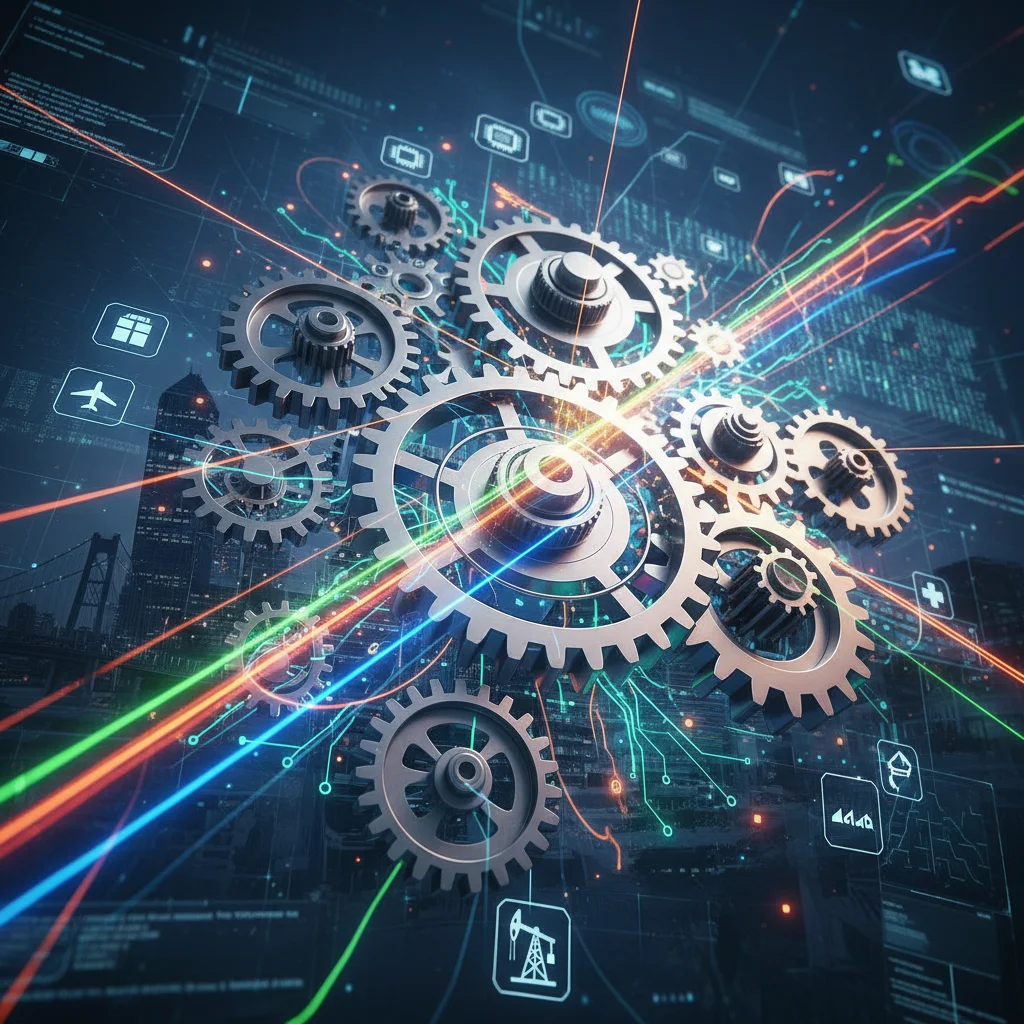
The landscape of American industry is perpetually shifting, driven by an insatiable hunger for progress and a relentless pursuit of efficiency and innovation. As we cast our gaze towards 2026, the potential for groundbreaking transformations is not merely a possibility but a palpable certainty, largely fueled by the courage to ask the unasked questions. These are the inquiries that challenge established paradigms, dismantle conventional wisdom, and ultimately pave the way for unprecedented US industry breakthroughs. This article will explore how this audacious approach is setting the stage for significant advancements across various sectors, redefining what’s possible and solidifying America’s position as a global leader in innovation.
For decades, industries have operated within well-defined boundaries, adhering to proven methodologies and incremental improvements. While this approach has yielded stability, it often stifles the radical thinking necessary for true disruption. The current era, however, demands a different mindset. It calls for a proactive interrogation of every assumption, a willingness to dismantle and rebuild, and an unwavering commitment to exploring uncharted territories. This is precisely where the power of asking the unasked questions lies – in its ability to unlock dormant potential and catalyze revolutionary change. By 2026, we anticipate that this spirit of inquiry will have reshaped numerous American industries, leading to profound and lasting impacts.
The Genesis of Breakthroughs: Challenging the Status Quo
Every significant advancement in human history has been born from a moment of questioning the norm. From the invention of the wheel to the advent of artificial intelligence, progress has always been a direct consequence of refusing to accept the status quo. In the context of US industry breakthroughs, this principle is more relevant than ever. Companies and researchers are increasingly recognizing that the most fertile ground for innovation lies not in refining existing answers, but in formulating entirely new questions.
Consider the pharmaceutical industry, traditionally characterized by lengthy and expensive drug development cycles. The unasked question here might be: ‘Can we bypass traditional animal testing entirely and move directly to human-relevant models?’ This radical inquiry is driving advancements in organ-on-a-chip technology and sophisticated computational modeling, promising to significantly accelerate drug discovery and reduce costs. Similarly, in the energy sector, instead of solely focusing on more efficient fossil fuel extraction, the unasked question could be: ‘How can we achieve true energy independence without any carbon footprint?’ This has spurred monumental investments in fusion research, advanced battery storage, and novel renewable energy sources, pushing the boundaries of what was once deemed theoretical.
This culture of inquiry is not limited to research and development. It permeates operational strategies, supply chain management, and customer engagement. Businesses are asking: ‘What if our entire production line could self-optimize in real-time?’ or ‘How can we predict customer needs before they even articulate them?’ These questions are leading to the widespread adoption of AI-driven analytics, predictive maintenance, and hyper-personalized customer experiences. The drive to answer these fundamental, often uncomfortable, questions is the engine powering the next wave of US industry breakthroughs.
Artificial Intelligence and Machine Learning: The Unseen Architect of Change
Among the most prominent catalysts for future US industry breakthroughs is the exponential growth and integration of Artificial Intelligence (AI) and Machine Learning (ML). These technologies are not just tools; they are transforming the very fabric of industrial operations, decision-making, and product development. By 2026, AI and ML will be deeply embedded in almost every sector, from healthcare and finance to manufacturing and agriculture.
In healthcare, for instance, AI is moving beyond diagnostic assistance. The unasked question is becoming: ‘Can AI not only diagnose but also proactively prevent disease on a population scale?’ This is leading to breakthroughs in personalized medicine, predictive health analytics, and AI-powered drug discovery, where algorithms can analyze vast datasets to identify novel therapeutic compounds and predict their efficacy with unprecedented accuracy. Patients will experience more tailored treatments, and healthcare providers will benefit from enhanced efficiency and diagnostic precision.
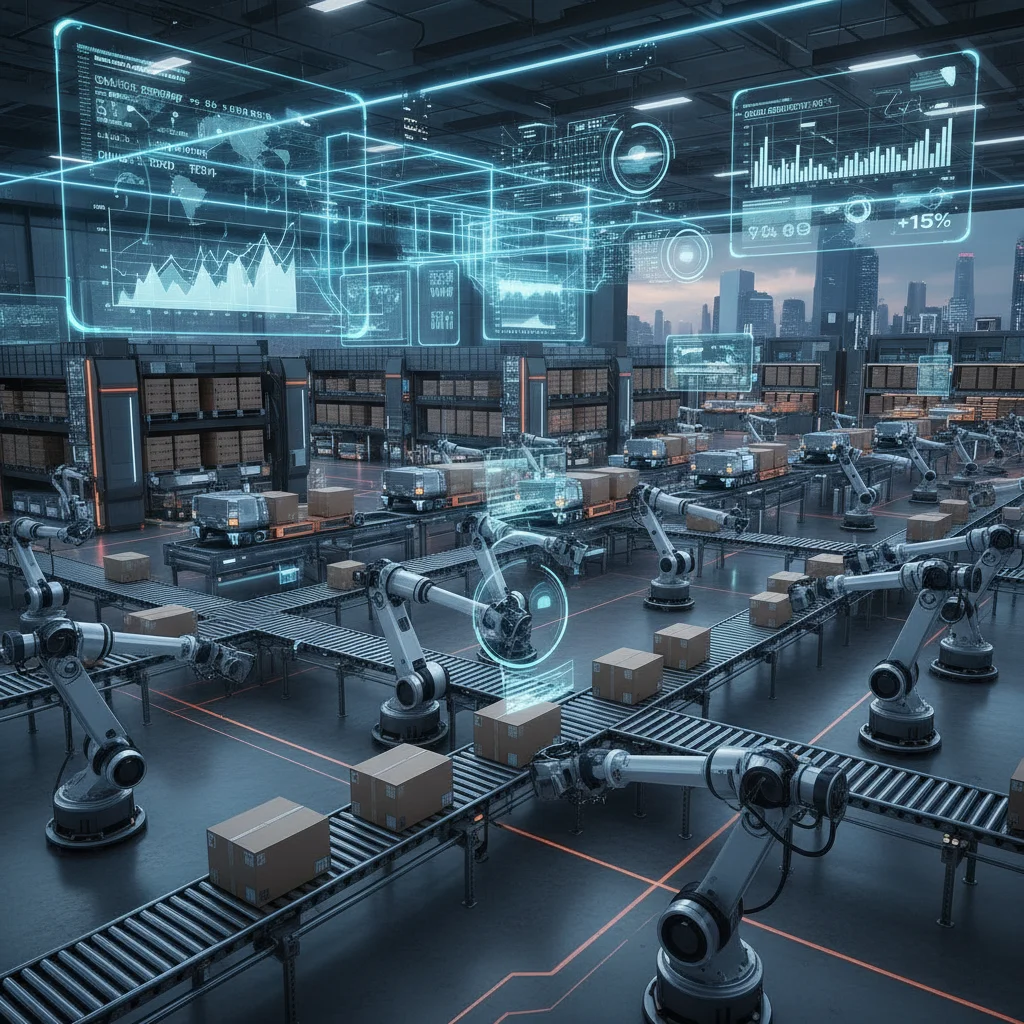
Manufacturing is another sector undergoing a profound metamorphosis. The concept of ‘smart factories’ is rapidly evolving. The unasked question here is: ‘What if manufacturing processes could not only adapt but also innovate autonomously?’ This is pushing the boundaries of generative design, where AI creates optimal product designs based on specified parameters, and self-healing systems that predict and prevent machinery failures before they occur. The result will be hyper-efficient, resilient, and highly adaptable production lines, significantly boosting US competitiveness.
Financial services are also being reimagined. Beyond fraud detection and algorithmic trading, the unasked question is: ‘How can AI democratize complex financial planning and make it accessible to everyone, regardless of wealth?’ This is fueling the rise of AI-driven robo-advisors offering personalized investment strategies, sophisticated risk assessment tools, and blockchain-based financial systems that promise greater transparency and security. These advancements will make financial services more inclusive and responsive to individual needs.
The ubiquity of AI and ML means that the ‘unasked questions’ are being posed and answered at an accelerating pace, leading to a cascade of innovations across the board. These technologies are not just improving existing processes; they are enabling entirely new capabilities that were once confined to the realm of science fiction, making them central to future US industry breakthroughs.
Biotechnology and Personalized Medicine: Tailoring the Future of Health
The biotechnology sector is poised for some of the most profound US industry breakthroughs by 2026, largely driven by a pivot towards personalized medicine and a deeper understanding of human biology. The core unasked question here is: ‘Instead of treating diseases, can we predict, prevent, and even cure them at a genetic or cellular level?’ This fundamental shift in perspective is unlocking revolutionary approaches to healthcare.
Gene editing technologies like CRISPR are moving from experimental stages to clinical applications. Imagine a future where genetic predispositions to debilitating diseases can be corrected before symptoms even manifest. This involves intricate ethical considerations, but the scientific advancements are undeniable. Beyond correction, gene therapies are offering cures for previously untreatable genetic disorders, transforming the lives of patients and their families. This represents a monumental leap from managing symptoms to eradicating the root cause of illness.
The development of advanced diagnostics, including liquid biopsies for early cancer detection and wearable sensors that continuously monitor vital signs and biomarkers, is another area of rapid progress. These tools are enabling a proactive approach to health, allowing for interventions long before a condition becomes critical. The data collected from these devices, combined with AI analytics, will create highly personalized health profiles, guiding preventive care and treatment plans tailored to an individual’s unique biological makeup.
Furthermore, regenerative medicine, which focuses on repairing or replacing damaged tissues and organs, is seeing significant strides. From lab-grown organs to advanced stem cell therapies, the potential to restore function and overcome chronic conditions is immense. These innovations promise to extend healthy lifespans and dramatically improve the quality of life for millions. These advancements are not just incremental improvements; they are paradigm shifts that will redefine healthcare and solidify biotechnology’s role in future US industry breakthroughs.

Sustainable Technologies and Green Initiatives: A New Industrial Revolution
The imperative for sustainability is no longer a niche concern but a driving force behind widespread US industry breakthroughs. As climate change pressures intensify, industries are asking: ‘How can we achieve economic prosperity not just alongside environmental stewardship, but through it?’ This unasked question is sparking a new industrial revolution centered on green technologies and circular economic models.
Renewable energy sources are becoming increasingly efficient and cost-effective. Solar, wind, geothermal, and even nascent tidal energy technologies are seeing rapid advancements. Beyond energy generation, the focus is shifting to energy storage solutions – from advanced battery technologies to hydrogen fuel cells – which are critical for grid stability and widespread adoption. The goal is not just to replace fossil fuels, but to create an entirely new energy infrastructure that is resilient, decentralized, and carbon-neutral.
In manufacturing, the concept of the circular economy is gaining traction. Instead of a linear ‘take-make-dispose’ model, industries are exploring ways to design products for longevity, repairability, and ultimate recyclability. This involves innovative material science, advanced recycling techniques, and business models that prioritize resource efficiency. For example, companies are developing biodegradable plastics from plant-based materials, and creating closed-loop systems where waste from one process becomes a raw material for another.
Agriculture is also undergoing a green transformation. Precision agriculture, powered by IoT sensors, drones, and AI, is optimizing resource use, minimizing waste, and reducing environmental impact. Vertical farming and cellular agriculture (producing meat and dairy in labs) are tackling food security and land use challenges. These innovations are not just about being ‘eco-friendly’; they represent fundamental shifts that enhance productivity, reduce costs, and create new economic opportunities, making them crucial for future US industry breakthroughs.
The Digital Transformation of Infrastructure: Smart Cities and Beyond
Our physical world is becoming increasingly intelligent, thanks to profound digital transformations. The unasked question driving this evolution is: ‘How can our cities and national infrastructure not only support but actively enhance human well-being and environmental sustainability?’ This inquiry is leading to the development of smart cities and resilient, digitally integrated infrastructure, setting the stage for significant US industry breakthroughs by 2026.
Smart city initiatives are integrating IoT devices, advanced sensors, and AI to optimize everything from traffic flow and public safety to waste management and energy consumption. Imagine streetlights that dim when no one is around, smart grids that dynamically balance energy supply and demand, and public transport systems that adapt in real-time to commuter needs. These interconnected systems promise to make urban living more efficient, sustainable, and enjoyable.
Beyond urban centers, the national infrastructure is also being modernized. The development of 5G and soon 6G networks provides the high-speed, low-latency connectivity essential for these smart systems. This advanced connectivity is enabling breakthroughs in autonomous transportation, remote healthcare, and distributed manufacturing. Bridges and roads embedded with sensors can monitor their own structural integrity, predicting maintenance needs before they become critical. This proactive approach ensures greater safety and reduces long-term costs.
The construction industry itself is being transformed by digital tools. Building Information Modeling (BIM), prefabrication, and robotic construction are accelerating project timelines, reducing waste, and improving safety. Digital twins – virtual replicas of physical assets – allow for real-time monitoring, simulation, and predictive maintenance of entire infrastructures, from power plants to transportation networks. These advancements are not just about building faster; they are about building smarter, more resilient, and more sustainable infrastructures that will underpin countless future US industry breakthroughs.
Space Exploration and Commercialization: The New Frontier
Once the exclusive domain of government agencies, space exploration is rapidly being commercialized, opening up an entirely new frontier for US industry breakthroughs. The unasked question that is fueling this rapid expansion is: ‘What if space is not just a destination for scientific inquiry, but a viable economic ecosystem?’ This shift in perspective is driving immense innovation and investment.
Private companies are leading the charge in developing reusable rockets, significantly reducing the cost of launching payloads into orbit. This affordability is democratizing access to space, enabling a proliferation of satellite constellations for global internet, Earth observation, and advanced navigation. These services are vital for everything from precision agriculture to disaster relief and global communication, impacting numerous terrestrial industries.
Beyond Earth orbit, the focus is expanding to lunar and Martian missions, not just for scientific discovery but for resource utilization. Companies are exploring the feasibility of mining asteroids for rare earth metals and water ice, which could be used to fuel further space exploration or even support extraterrestrial settlements. The development of in-situ resource utilization (ISRU) technologies is critical for making long-duration space missions and off-world habitats sustainable.
Space tourism, while still nascent, is another area of significant commercial interest. As technology advances and costs decrease, the idea of civilian space travel could become a reality for a broader segment of the population. This creates new industries around spacecraft design, astronaut training, and orbital habitats. The challenges of operating in space – from extreme temperatures to radiation – are also driving materials science and engineering breakthroughs that have applications back on Earth. The boundless potential of space ensures it will be a fertile ground for US industry breakthroughs for decades to come.
Quantum Computing and Advanced Materials: Redefining the Possible
At the cutting edge of technological innovation, quantum computing and advanced materials are poised to deliver some of the most transformative US industry breakthroughs. These fields are characterized by truly unasked questions that challenge the very laws of physics and materials science. The primary question here is: ‘Can we harness the fundamental properties of matter and energy to solve problems currently deemed intractable?’
Quantum computing, still in its early stages, promises to revolutionize fields like cryptography, drug discovery, and financial modeling. Traditional computers process information as bits (0s or 1s), but quantum computers use qubits, which can be both 0 and 1 simultaneously. This allows them to perform complex calculations at speeds currently unimaginable. By 2026, while widespread commercial quantum computers might still be some years away, significant breakthroughs in quantum algorithms and error correction will pave the way for their eventual integration into critical industrial applications, especially in areas requiring immense computational power for optimization and simulation.
Advanced materials science is equally revolutionary. Researchers are developing materials with unprecedented properties, such as self-healing polymers, super-strong yet lightweight composites, and materials that can harvest energy from their environment. These innovations have applications across a vast array of industries, from aerospace and automotive to electronics and construction. Imagine aircraft that repair themselves in flight, or buildings that generate their own power. Metamaterials, engineered to have properties not found in nature, are opening doors for revolutionary optics, stealth technology, and even seismic protection.
The synergy between quantum computing and advanced materials is particularly exciting. Quantum simulations can design and predict the properties of new materials with incredible precision, accelerating the discovery process. These breakthroughs are not just about incremental improvements; they represent a fundamental redefinition of what is physically and technologically possible, driving the most ambitious US industry breakthroughs of the next decade.
The Human Element: Cultivating a Culture of Inquiry
While technology and scientific advancements are critical, the ultimate driver of US industry breakthroughs is the human element – specifically, a culture that actively encourages and rewards the asking of unasked questions. Innovation doesn’t happen in a vacuum; it flourishes in environments that foster curiosity, embrace risk, and tolerate failure as a learning opportunity.
Educational institutions are playing a vital role in cultivating this mindset, shifting from rote learning to problem-based and inquiry-driven approaches. Companies are also investing heavily in fostering internal innovation ecosystems, offering hackathons, innovation labs, and cross-functional teams dedicated to exploring radical ideas. The emphasis is on psychological safety, where employees feel empowered to challenge assumptions without fear of reprisal. This approach recognizes that the most profound insights often come from unexpected sources and diverse perspectives.
Government policies also have a significant impact. Investments in basic research, tax incentives for R&D, and regulatory frameworks that adapt to new technologies rather than stifle them are crucial for nurturing an environment conducive to breakthroughs. Furthermore, public-private partnerships are accelerating the translation of scientific discoveries into commercial applications, ensuring that cutting-edge research benefits society at large.
By prioritizing a culture of continuous questioning and intellectual bravery, the US is not only fostering individual brilliance but also building a collective capacity for innovation that will ensure a steady stream of US industry breakthroughs well beyond 2026. It’s about empowering every individual, from the factory floor to the research lab, to look beyond the obvious and imagine what could be.
Conclusion: A Future Forged by Bold Questions
The journey towards US industry breakthroughs by 2026 is fundamentally about pushing boundaries and daring to ask the unasked questions. From the transformative power of AI and personalized medicine to the sustainable revolution and the boundless frontier of space, each sector is being reshaped by audacious inquiry. These aren’t just minor adjustments; they are foundational shifts that promise to redefine economic landscapes, improve quality of life, and solidify America’s role as a global leader in innovation.
The ability to look beyond the conventional, to challenge established norms, and to bravely venture into the unknown is the hallmark of true progress. As industries continue to embrace this mindset, fostered by a supportive ecosystem of education, policy, and collaborative spirit, the future is not just bright – it is revolutionary. The breakthroughs we anticipate by 2026 will not merely be technological marvels; they will be testaments to the enduring power of human curiosity and the courage to ask: ‘What if?’ The answers to these questions are already beginning to unfold, promising a future that is more efficient, sustainable, healthy, and interconnected than ever before.