Investing in Innovation: How to Identify High-Growth U.S. Startups in 2026

Investing in Innovation: How to Identify High-Growth U.S. Startups in 2026
The landscape of investment is constantly evolving, with innovation serving as the bedrock of future prosperity. As we look towards 2026, the United States continues to be a hotbed for groundbreaking startups, offering immense potential for investors seeking high returns. Identifying these High-Growth US Startups requires a keen eye, a strategic approach, and a deep understanding of emerging trends and financial indicators. This comprehensive guide will equip you with the knowledge and tools necessary to navigate this exciting, yet challenging, investment arena.
Investing in startups is inherently risky, but the rewards for selecting the right ventures can be transformative. The U.S. market, with its robust venture capital ecosystem, entrepreneurial spirit, and access to advanced technology, remains a prime location for these opportunities. However, not all startups are created equal. The key lies in distinguishing those with genuine high-growth potential from those that are merely speculative. Our focus will be on actionable strategies to identify and evaluate these promising companies, ensuring your investment decisions are well-informed and strategically sound.
The year 2026 presents a unique set of economic and technological circumstances. Post-pandemic shifts, accelerating digital transformation, and a renewed focus on sustainability and artificial intelligence are shaping the next generation of industries. Understanding these macro trends is the first step in pinpointing sectors ripe for disruption and, consequently, for the emergence of High-Growth US Startups.
Understanding the Current Investment Climate for High-Growth US Startups
Before diving into specific identification techniques, it’s crucial to grasp the current investment climate. The past few years have seen fluctuations in venture capital funding, interest rates, and overall market sentiment. While the exuberance of pre-2022 valuations has tempered, this has created a more rational, and arguably healthier, environment for discerning investors. Valuations are becoming more realistic, and due diligence is more rigorous, which benefits those who conduct thorough research.
In 2026, we anticipate a continued emphasis on sustainable business models and profitable growth over mere top-line expansion. Investors are increasingly looking for startups with clear paths to profitability and strong unit economics. This shift means that while innovative ideas are still paramount, their commercial viability and scalability are under greater scrutiny. Geographically, while Silicon Valley remains a powerhouse, other hubs like Austin, Miami, Boston, and New York are also fostering vibrant startup ecosystems, offering diverse opportunities for High-Growth US Startups.
Key Macroeconomic Factors Influencing Startup Growth
- Interest Rates and Capital Availability: Higher interest rates can make debt financing more expensive and impact venture capital deployment. However, it also encourages more disciplined capital allocation by startups.
- Inflation: Inflation can affect a startup’s cost of goods sold, operational expenses, and consumer purchasing power. Identifying startups with strong pricing power or cost efficiencies becomes vital.
- Regulatory Environment: Changes in regulations, particularly in sectors like AI, fintech, and biotech, can significantly impact a startup’s trajectory. Staying abreast of these developments is crucial.
- Geopolitical Stability: Global events can influence supply chains, market access, and investor confidence, indirectly affecting U.S. startups.
Understanding these factors provides a foundational context for evaluating the potential success of High-Growth US Startups. It’s not just about the product or service; it’s about the environment in which it operates.
Identifying Promising Sectors and Trends for High-Growth US Startups
The first step in identifying high-growth startups is to pinpoint the sectors that are poised for significant expansion. In 2026, several key trends are expected to drive innovation and create fertile ground for new ventures.
Emerging Technologies and Their Investment Potential
- Artificial Intelligence (AI) and Machine Learning (ML): AI continues to be a dominant force, with applications expanding far beyond initial expectations. Look for startups leveraging AI in specialized domains like personalized medicine, advanced robotics, autonomous systems, and generative AI for content creation and design. The ethical considerations and regulatory frameworks around AI will also be critical areas for innovation.
- Biotechnology and Life Sciences: Advances in gene editing (CRISPR), personalized therapeutics, bioinformatics, and digital health are transforming healthcare. Startups in these areas addressing unmet medical needs or improving healthcare delivery are prime candidates for high growth.
- Sustainable Technologies (CleanTech/GreenTech): With increasing global focus on climate change, startups developing solutions for renewable energy, carbon capture, sustainable agriculture, waste management, and circular economy models are experiencing unprecedented demand and investment.
- Cybersecurity: As digital threats become more sophisticated, the need for robust cybersecurity solutions is paramount. Startups offering innovative approaches to data protection, threat detection, and privacy management will continue to see strong growth.
- Fintech and Blockchain: While the cryptocurrency market has matured, blockchain technology’s applications in supply chain management, data security, and decentralized finance (DeFi) are still evolving. Fintech startups focusing on financial inclusion, automated investing, and secure payment solutions remain attractive.
- Space Technology (NewSpace): The commercialization of space, including satellite internet, space tourism, and asteroid mining, is creating a burgeoning industry. Startups in satellite manufacturing, launch services, and space data analytics are worth watching.
- Augmented Reality (AR) and Virtual Reality (VR) / Metaverse: While the metaverse concept is still in its early stages, AR/VR technologies are finding practical applications in training, remote work, entertainment, and retail. Startups building foundational technologies or compelling applications in this space could see significant growth.
By focusing your search within these high-potential sectors, you significantly increase your chances of finding High-Growth US Startups that are aligned with future market needs.
Due Diligence: The Core of Smart Startup Investing
Once you’ve identified promising sectors, the next critical step is rigorous due diligence on individual startups. This involves evaluating multiple facets of the company, from its team to its financial health and market position.
Evaluating the Team and Management
The team is arguably the most crucial factor in a startup’s success. Even the best idea can fail with a weak team, while a strong team can pivot and succeed even with an initial flawed concept. Look for:
- Experience and Expertise: Does the team have relevant industry experience, technical expertise, and a proven track record of execution?
- Complementary Skills: A balanced team with diverse skills (e.g., technical, business development, marketing, finance) is more likely to navigate challenges effectively.
- Passion and Vision: A deep passion for the problem they are solving and a clear, compelling vision for the future are indicators of sustained effort and dedication.
- Adaptability and Resilience: Startups face numerous obstacles. A team’s ability to learn, adapt, and persevere through setbacks is essential.
- Advisory Board: A strong advisory board with industry veterans and strategic thinkers can add significant value and credibility.
Assessing the Product or Service and Market Fit
A great team needs a great product or service that addresses a real market need. Consider:
- Problem Solved: Is the startup addressing a significant pain point or an underserved market? How large is this problem, and how many people or businesses experience it?
- Solution Uniqueness: How innovative and differentiated is the solution? What are its competitive advantages, and how sustainable are they?
- Market Validation: Has the product or service been validated by early customers? Are there testimonials, case studies, or pilot programs demonstrating its value?
- Scalability: Can the product or service be scaled efficiently to reach a large customer base without disproportionate increases in cost?
- Total Addressable Market (TAM): What is the potential market size for this solution? A large and growing TAM indicates significant growth potential for High-Growth US Startups.
Analyzing Financials and Growth Metrics
While early-stage startups may not have extensive financial history, certain metrics are crucial for assessing their health and growth potential.
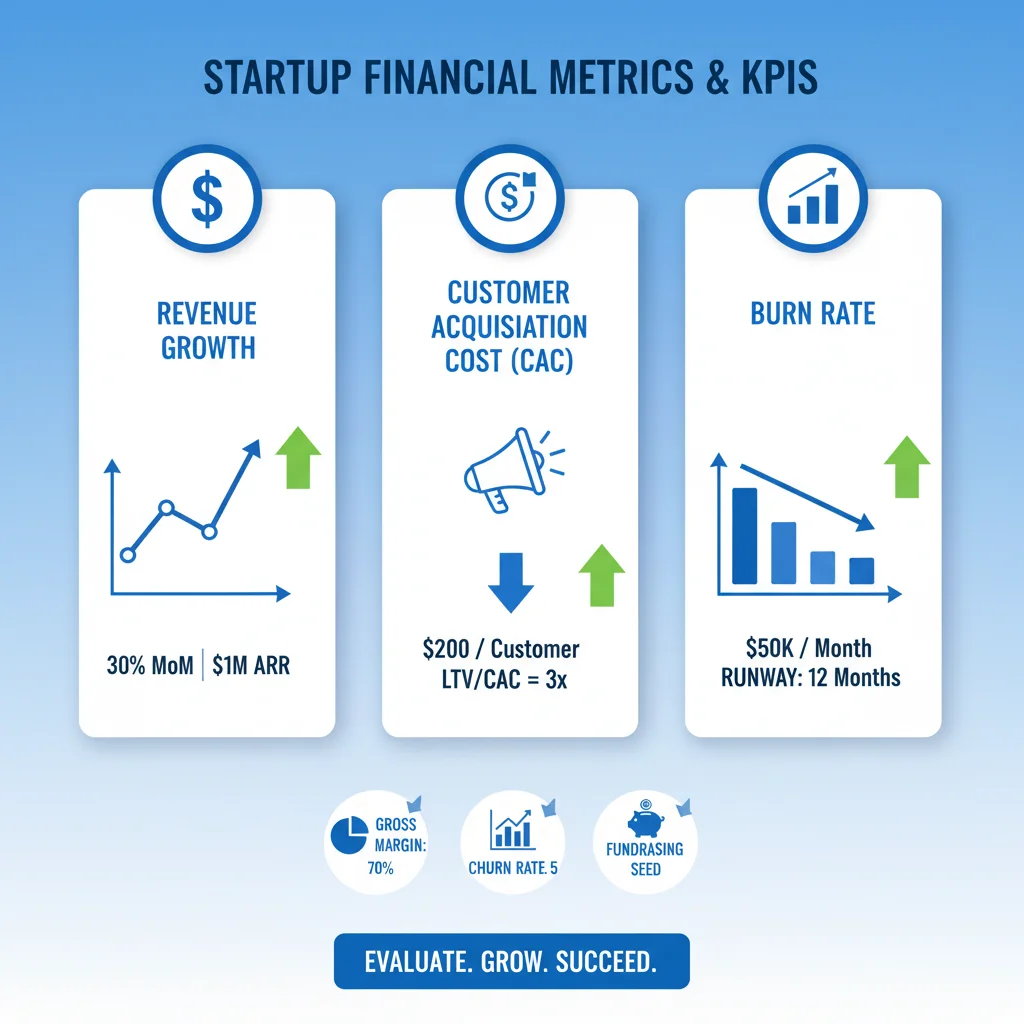
- Revenue Growth: For startups with existing revenue, consistent and accelerating growth is a strong indicator. Look at month-over-month (MoM) or quarter-over-quarter (QoQ) growth rates.
- Customer Acquisition Cost (CAC): How much does it cost to acquire a new customer? A low and decreasing CAC is highly desirable.
- Customer Lifetime Value (LTV): What is the estimated total revenue a customer will generate over their relationship with the company? A high LTV to CAC ratio (e.g., 3:1 or higher) indicates a sustainable business model.
- Churn Rate: The rate at which customers discontinue using the product or service. Low churn is critical for recurring revenue models.
- Burn Rate and Runway: How quickly is the startup spending its cash, and how long can it operate before needing additional funding? A healthy runway provides stability.
- Gross Margins: High gross margins indicate the product or service is profitable at a fundamental level.
- Unit Economics: Understanding the profitability of each unit of product or service sold. Positive unit economics are a prerequisite for scalable profitability.
These financial indicators, even in their early stages, paint a picture of operational efficiency and potential for scalable growth, which are hallmarks of High-Growth US Startups.
Navigating the Investment Landscape: Funding Rounds and Valuation
Understanding the different stages of startup funding and how valuations are determined is crucial for making informed investment decisions.
Stages of Startup Funding
- Pre-Seed/Seed Stage: Initial funding from founders, friends, family, and angel investors to develop the product and achieve market validation. Valuations are often based on potential and team.
- Series A: Typically for startups with a validated product, early revenue, and clear market traction. Venture capital firms begin to get involved. Valuations are based on early metrics and growth potential.
- Series B, C, and Beyond: For more mature startups scaling their operations, expanding into new markets, or developing new products. Valuations become increasingly tied to revenue, profitability, and market share.
As an investor, your entry point into these stages will determine your risk profile and potential returns. Earlier stages offer higher risk but also higher potential returns if the startup succeeds. Later stages offer more stability but potentially lower multiples on your investment.
Understanding Valuation
Startup valuation is more art than science, especially in earlier stages. Common methods include:
- Pre-Money vs. Post-Money Valuation: Pre-money is the company’s value before investment, post-money is after.
- Comparable Company Analysis: Benchmarking against similar companies that have recently raised funding or been acquired.
- Discounted Cash Flow (DCF): Projecting future cash flows and discounting them back to the present. More applicable for later-stage startups with predictable revenue.
- Venture Capital Method: Calculating required return on investment (ROI) at an exit and working backward to determine current valuation.
- Scorecard Method: Comparing the startup to typical seed-stage companies in the region and adjusting valuation based on various factors (team, market, product, etc.).
Be wary of excessively high valuations, especially in early stages, as they can limit future upside and make subsequent funding rounds more challenging. A fair valuation that reflects the startup’s current stage and future potential is always preferable for sustainable growth.
Strategic Approaches to Investing in High-Growth US Startups
Beyond individual startup analysis, consider your overall investment strategy to maximize success and manage risk.
Diversification is Key
Never put all your eggs in one basket. Startup investing is inherently volatile. Diversifying your portfolio across multiple startups, sectors, and stages can mitigate risk and increase your chances of backing a winner. Even experienced angel investors expect only a small percentage of their portfolio to generate outsized returns.
Consider Investment Vehicles
- Direct Investment: Investing directly into a startup, often as an angel investor or through syndicates. This offers more control but requires significant due diligence.
- Venture Capital Funds: Investing in a VC fund allows professional managers to identify and manage a portfolio of startups on your behalf. This provides diversification with less direct effort.
- Crowdfunding Platforms: Platforms like Republic, SeedInvest, and StartEngine allow accredited (and sometimes non-accredited) investors to invest smaller amounts in a wider range of startups.
The Importance of Networking and Deal Flow
Access to quality deal flow is crucial. Attend industry events, join angel investor networks, connect with venture capitalists, and build relationships with incubators and accelerators. These networks can provide early access to promising High-Growth US Startups before they become widely known.
Long-Term Perspective
Startup investing is a long game. It can take 5-10 years, or even longer, for a startup to mature and provide an exit (acquisition or IPO). Patience is a virtue, and capital should be allocated with a long-term horizon in mind.

Potential Pitfalls and How to Avoid Them When Investing in High-Growth US Startups
While the allure of high returns is strong, it’s essential to be aware of the common pitfalls in startup investing.
- Lack of Due Diligence: Rushing into investments without thorough research is a recipe for disaster.
- Over-Reliance on Hype: Don’t be swayed by buzzwords or media attention alone. Validate claims with data and independent analysis.
- Ignoring the Team: A brilliant idea with a dysfunctional or inexperienced team is unlikely to succeed.
- Insufficient Capital: Startups often require more capital than initially projected. Ensure the company has a realistic funding plan and sufficient runway.
- Poor Exit Strategy: Understand how you, as an investor, will eventually realize your returns. Is there a clear path to acquisition or IPO?
- Failure to Diversify: Concentrating all your capital in one or two startups significantly amplifies risk.
- Emotional Investing: Making decisions based on gut feelings rather than data and rational analysis.
By consciously guarding against these pitfalls, you can significantly improve your chances of success in the competitive world of startup investment.
The Role of Government Support and Ecosystems in Fostering High-Growth US Startups
The U.S. government and various non-profit organizations play a significant role in creating an environment conducive to startup growth. Understanding these support structures can also inform your investment strategy.
Government Initiatives and Funding
- Small Business Administration (SBA): Offers various programs, loans, and resources for small businesses and startups.
- National Science Foundation (NSF) and National Institutes of Health (NIH): Provide grants for R&D in critical areas, often leading to spin-off startups.
- Tax Incentives: Certain states and federal programs offer tax breaks for investing in qualifying small businesses or innovative ventures.
Incubators, Accelerators, and University Programs
These organizations are vital for nurturing early-stage High-Growth US Startups. They provide mentorship, resources, office space, and often initial funding. Investing in startups that have successfully completed reputable accelerator programs (e.g., Y Combinator, Techstars) can be a strong signal of quality and potential.
- Mentorship: Access to experienced entrepreneurs and industry leaders.
- Networking: Connections to potential customers, partners, and future investors.
- Validation: The rigorous selection process of top accelerators acts as a form of initial vetting.
Being aware of these support systems can help you identify startups that are not only innovative but also well-supported and connected within the broader entrepreneurial ecosystem.
Looking Ahead: The Future of High-Growth US Startups in 2026 and Beyond
The innovation engine of the United States shows no signs of slowing down. As technology continues to advance at an exponential rate, new opportunities for disruption and value creation will emerge. In 2026, we can expect:
- Increased Specialization: Startups will likely become even more specialized, focusing on niche problems within large markets, leveraging deep expertise.
- Global Integration: While U.S. startups remain a focus, their global footprint and ability to tap into international markets will be increasingly important for sustained high growth.
- Emphasis on Impact: Investors and consumers alike are increasingly seeking companies that not only generate profits but also have a positive social and environmental impact. Startups with strong ESG (Environmental, Social, Governance) frameworks may find it easier to attract capital.
- Hybrid Work Models: The lasting impact of remote and hybrid work will continue to drive innovation in collaboration tools, cybersecurity, and digital infrastructure.
- Data-Driven Decision Making: The ability for startups to collect, analyze, and act upon data will be a critical differentiator. Investors will look for companies that demonstrate sophisticated data strategies.
Staying curious, continuously learning, and adapting your investment thesis to these evolving trends will be paramount for success in identifying the next generation of High-Growth US Startups.
Conclusion: Seizing the Opportunity in High-Growth US Startups
Investing in High-Growth US Startups in 2026 offers an exciting avenue for significant financial returns and the satisfaction of contributing to groundbreaking innovation. Success hinges on a disciplined approach that combines macro-level trend analysis with granular due diligence on individual companies. By focusing on strong teams, validated products addressing large markets, healthy financial metrics, and a diversified portfolio, investors can navigate the inherent risks and unlock the immense potential within the U.S. startup ecosystem.
Remember, the journey of startup investment is a marathon, not a sprint. It requires patience, continuous learning, and a willingness to embrace both successes and setbacks. By applying the strategies outlined in this guide, you can position yourself to identify and capitalize on the most promising High-Growth US Startups and play a part in shaping the future of innovation.