Uncommon Personal Growth: 7 Insights for the Next 12 Months

Beyond the Obvious: 7 Uncommon Insights for Personal Growth in the Next 12 Months
In a world saturated with self-help advice, it’s easy to feel overwhelmed by the sheer volume of strategies promising a better you. From daily affirmations to elaborate goal-setting frameworks, the path to personal growth often feels well-trodden and, at times, repetitive. But what if the most impactful transformations lie not in the obvious, but in the subtle, the overlooked, and the truly uncommon? This article delves into 7 profound and often-missed insights that can catalyze your uncommon personal growth journey over the next 12 months, leading to deeper, more sustainable change.
We’re moving beyond the surface-level tips to explore psychological nuances, counter-intuitive approaches, and shifts in perspective that can redefine your understanding of self-improvement. If you’re ready to embark on a journey that challenges conventional wisdom and unlocks new dimensions of your potential, join us as we uncover these powerful keys to transformative personal development.
1. The Power of Deliberate Discomfort: Embracing the Edge of Your Comfort Zone
Most personal growth advice advocates for expanding your comfort zone. While true, the real magic happens when you deliberately seek out and embrace discomfort. This isn’t about masochism; it’s about strategic exposure to situations that challenge your current limits, both mentally and emotionally. Think of it as strength training for your resilience. If you consistently stay within what feels easy, your growth plateaus. Uncommon personal growth demands a willingness to lean into the awkward, the uncertain, and the challenging.
For the next 12 months, identify one area each quarter where you can intentionally step into discomfort. This could be public speaking if you’re shy, learning a completely new skill that feels daunting, or engaging in difficult conversations you’ve been avoiding. The goal isn’t to succeed perfectly, but to build your capacity to tolerate and navigate discomfort. This practice rewires your brain, teaching it that discomfort isn’t a signal for danger but an opportunity for adaptation and expansion. Over time, what once felt uncomfortable becomes your new normal, and your perceived limits significantly expand. This deliberate approach to challenging your boundaries is a cornerstone of true personal evolution.
Consider the subtle difference: simply waiting for discomfort to find you is reactive. Actively seeking it out is proactive and empowering. It shifts your mindset from avoiding pain to embracing growth. This isn’t about grand gestures; it can be as simple as taking a cold shower for a minute each day, or intentionally choosing the more difficult route during your commute. These small, consistent acts of deliberate discomfort build mental fortitude and a profound sense of self-efficacy, proving to yourself that you are capable of more than you thought.
Furthermore, this practice fosters a deeper understanding of your own triggers and coping mechanisms. When you intentionally place yourself in uncomfortable situations, you gain invaluable insight into how you react under pressure. This self-awareness is critical for developing more effective strategies for managing stress, fear, and uncertainty in all areas of your life. It’s a foundational step towards mastering your emotional landscape, a key component of sustainable uncommon personal growth.
2. The Art of Subtractive Growth: What to Remove, Not Just Add
Our society often champions accumulation: more skills, more possessions, more commitments. While adding can be beneficial, true uncommon personal growth often comes from subtraction. What are you holding onto that no longer serves you? This could be negative thought patterns, toxic relationships, unproductive habits, or even physical clutter that drains your energy.
Over the next year, commit to a quarterly audit of your life. Identify one thing to actively remove or significantly reduce. This isn’t about deprivation; it’s about creating space. When you remove what’s draining you, you automatically create a vacuum that can be filled with more positive, life-affirming experiences and energy. For instance, if you spend an hour daily scrolling mindlessly, removing that habit doesn’t just save time; it frees up mental bandwidth and energy that can be redirected towards more meaningful pursuits. Subtractive growth is about refining your existence, shedding the unnecessary, and focusing on what truly matters.
Think of a sculptor who removes excess material to reveal the masterpiece within. Similarly, by consciously removing distractions, obligations, and beliefs that no longer align with your authentic self, you reveal a clearer, more powerful version of who you are meant to be. This process requires courage and honest self-reflection, as letting go can often be more challenging than acquiring something new. However, the liberation and clarity that follow are unparalleled.
This insight also extends to your mental landscape. How many limiting beliefs or outdated narratives do you carry? Subtractive growth can involve actively challenging and dismantling these internal barriers. By questioning long-held assumptions about yourself and the world, you create mental space for new perspectives and possibilities. This cognitive decluttering is a powerful, yet often overlooked, aspect of fostering profound personal evolution and achieving true uncommon personal growth.
3. Cultivating a ‘Second-Order Thinking’ Mindset: Beyond the Immediate Reaction
Most people react to situations with first-order thinking: what is the immediate consequence? Uncommon personal growth thrives on second-order thinking, which asks: “And then what? What are the consequences of the consequences?” This deeper level of analysis allows you to anticipate outcomes, make more informed decisions, and avoid pitfalls that are obvious only in hindsight.
For example, if you’re offered a promotion that comes with more money but significantly more stress and longer hours (first-order consequence: more money), second-order thinking would ask: “What will the long-term impact be on my health, relationships, and overall happiness? Will the extra money compensate for potential burnout or neglected family time?” This isn’t about overthinking; it’s about thoughtful consideration of downstream effects. Practice this by pausing before making significant decisions, asking yourself not just “What will happen?” but “What will happen because of what just happened?” This foresight is a superpower in personal development, allowing you to steer your life with greater intentionity and wisdom.
Implementing second-order thinking involves developing a habit of critical inquiry. Instead of accepting situations at face value, dig deeper. Ask ‘why’ multiple times. Consider the ripple effects of your actions and choices, not just on yourself, but on your environment and the people around you. This analytical approach sharpens your discernment and helps you to identify potential problems before they escalate, or to recognize hidden opportunities that others might miss.
This mindset also helps in understanding the true nature of challenges. For instance, if you face a setback (first-order), second-order thinking would lead you to ask: “What can I learn from this setback? How can this experience make me stronger or guide me towards a better path?” This reframing transforms obstacles into stepping stones, accelerating your journey towards significant uncommon personal growth.
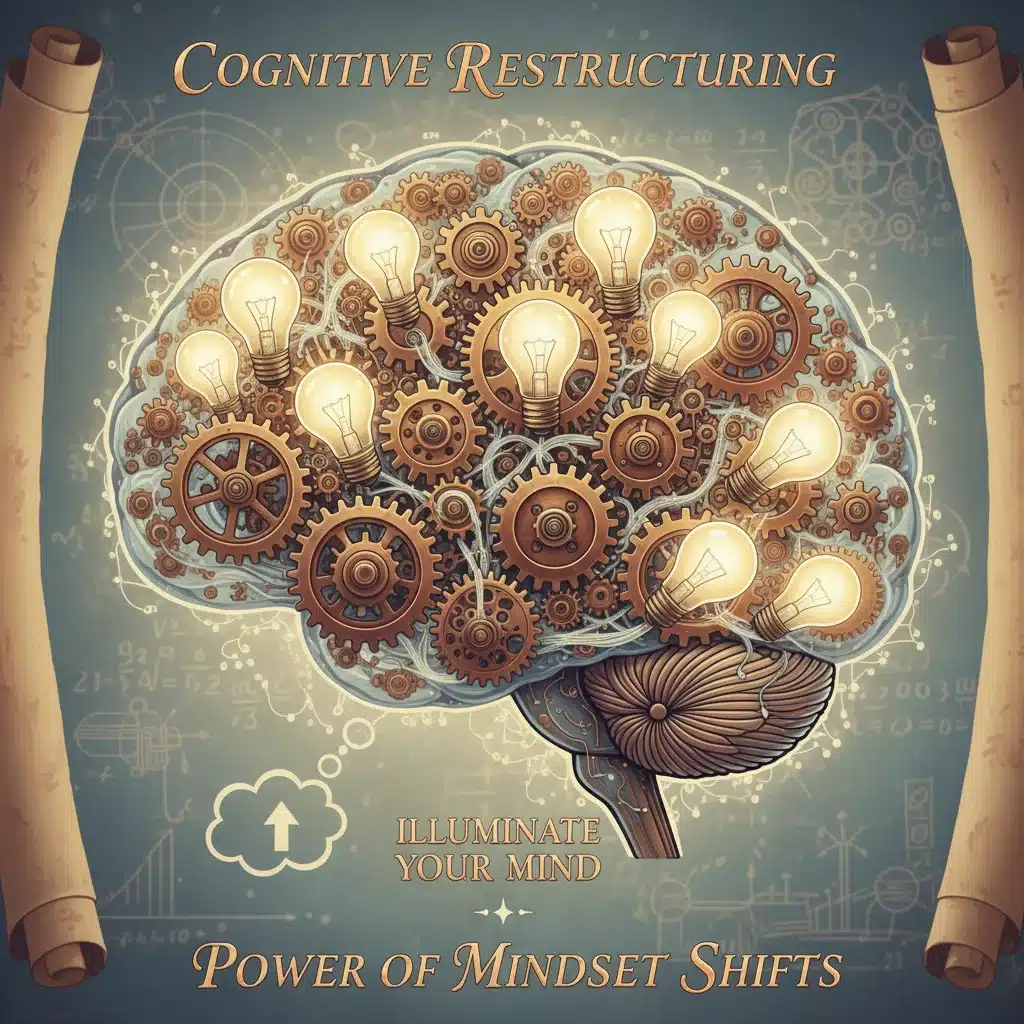
4. The Paradox of Imperfection: Embracing ‘Good Enough’ for Greater Progress
Perfectionism is often lauded as a virtue, but it’s a silent killer of progress. The pursuit of flawlessness can lead to procrastination, paralysis by analysis, and ultimately, stagnation. An insight for uncommon personal growth is to understand and embrace the ‘good enough’ principle. This doesn’t mean settling for mediocrity; it means recognizing that done is better than perfect, especially in the early stages of learning or creating.
Over the next year, challenge your perfectionist tendencies. For projects, tasks, or new skills, aim for 80% completion and then move on or iterate. The act of completing and releasing, even imperfectly, provides invaluable feedback and builds momentum. It’s better to launch an imperfect product and improve it based on real-world feedback than to spend years perfecting something in isolation that never sees the light of day. This principle applies to personal habits too. It’s better to consistently meditate for 5 minutes (good enough) than to aim for an hour and give up after a week because it felt too daunting.
Embracing imperfection fosters psychological flexibility. It reduces the pressure to perform flawlessly, allowing you to experiment, fail faster, and learn more effectively. This iterative approach is far more conducive to rapid growth than a rigid pursuit of an unattainable ideal. It also cultivates self-compassion, as you learn to accept your efforts as valuable even when they aren’t flawless. This shift in perspective can unlock tremendous creative and productive energy that was previously bound by the fear of not being perfect.
Moreover, the ‘good enough’ mindset helps you overcome the fear of judgment. When you release something that isn’t perfect, you build resilience against criticism and learn that your worth isn’t tied to flawless execution. This liberation from external validation is a significant step towards authentic self-expression and genuine uncommon personal growth.
5. The Power of Strategic Boredom: Unlocking Creativity and Deeper Thought
In our hyper-connected world, boredom is often seen as something to be avoided at all costs. We fill every spare moment with scrolling, notifications, or entertainment. However, strategic boredom is a potent, often overlooked tool for uncommon personal growth. When your mind isn’t constantly stimulated, it has the space to wander, connect disparate ideas, solve problems creatively, and engage in deeper self-reflection.
For the next 12 months, intentionally schedule periods of ‘nothingness’. This could be a 15-minute walk without your phone, sitting quietly and looking out the window, or simply letting your mind drift while doing a mundane task. Resist the urge to reach for a device or fill the silence. At first, it might feel uncomfortable or unproductive. But over time, you’ll notice a surge in creative ideas, clearer insights into your problems, and a deeper understanding of your own thoughts and feelings. This ‘idle’ time is where true mental processing and innovation often occur, away from the constant demands of external input.
Strategic boredom is not about being lazy; it’s about purposeful disengagement from external stimuli to allow internal processes to flourish. It’s in these quiet moments that your subconscious mind can work its magic, connecting dots you might not consciously see, and generating novel solutions to challenges you face. This practice enhances your problem-solving abilities and fosters a richer inner life, moving beyond superficial engagement with the world.
By embracing boredom, you also train your attention span and reduce your reliance on constant external validation or distraction. This increased capacity for sustained focus and introspection is invaluable for any form of deep work or meaningful self-exploration, contributing significantly to your journey of uncommon personal growth.
6. The ‘Anti-Goal’ Approach: Focusing on Systems, Not Just Outcomes
Traditional goal-setting is powerful, but it often places too much emphasis on the destination. An anti-goal approach, or more accurately, a systems-first approach, shifts the focus from achieving a specific outcome to building robust, sustainable systems that make the outcome inevitable. This is a subtle yet profound shift for uncommon personal growth.
Instead of saying, “I want to lose 20 pounds,” try “I will build a system where I prepare healthy meals on Sundays and exercise for 30 minutes, 5 times a week.” The weight loss becomes a byproduct of consistently executing the system. Similarly, instead of “I want to write a book,” focus on “I will write 500 words every morning before work.” The book will emerge from the consistent application of the writing system.
Over the next year, identify 1-2 major goals you have. Then, break them down into the daily or weekly systems you need to implement to achieve them. Focus 90% of your energy on adhering to the system, and trust that the outcome will follow. This reduces the pressure associated with hitting specific targets and instead builds powerful, compounding habits that lead to success far beyond any single goal. It’s about becoming the person who naturally achieves those outcomes, rather than just chasing them.
This approach also makes progress less dependent on motivation, which can be fickle. When you have a solid system in place, you rely on discipline and routine, which are far more reliable drivers of long-term change. Furthermore, systems are adaptable; if a system isn’t yielding the desired results, you can tweak the system itself rather than feeling like a failure for not reaching an outcome. This iterative improvement of your systems is a hallmark of sustained uncommon personal growth.

7. The Mirror of Your Relationships: Leveraging Others for Self-Discovery
We often think of personal growth as an internal, solitary journey. However, one of the most powerful and often overlooked catalysts for uncommon personal growth lies in our relationships. The people closest to us—friends, family, colleagues—act as mirrors, reflecting aspects of ourselves that we might not otherwise perceive.
For the next 12 months, consciously engage with your relationships as opportunities for self-discovery. Pay attention to how you react to others, what triggers you, and what qualities you admire or dislike in them. Often, what irritates us in others is a projection of something we dislike in ourselves, or a shadow aspect we haven’t integrated. Conversely, what we admire in others can be a reflection of our own latent potential. Seek feedback from trusted individuals about your blind spots and strengths. This requires vulnerability and a willingness to truly listen, without defensiveness.
By engaging deeply and reflectively with your relationships, you gain invaluable insights into your communication patterns, emotional responses, values, and areas for development. This external perspective, when processed internally, accelerates your understanding of self in ways that solitary introspection often cannot. It transforms your social interactions from mere exchanges into profound learning experiences, making every connection a potential stepping stone on your path to a more integrated and self-aware you.
This insight also encourages you to cultivate relationships that challenge you in constructive ways, rather than only seeking out those who reinforce your existing views. Engaging with diverse perspectives and individuals who hold different beliefs can broaden your own understanding of the world and yourself. This dynamic interplay is crucial for breaking out of cognitive biases and fostering a more nuanced and expansive self-concept, which is essential for deep uncommon personal growth.
Conclusion: Your Year of Uncommon Personal Growth Awaits
The journey of personal growth is lifelong, but the next 12 months offer a unique opportunity to transcend conventional wisdom and embrace truly transformative insights. By deliberately seeking discomfort, practicing subtractive growth, thinking in second-order terms, embracing imperfection, cultivating strategic boredom, focusing on robust systems, and leveraging your relationships for self-discovery, you are not just improving; you are fundamentally evolving.
These 7 uncommon insights are not quick fixes, but rather profound shifts in perspective and practice that, when consistently applied, will lead to deep, sustainable change. The path to uncommon personal growth requires courage, self-awareness, and a willingness to challenge your own assumptions. As you embark on this exciting journey, remember that the most rewarding growth often lies just beyond the obvious. What one insight will you commit to exploring first?