Master Your Mind: Building a Personal Knowledge Management System for 2026

Master Your Mind: Building a Personal Knowledge Management System for 2026
In an era defined by an unprecedented deluge of information, the ability to effectively manage, process, and retrieve knowledge is no longer a luxury—it’s a necessity. As we step into 2026, the concept of a personal knowledge management (PKM) system has become more critical than ever. We’re not just talking about storing files; we’re talking about cultivating a dynamic, interconnected network of insights that fuels your learning, creativity, and decision-making. This comprehensive guide will walk you through the practical steps to build a robust personal knowledge management system tailored for the demands of the modern world.
Think about it: how many times have you stumbled upon a brilliant article, saved it, and then forgotten where it was or why you saved it? How often do you find yourself re-researching topics you’ve already explored? These are common frustrations that a well-designed personal knowledge management system can alleviate. It’s about transforming raw information into actionable knowledge, making it readily available when you need it most, and fostering deeper connections between disparate ideas.
The landscape of information is constantly evolving, with new tools and methodologies emerging regularly. In 2026, the emphasis is on systems that are not only efficient but also adaptable, leveraging AI, automation, and interconnectedness to enhance our cognitive abilities. This article will delve into the core principles of PKM, explore essential tools, and provide a step-by-step framework to help you construct a system that truly serves your unique needs and goals.
What is Personal Knowledge Management (PKM)?
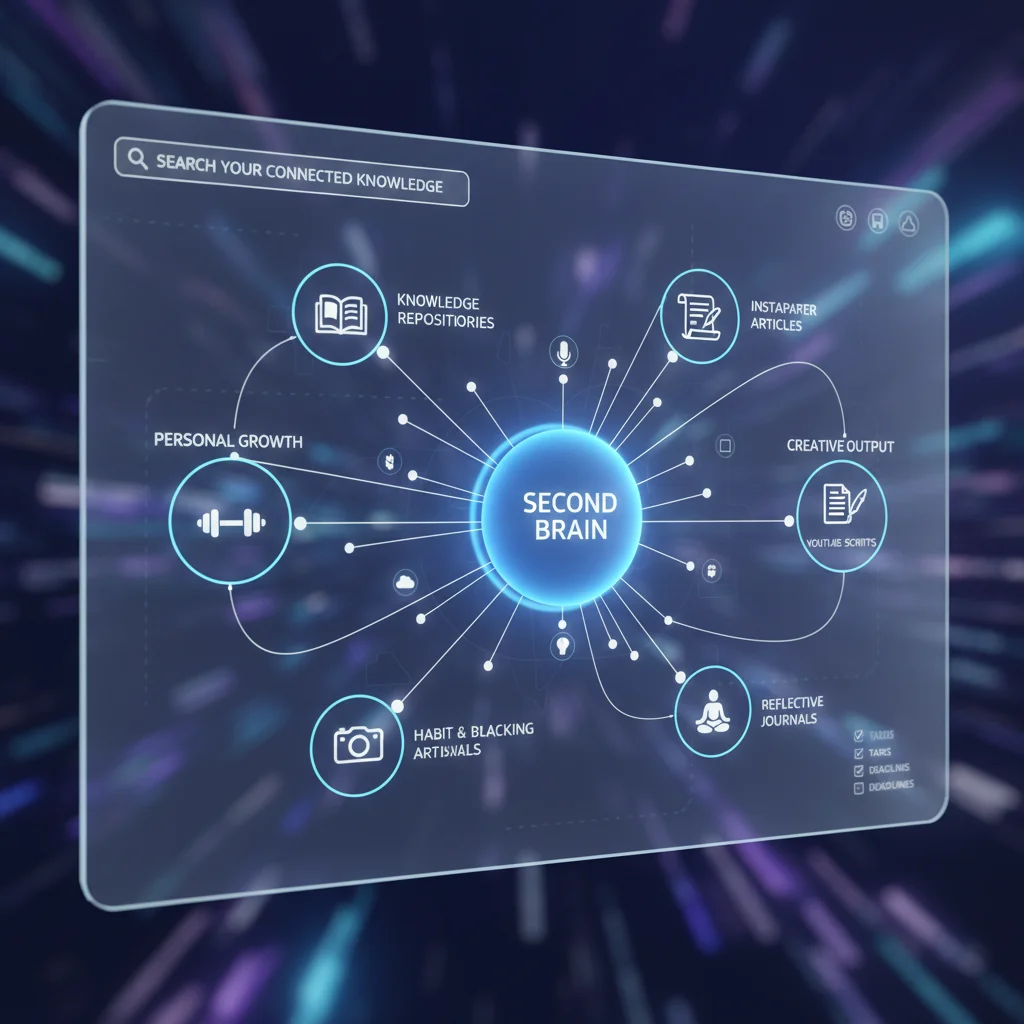
At its heart, personal knowledge management is the process by which an individual collects, categorizes, stores, synthesizes, and retrieves information for personal use. It’s about creating a ‘second brain’—an external system that complements and extends your natural memory and cognitive functions. Unlike traditional information management, PKM is highly personalized, focusing on how you learn, think, and create.
The goal of PKM is not simply to hoard information, but to transform it into valuable knowledge that can be applied to problem-solving, decision-making, and creative endeavors. It’s an active process that involves:
- Capture: Efficiently saving information from various sources (articles, books, meetings, ideas, conversations).
- Organize: Structuring and categorizing this information in a way that makes sense to you, facilitating easy retrieval.
- Synthesize: Connecting disparate pieces of information, identifying patterns, and generating new insights.
- Express: Using your organized knowledge to produce new content, solve problems, and communicate ideas effectively.
- Reflect: Regularly reviewing and refining your system to ensure it remains relevant and effective.
In 2026, PKM systems are increasingly leveraging AI-powered search, natural language processing, and advanced linking capabilities to create a more fluid and intuitive experience. This means less time spent manually categorizing and more time spent connecting ideas and generating insights.
Why is Building a Personal Knowledge Management System Crucial in 2026?
The reasons for investing time in building a robust personal knowledge management system have never been more compelling:
1. Information Overload Mitigation
The digital age brings with it an overwhelming volume of data. Without a system to filter, process, and store relevant information, we risk being drowned in noise. A PKM acts as a personalized filter, allowing you to focus on what truly matters and store it intelligently for future use.
2. Enhanced Learning and Retention
Simply reading an article or watching a video isn’t enough for true learning. A PKM encourages active engagement with information through summarization, annotation, and linking. This active processing significantly improves comprehension and long-term retention, making your learning more effective and durable. By actively integrating new information into your existing knowledge base, you build stronger cognitive connections.
3. Boosted Creativity and Innovation
Creativity often arises from connecting seemingly unrelated ideas. A well-organized personal knowledge management system makes it easier to serendipitously discover these connections. By having a vast, interconnected repository of your thoughts, observations, and research, you create fertile ground for new insights and innovative solutions. It’s like having a personal brainstorming partner available 24/7.
4. Improved Decision-Making
Access to relevant and well-organized information is fundamental to making informed decisions. Whether it’s a personal choice or a professional strategy, your PKM system provides a reliable source of past research, lessons learned, and contextual data, enabling you to make more confident and effective choices.
5. Increased Productivity and Efficiency
Imagine never having to search for that one elusive document or re-read an entire book to find a specific concept. A PKM system dramatically reduces the time spent searching for information, allowing you to allocate more energy to productive work. It streamlines your workflow, reduces cognitive load, and helps you avoid redundant efforts.
6. Future-Proofing Your Knowledge
In a rapidly changing world, skills and knowledge can become obsolete quickly. A dynamic personal knowledge management system allows you to continuously update your understanding, adapt to new trends, and build upon your existing expertise, ensuring your knowledge remains relevant and valuable.
Practical Steps to Building Your Personal Knowledge Management System
Building an effective PKM system is an iterative process, not a one-time setup. Here’s a step-by-step guide to get you started and keep you going:
Step 1: Define Your Goals and Principles
Before diving into tools, understand why you’re building a PKM. What kind of information do you need to manage? What problems are you trying to solve? Are you a student, a researcher, a creative professional, or someone looking to simply organize their life better?
- Identify your core needs: What types of information do you consume most? What do you need to recall frequently?
- Set your principles: Will your system prioritize speed of capture, depth of connection, or ease of retrieval? For example, some people follow the ‘PARA’ method (Projects, Areas, Resources, Archives) for organization, while others prefer a ‘Zettelkasten’ approach for interconnected notes.
- Start small: Don’t try to build the perfect system overnight. Begin with a manageable scope and expand as you become more comfortable.
Step 2: Choose Your Core Tools (The ‘Digital Brain’)
The right tools are essential, but remember, the system is more important than the software. In 2026, the options are diverse, often with AI integration and strong linking capabilities. Here are some popular categories:
A. Note-Taking and Linking Tools:
- Obsidian: A powerful, local-first markdown editor that excels at creating interconnected notes through backlinks, building a ‘graph’ of your knowledge. Highly customizable with a vast plugin ecosystem.
- Roam Research/Logseq: Graph-based note-taking tools that emphasize daily journaling and bidirectional linking, perfect for capturing fleeting thoughts and building connections over time.
- Notion: A versatile workspace that combines notes, databases, wikis, and project management. Excellent for structured information and building complex systems, though less focused on pure graph-based linking than Obsidian or Roam.
- Evernote/OneNote: More traditional, hierarchical note-taking apps good for general capture and organization, often with web clipping features.
B. Read-It-Later Services:
- Pocket/Instapaper: For saving articles, videos, and web pages to read later, often with highlighting and annotation features.
- Raindrop.io: A powerful bookmark manager that can organize links with tags and collections, acting as a central hub for web resources.
C. Reference Managers:
- Zotero/Mendeley: Essential for academics and researchers to manage citations, PDFs, and research papers.
D. Task Managers (Optional, but often integrated):
- Todoist/Things 3/TickTick: For managing actionable items and integrating them with your knowledge base (e.g., linking a task to a relevant note).
Recommendation for 2026: Consider a tool that supports bidirectional linking (like Obsidian or Logseq) as your primary note-taking hub. This feature is revolutionary for making connections and fostering emergent insights within your personal knowledge management system.
Step 3: Develop a Consistent Capture Strategy
The first rule of PKM: capture everything that resonates. Ideas are fleeting, and inspiration can strike anywhere. Your capture strategy should be frictionless.
- Ubiquitous Capture: Have a quick-capture tool readily available on all your devices (phone, computer). This could be a dedicated inbox in your note app, a voice recorder, or a simple text file.
- Web Clipper: Use browser extensions to save articles, highlights, and screenshots directly into your system.
- Voice Notes: Don’t underestimate the power of speaking your thoughts. Transcribe them later or use AI-powered transcription services.
- Physical Notes: If you prefer pen and paper, have a system for digitizing them (e.g., scanning with your phone, retyping key points).
- Inbox Zero for Ideas: Treat your capture inbox like an email inbox. Process it regularly, moving notes to their permanent homes or acting on them.
The key is to reduce friction. The easier it is to capture, the more likely you are to do it consistently. This forms the foundation of your personal knowledge management system.
Step 4: Implement an Organization Framework
This is where your captured information starts to transform into knowledge. Avoid overly rigid hierarchies initially. Think about how you naturally recall information.
Popular Organization Methods:
- PARA Method (Projects, Areas, Resources, Archives):
- Projects: Short-term endeavors with a specific outcome (e.g., ‘Write Blog Post on PKM’).
- Areas: Long-term responsibilities with no end date (e.g., ‘Health’, ‘Finance’, ‘Career Development’).
- Resources: Topics or interests that might be useful in the future (e.g., ‘AI Trends’, ‘Productivity Hacks’).
- Archives: Completed projects or inactive areas/resources.
- Zettelkasten (Slip-box) Method: Focuses on creating atomic, interconnected notes. Each note contains a single idea and is linked to other relevant notes. This method excels at fostering emergent insights and non-linear thinking, making it a powerful approach for developing a deep personal knowledge management system.
- Tags and Keywords: Use a consistent tagging system. Overlap tags where appropriate to create multiple access points to the same information. Avoid tag bloat by keeping your tags concise and relevant.
- Folders (for broad categories): While tags and links are powerful, folders can still serve for very high-level categorization (e.g., ‘Work’, ‘Personal’, ‘Learning’).
Pro-Tip: Don’t over-organize too early. Let your system evolve organically. As you use it, natural patterns will emerge, guiding your categorization. The goal is discoverability, not perfect order.
Step 5: Process and Synthesize Information (The ‘Thinking’ Phase)
This is where the magic happens. Simply storing information isn’t enough; you need to engage with it.
- Progressive Summarization: When reviewing a captured article or note, gradually distill its essence. Start by highlighting, then bolding key sentences, then writing a concise summary in your own words. This deepens understanding and makes retrieval faster.
- Connect Ideas: This is the cornerstone of a powerful personal knowledge management system. Actively look for connections between new information and existing notes. Use bidirectional links to create a web of knowledge. Ask yourself: ‘How does this relate to X?’ or ‘What questions does this answer or raise?’
- Add Your Own Insights: Don’t just copy-paste. Annotate, add your opinions, reflections, and how this information might apply to your life or work. This transforms information into personal knowledge.
- Create ‘Evergreen Notes’: These are notes on fundamental concepts that are timeless and evolve over time. They are the core building blocks of your knowledge base, constantly refined and linked.

Step 6: Regular Review and Refinement
A PKM system is a living entity. It needs regular care to thrive. This step is often overlooked but is crucial for long-term effectiveness.
- Weekly/Monthly Review: Schedule dedicated time to review your captured notes, process your inbox, and make new connections. This helps consolidate learning and prevents backlog.
- Emergent Themes: During reviews, look for recurring themes or areas of interest. These might indicate new ‘Areas’ or ‘Resources’ you need to create in your system.
- Pruning and Archiving: Don’t be afraid to delete or archive information that is no longer relevant. A lean system is an efficient system.
- Experiment with Tools and Workflows: As your needs change and new tools emerge, be open to adjusting your system. The best PKM is one that evolves with you.
- Test Your System: Can you quickly find the information you need? Does it spark new ideas? If not, identify bottlenecks and adjust.
Advanced PKM Strategies for 2026
As your foundational personal knowledge management system matures, consider these advanced strategies:
1. Leverage AI for Semantic Search and Connections
Many modern PKM tools are integrating AI to offer more intelligent search capabilities beyond keywords. They can understand the context and meaning of your notes, suggesting connections you might have missed. Explore tools that offer:
- Semantic Search: Find notes based on meaning, not just exact keywords.
- Automated Tagging/Categorization: AI can help suggest relevant tags or even categorize notes automatically.
- Knowledge Graph Visualization: Tools that visually represent the connections between your notes, allowing for intuitive exploration of your knowledge.
2. Integrate with External Services
Your PKM shouldn’t be an isolated island. Look for tools that integrate seamlessly with:
- Calendar Apps: Link notes to meetings or events.
- Project Management Software: Connect research notes to specific tasks or projects.
- E-readers/Highlighting Tools: Automatically sync your highlights and annotations from books and articles.
- RSS Feeds: Automatically pull in content from your favorite blogs and news sources for quick review.
3. Utilize Templates for Consistency
For recurring note types (e.g., meeting notes, book summaries, project plans), create templates. This ensures consistency in your capture and organization, making it easier to process information later. Templates can include sections for key takeaways, action items, related links, and reflection questions, significantly streamlining your personal knowledge management workflow.
4. Practice Active Recall and Spaced Repetition
While PKM helps store information, active recall and spaced repetition techniques (like those used in Anki) can help embed that knowledge into your long-term memory. Integrate these practices by turning key concepts from your notes into flashcards or self-quizzing prompts. Some PKM tools are starting to incorporate these features directly.
5. Develop a ‘Curatorial Mindset’
Beyond simply collecting, cultivate a mindset of curation. Regularly review your sources, reflect on the quality of information you’re consuming, and actively seek out diverse perspectives. Your PKM system is only as good as the information you feed it.
Common Pitfalls to Avoid
As you build your personal knowledge management system, be mindful of these common traps:
- Analysis Paralysis: Don’t get stuck endlessly researching the ‘perfect’ tool or method. Just start with something and iterate.
- Over-Complication: A complex system that you don’t use is useless. Keep it as simple as possible while still meeting your needs.
- Hoarding vs. Curating: Resist the urge to just dump everything into your system without processing. The value comes from connection and synthesis, not just accumulation.
- Inconsistency: A PKM system thrives on regular engagement. Sporadic use will lead to a messy, ineffective system.
- Fear of Deletion: It’s okay to let go of information that no longer serves you. An overloaded system is hard to navigate.
The Future of Personal Knowledge Management in 2026 and Beyond
Looking ahead, personal knowledge management systems are poised to become even more integrated and intelligent. We can expect:
- More Advanced AI Agents: AI will likely play a larger role in proactively suggesting connections, summarizing content, identifying knowledge gaps, and even generating new ideas based on your existing knowledge base.
- Seamless Multimodal Capture: Easier capture of audio, video, and even real-world observations directly into your system, with AI processing for transcription and content analysis.
- Augmented Reality Integration: Imagine retrieving contextual notes or information simply by looking at an object or location through AR glasses.
- Personalized Learning Paths: PKM systems could evolve into personalized learning companions, guiding you through topics based on your interests and knowledge gaps, leveraging your captured information.
- Enhanced Privacy and Ownership: As AI becomes more prevalent, there will be a greater emphasis on tools that offer robust privacy controls and allow users full ownership of their data.
The journey of building a personal knowledge management system is continuous. It’s an investment in yourself, your learning, and your future. By embracing these practical steps and a growth mindset, you can transform the way you interact with information, unlocking new levels of productivity, creativity, and intellectual mastery in 2026 and for years to come.
Conclusion
Building a robust personal knowledge management system is one of the most impactful investments you can make in your intellectual and professional development. In a world awash with data, the ability to effectively capture, organize, synthesize, and retrieve information is a superpower. By following the practical steps outlined in this guide—defining your goals, choosing the right tools, developing capture and organization strategies, actively processing information, and committing to regular review—you can create a ‘second brain’ that amplifies your cognitive abilities.
Remember, your PKM system is unique to you; it’s a reflection of your evolving interests, learning style, and objectives. Don’t strive for perfection from day one; instead, focus on consistency and iteration. Embrace the journey of continuously refining your system, experimenting with new techniques, and leveraging emerging technologies to make it more intelligent and intuitive. As we navigate the complexities of 2026 and beyond, a well-crafted personal knowledge management system will not only help you stay organized but will also empower you to think more clearly, learn more effectively, and innovate with greater confidence. Start building your knowledge fortress today, and unlock the boundless potential of your own mind.