Master Your Week: The Ultimate Weekly Planning Session Blueprint for Success in 2026

Master Your Week: The Ultimate Weekly Planning Session Blueprint for Success in 2026
In the relentless pace of modern life, where demands on our time and attention seem to multiply daily, the concept of a dedicated weekly planning session has emerged not just as a productivity hack, but as an essential practice for maintaining sanity, achieving goals, and fostering overall well-being. As we look ahead to 2026, the strategic implementation of a robust weekly planning session can be the cornerstone of your success, transforming chaotic weeks into orderly, productive periods. This comprehensive blueprint will guide you through every step, ensuring you harness the full power of this transformative habit.
Many of us start the week with good intentions, only to find ourselves adrift by Wednesday, reacting to urgent tasks rather than proactively working on important ones. This reactive mode is a common pitfall that a well-structured weekly planning session is designed to prevent. By dedicating a specific block of time each week to review, strategize, and organize, you gain clarity, reduce stress, and significantly increase your chances of hitting your targets. This isn’t just about making a to-do list; it’s about crafting a roadmap for your week, aligning your daily actions with your overarching goals and values. The benefits extend beyond mere task completion, impacting your mental health, decision-making abilities, and even your personal relationships.
This article delves deep into the ‘why’ and ‘how’ of a successful weekly planning session. We’ll explore the psychological underpinnings that make it so effective, provide a step-by-step guide to conducting your own session, and offer advanced tips to optimize its impact. Whether you’re a seasoned planner looking to refine your approach or a newcomer eager to embrace a more organized life, this blueprint provides actionable insights to make your weekly planning session a powerful engine for progress in 2026 and beyond.
The Unquestionable Benefits of a Consistent Weekly Planning Session
Before diving into the mechanics, it’s crucial to understand the profound impact a regular weekly planning session can have on your life. This isn’t just about checking off boxes; it’s about intentional living.
Enhanced Clarity and Focus
One of the primary benefits of a weekly planning session is the clarity it brings. When you take the time to review your past week and look ahead, you gain a panoramic view of your commitments, priorities, and aspirations. This bird’s-eye perspective helps you identify what truly matters and eliminate distractions. Without this dedicated time, it’s easy to get caught in the whirlwind of daily tasks, losing sight of your larger objectives. A clear vision for the week acts as a compass, guiding your decisions and ensuring your efforts are directed towards meaningful outcomes. This clarity translates into improved focus, as you’re less likely to be sidetracked by emergent, non-essential tasks.
Reduced Stress and Overwhelm
The feeling of being overwhelmed often stems from a lack of control and an unclear understanding of what needs to be done. A weekly planning session directly addresses this by creating a structured approach to your week. By externalizing your thoughts, tasks, and appointments onto a planner or digital tool, you free up mental bandwidth. This process, known as ‘getting things out of your head,’ significantly reduces cognitive load and the associated stress. Knowing exactly what’s on your plate and having a plan to tackle it instills a sense of calm and confidence, making your week feel manageable rather than daunting. It’s akin to having a well-organized map before embarking on a journey, rather than navigating unfamiliar terrain blindly.
Increased Productivity and Efficiency
It might seem counterintuitive to spend an hour or two planning when you could be ‘doing,’ but this investment of time pays dividends in productivity. A well-executed weekly planning session allows you to strategically allocate your time and energy to the most impactful activities. You can batch similar tasks, schedule focused work blocks, and proactively address potential bottlenecks. This pre-emptive approach minimizes context-switching, a notorious productivity killer, and ensures you’re working on the right things at the right time. The result is not just more work done, but more *meaningful* work done with greater efficiency. You move from a reactive state to a proactive one, dictating your schedule rather than being dictated by it.
Better Goal Achievement
Your larger goals, whether personal or professional, are often achieved through consistent, small steps. A weekly planning session provides the perfect framework for breaking down ambitious goals into manageable, actionable tasks that can be integrated into your weekly schedule. By regularly reviewing your progress and identifying the next immediate steps, you maintain momentum and stay accountable to your long-term vision. This iterative process of planning, executing, and reviewing ensures that your weekly efforts are always aligned with your ultimate aspirations, making goal achievement not just a possibility, but a predictable outcome. It transforms abstract desires into concrete actions, week after week.
Improved Work-Life Balance
In today’s interconnected world, the lines between work and personal life often blur. A weekly planning session offers an opportunity to intentionally schedule time for both. By including personal appointments, family time, hobbies, and self-care activities in your plan, you ensure that these vital aspects of your life don’t get sidelined by professional demands. This intentional allocation of time fosters a healthier work-life balance, preventing burnout and promoting overall well-being. It’s a conscious decision to prioritize all facets of your life, leading to greater satisfaction and fulfillment. This balanced approach is crucial for sustained success and happiness.
The Blueprint: Step-by-Step Guide to Your Weekly Planning Session
Now that you’re convinced of the power of a weekly planning session, let’s walk through the practical steps to implement one effectively. The ideal time for this session is usually Sunday afternoon or evening, or Monday morning before your work truly begins. Consistency is key, so choose a time that you can realistically commit to each week.
Step 1: Set the Stage (5-10 minutes)
Create a conducive environment for your weekly planning session. Find a quiet space where you won’t be interrupted. Gather your tools: your calendar (digital or physical), a notebook or planner, pens, and perhaps a warm beverage. Eliminate distractions by turning off notifications on your phone and computer. This dedicated time is sacred; treat it as such. A calm, focused environment sets the tone for a productive planning session. Consider playing some instrumental music to help you concentrate and relax into the process. The goal is to make this a ritual you look forward to.
Step 2: Review the Past Week (15-20 minutes)
This is a critical, often overlooked, step of the weekly planning session. Reflect on the week that just ended. Ask yourself:
- What went well? Celebrate your successes, big or small. Acknowledging achievements boosts morale and provides positive reinforcement.
- What didn’t go as planned? Identify roadblocks, challenges, or areas where you fell short. Be honest but not overly critical.
- What did I learn? Extract lessons from both successes and failures. How can you apply these learnings to the upcoming week?
- What tasks were left incomplete? Carry over essential tasks to the new week, re-evaluating their priority.
- Did I honor my commitments to myself (e.g., exercise, self-care)? This reflects on your work-life balance.
This review phase provides valuable feedback, allowing you to refine your approach and avoid repeating mistakes. It’s a moment for learning and growth, making your weekly planning session a dynamic process of continuous improvement.
Step 3: Brain Dump Everything (10-15 minutes)
Empty your mind of everything that’s currently occupying your thoughts. Write down every task, idea, appointment, reminder, or concern that comes to mind. Don’t filter or organize at this stage; just get it all out. This includes personal to-dos, work projects, errands, phone calls, emails, and any lingering thoughts. This ‘brain dump’ is a powerful stress reliever and ensures that nothing important is forgotten. It’s the foundation upon which your organized week will be built. Use a dedicated page or section for this, letting your thoughts flow freely without judgment. This step is crucial for clearing mental clutter before you begin to structure your week.
Step 4: Identify Your Big Rocks / Top Priorities (15-20 minutes)
From your brain dump and your long-term goals, identify the 1-3 most important tasks or projects that absolutely *must* get done this week. These are your ‘big rocks’ – the high-impact activities that will move you closer to your most significant goals. Stephen Covey’s analogy of ‘putting the big rocks in first’ is highly relevant here. If you don’t schedule these first, they often get displaced by smaller, less important tasks. These priorities should ideally tie back to your overarching monthly or quarterly goals. Be realistic; attempting too many big rocks will lead to burnout. This step is the heart of your effective weekly planning session, ensuring that your week is purpose-driven.
Step 5: Schedule Your Week (20-30 minutes)
Now it’s time to populate your calendar and planner. Start by scheduling your fixed appointments and meetings. Then, integrate your ‘big rocks’ into specific time slots. Block out dedicated time for these priority tasks, treating them as non-negotiable appointments. Next, add in other important tasks from your brain dump, grouping similar activities together (e.g., all emails, all phone calls). Remember to:
- Batch similar tasks: This reduces context-switching and improves efficiency.
- Time block: Allocate specific time slots for specific tasks.
- Schedule buffer time: Don’t fill every minute. Leave room for unexpected events, breaks, and creative thinking.
- Include personal time: Schedule workouts, family time, hobbies, and relaxation.
- Be realistic: Over-scheduling leads to frustration. It’s better to under-schedule and achieve everything than to over-schedule and fall short.
Visualize your week as you schedule. Where might challenges arise? How can you proactively address them? This detailed scheduling is where your weekly planning session truly comes to life.
Step 6: Create a Daily To-Do List Template (5-10 minutes)
While the weekly plan provides the overview, a daily to-do list offers immediate guidance. Based on your scheduled week, create a preliminary daily to-do list for each day. This doesn’t have to be exhaustive, but it should highlight the key tasks and appointments for each day. You can refine these daily lists each morning, but having a starting point saves time and mental energy. Many find it helpful to identify 3 ‘Most Important Tasks’ (MITs) for each day, ensuring that even if nothing else gets done, these crucial items are completed. This daily touchpoint reinforces the effectiveness of your weekly planning session.
Step 7: Review and Commit (5 minutes)
Once your week is planned, take a moment to review everything. Does it feel balanced? Is it achievable? Does it align with your goals? Make any necessary adjustments. Finally, commit to your plan. Sign off on it, mentally or literally. This commitment transforms your plan from a mere list into a powerful intention. End your weekly planning session feeling confident and ready to tackle the week ahead.
Advanced Strategies for an Optimized Weekly Planning Session
Once you’ve mastered the basics, consider these advanced techniques to elevate your weekly planning session and maximize its impact.
Incorporate Themed Days or Focus Blocks
To reduce context-switching and enhance deep work, consider implementing themed days or focus blocks. For example, dedicate Mondays to strategic planning and meetings, Tuesdays and Thursdays to deep work on major projects, and Fridays to administrative tasks and follow-ups. This approach creates a rhythm for your week, making it easier to get into a flow state and produce high-quality work. When you know what type of work you’ll be doing on a given day, your brain can prepare for it, leading to increased efficiency during your weekly planning session.
Utilize a ‘Parking Lot’ for Non-Urgent Ideas
During your weekly planning session, new ideas or tasks that aren’t immediately relevant to the current week might surface. Instead of letting them derail your focus or get lost, create a ‘parking lot’ or ‘someday/maybe’ list. This allows you to capture these thoughts without committing to them immediately. You can review this list periodically (e.g., monthly) to see if any items have become priorities. This keeps your weekly plan lean and focused while ensuring valuable ideas aren’t forgotten.
Implement the Eisenhower Matrix for Prioritization
The Eisenhower Matrix (Urgent/Important) is an excellent tool for refining your prioritization during your weekly planning session. Categorize tasks into four quadrants:
- Urgent and Important: Do these first. (Crisis, deadlines)
- Important but Not Urgent: Schedule these. (Planning, relationship building, new opportunities)
- Urgent but Not Important: Delegate these. (Some emails, interruptions)
- Not Urgent and Not Important: Eliminate these. (Time wasters, distractions)
Focusing on the ‘Important but Not Urgent’ quadrant is where true progress and proactive work happen, and your weekly planning session is the perfect time to schedule these tasks.
Schedule Proactive Self-Care and Breaks
Don’t just reactively squeeze in self-care when you’re burnt out. Proactively schedule breaks, exercise, meditation, hobbies, and quality time with loved ones during your weekly planning session. Treat these as non-negotiable appointments. Prioritizing your well-being is not a luxury; it’s a necessity for sustained productivity and creativity. A well-rested and balanced individual is far more effective than one running on fumes. This proactive approach to self-care is a hallmark of an intelligent weekly planning session.

Review Your Goals Regularly (Monthly/Quarterly)
While the weekly planning session focuses on the immediate future, it should always be informed by your larger goals. Make it a habit to review your monthly and quarterly goals before or during your weekly session. This ensures that your weekly tasks are always aligned with your long-term vision and prevents you from drifting off course. This regular alignment check is crucial for consistent progress towards your most ambitious targets.
Embrace Flexibility
A plan is a guide, not a rigid prison. While it’s important to commit to your weekly planning session, life happens. Unexpected events, urgent requests, or simply a shift in priorities can necessitate adjustments. Be flexible and willing to adapt your plan as needed. The goal isn’t perfect adherence, but rather a framework that helps you navigate your week effectively. A good plan has built-in flexibility, allowing you to pivot without losing your overall direction. The act of planning itself builds the muscle for adaptability.
Common Pitfalls and How to Avoid Them in Your Weekly Planning Session
Even with the best intentions, several common traps can undermine the effectiveness of your weekly planning session. Being aware of them is the first step to avoiding them.
Over-Scheduling
The most common mistake is trying to cram too much into one week. This leads to burnout, frustration, and a feeling of constant failure. Be realistic about what you can achieve. Remember the 80/20 rule: 20% of your efforts yield 80% of your results. Focus on those high-impact tasks. If you consistently find yourself over-scheduled, review your commitments and learn to say ‘no’ more often. A successful weekly planning session is about quality, not just quantity.
Lack of Review
Skipping the ‘Review the Past Week’ step is a critical error. Without reflection, you miss valuable learning opportunities and risk repeating the same mistakes. The review is what makes your weekly planning session a cycle of continuous improvement rather than just a repetitive task. Dedicate proper time to this crucial stage.
Not Protecting Your Planning Time
Your weekly planning session is an investment in your productivity. Treat it as such. Block out the time in your calendar and guard it fiercely. Don’t let other commitments infringe upon this essential ritual. If you consistently find yourself skipping it, re-evaluate your chosen time or environment. Make it a non-negotiable appointment with yourself.
Ignoring Personal Life and Self-Care
A purely work-focused plan is a recipe for burnout. Neglecting personal appointments, family time, and self-care activities will ultimately impact your professional performance. A holistic weekly planning session integrates all aspects of your life, creating a sustainable and fulfilling schedule. Remember, you are a whole person, not just a worker.
Perfectionism Over Progress
Don’t let the pursuit of the ‘perfect’ plan paralyze you. A good plan executed is infinitely better than a perfect plan never started. Your first few weekly planning sessions might feel clunky, and that’s perfectly normal. Iteration and improvement are part of the process. Focus on making progress, not achieving an unattainable ideal.
Tools and Resources for Your Weekly Planning Session
While the principles of a weekly planning session remain constant, the tools you use can greatly enhance the experience. Choose what works best for your style and preferences.
Digital Tools
- Calendar Apps: Google Calendar, Outlook Calendar, Apple Calendar are essential for scheduling appointments and time blocks.
- Task Managers: Todoist, TickTick, Asana, Trello, Monday.com, Notion are excellent for managing tasks, projects, and deadlines. Many offer robust features for recurring tasks and collaboration.
- Note-Taking Apps: Evernote, OneNote, Apple Notes, Google Keep can be used for your brain dump and capturing ideas.
- Mind Mapping Software: XMind, Miro, MindMeister can help you visually organize complex ideas and projects during your planning session.
Physical Tools
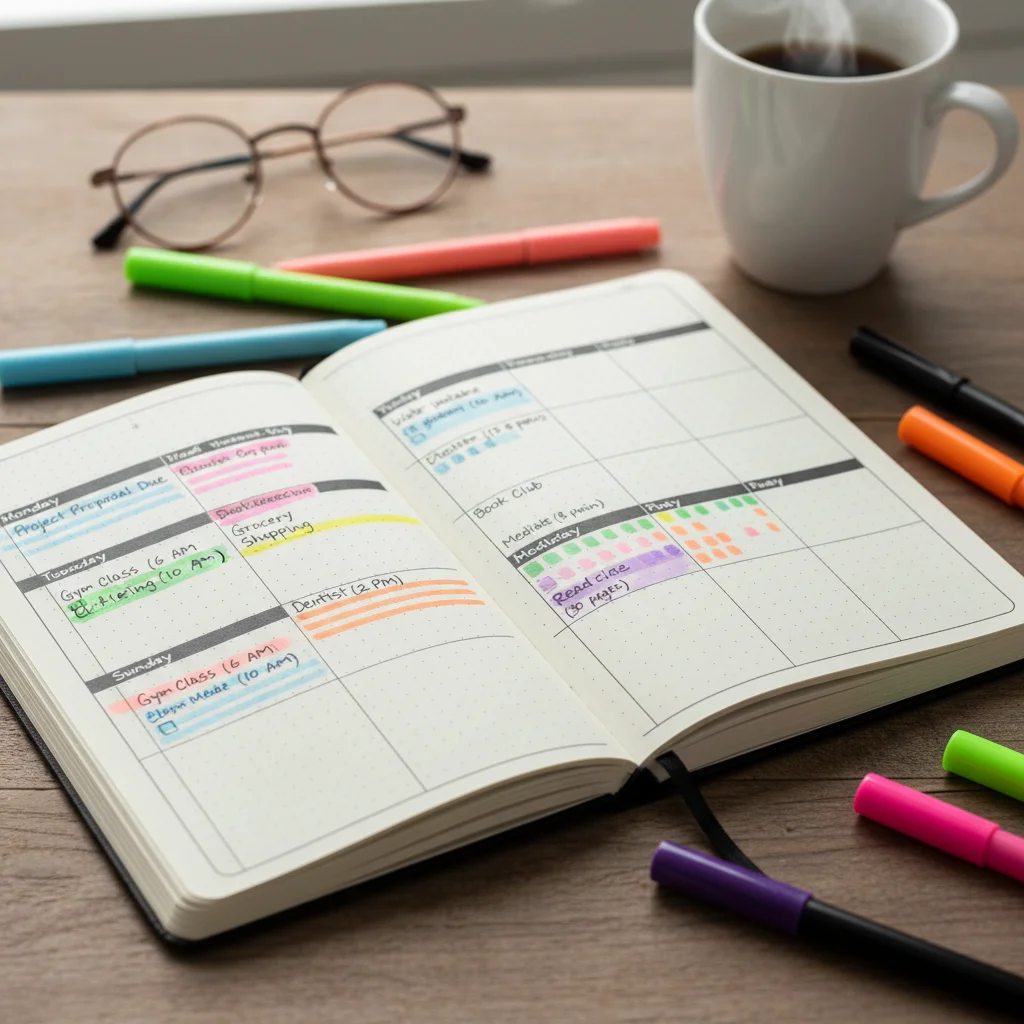
- Planners/Agendas: From Moleskine to specialized productivity planners (e.g., Panda Planner, Passion Planner), a physical planner offers a tactile experience many find beneficial.
- Notebooks: A simple notebook can be incredibly effective for brain dumping, journaling, and free-form planning.
- Bullet Journal: A highly customizable system for planning, tracking, and journaling, allowing you to design your own weekly layout.
- Whiteboards/Sticky Notes: Great for visual thinkers who like to move tasks around physically during their weekly planning session.
The best tool is the one you will consistently use. Don’t get caught up in finding the ‘perfect’ tool; start with something simple and iterate as you discover your needs.
Conclusion: Your Productive 2026 Starts with a Weekly Planning Session
Implementing a consistent and effective weekly planning session is one of the most powerful habits you can cultivate for personal and professional success in 2026. It’s not just about managing your time; it’s about managing your energy, your focus, and your life with intention. By dedicating a small, consistent amount of time each week to review, strategize, and organize, you gain unparalleled clarity, reduce stress, enhance productivity, and move steadily towards your most ambitious goals.
Remember, the goal is progress, not perfection. Start small, be patient with yourself, and refine your process over time. Embrace the power of reflection and proactive scheduling. As you consistently apply the steps outlined in this blueprint, you’ll discover a profound shift in your ability to navigate challenges, seize opportunities, and ultimately, create a life that is both productive and deeply fulfilling. Make your weekly planning session a non-negotiable ritual, and watch as 2026 unfolds into your most successful year yet.
Take the first step today. Block out time in your calendar for your first weekly planning session. Your future self will thank you for it.