
The Reflective Practitioner: How 2 Hours of Weekly Self-Assessment Fuels Personal Growth in 2026
In the relentless pace of 2026, where innovation and change are constants, the ability to adapt and grow is not just an advantage—it’s a necessity. But how do we ensure continuous improvement amidst the demands of our professional and personal lives? The answer, surprisingly simple yet profoundly impactful, lies in dedicated weekly self-assessment. This isn’t about adding another chore to your already packed schedule; it’s about strategically investing two hours each week to supercharge your personal growth, refine your skills, and align your actions with your deepest aspirations.
Imagine a world where you’re not just reacting to circumstances but proactively shaping your future. A world where you consistently learn from your experiences, celebrate your successes, and constructively address your challenges. This isn’t a utopian fantasy; it’s the tangible outcome of integrating regular, structured weekly self-assessment into your routine. In this comprehensive guide, we’ll explore why this practice is more crucial than ever in 2026, delve into effective methodologies, and provide actionable steps to make your two-hour weekly reflection session the most transformative part of your week.
Why Weekly Self-Assessment is Your 2026 Growth Engine
The landscape of work and life is evolving at an unprecedented rate. New technologies emerge daily, industries are disrupted overnight, and the skills required for success are constantly shifting. In such an environment, relying solely on external feedback or annual reviews is akin to navigating a fast-flowing river with an outdated map. Weekly self-assessment provides the real-time feedback loop you need to stay agile, relevant, and on course.
Consider the benefits: you gain clarity on your progress, identify emerging challenges before they escalate, capitalize on unforeseen opportunities, and maintain a strong connection to your long-term goals. This isn’t just about fixing what’s broken; it’s about optimizing what’s working, discovering new strengths, and fostering a mindset of continuous improvement. In 2026, the most successful individuals will be those who master the art of self-reflection and proactive adjustment.
The Power of Proactive Reflection
Many people view reflection as a passive activity, something done in hindsight. However, weekly self-assessment transforms reflection into a proactive tool. By dedicating specific time, you’re not just looking back; you’re looking forward, using past experiences to inform future actions. This proactive approach allows you to:
- Identify Patterns: Recognize recurring successes and challenges, allowing you to replicate positive behaviors and address negative ones systematically.
- Boost Self-Awareness: Understand your motivations, reactions, and strengths more deeply, leading to more authentic and effective interactions.
- Enhance Decision-Making: Make more informed choices by analyzing outcomes and considering alternative approaches.
- Cultivate Resilience: Learn from setbacks without dwelling on them, building a stronger capacity to bounce back.
- Stay Aligned with Goals: Regularly check if your daily actions are contributing to your overarching personal and professional objectives.
Without this structured introspection, it’s easy to get caught in a cycle of busy-ness without true progress. Two hours of weekly self-assessment acts as your personal compass, ensuring you’re always heading in the right direction.
Structuring Your 2-Hour Weekly Self-Assessment Session
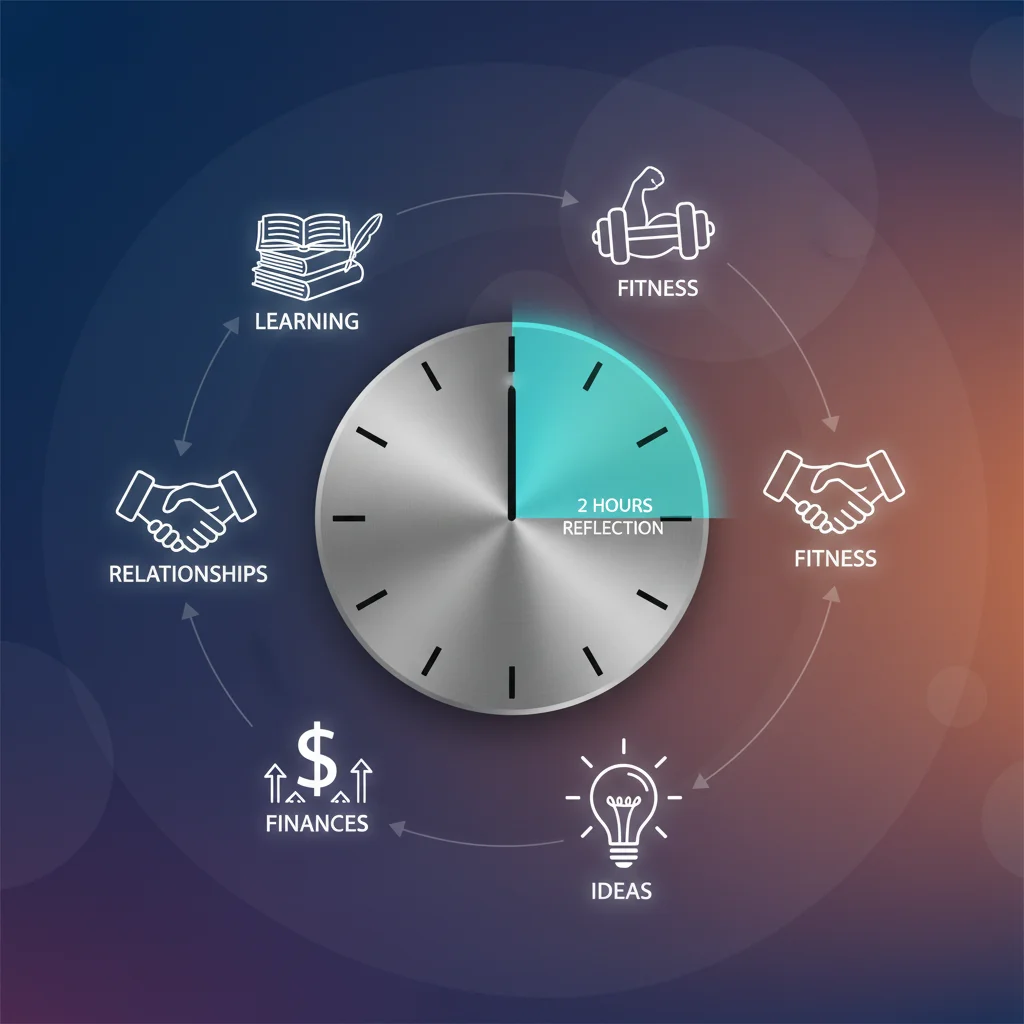
The key to effective weekly self-assessment isn’t just doing it, but doing it strategically. A structured approach ensures you cover all critical areas without getting overwhelmed. Here’s a breakdown of how you can allocate your two hours for maximum impact:
Phase 1: Reviewing the Past Week (45 Minutes)
This initial phase is about taking an honest look at the week that just ended. What happened? How did you feel? What were the outcomes? Use a journal, a digital document, or a dedicated app for this.
1. Triumphs and Accomplishments (15 Minutes)
Start positive! List everything you accomplished, no matter how small. Did you complete a difficult task? Learn something new? Help a colleague? Hit a fitness goal? Acknowledge these wins. This reinforces positive behaviors and boosts morale. Ask yourself:
- What were my top three achievements this week?
- What went exceptionally well, and why?
- What positive feedback did I receive, or what positive impact did I make?
2. Challenges and Learnings (20 Minutes)
This is where you confront the difficulties. What didn’t go as planned? Where did you struggle? The goal isn’t self-criticism, but self-correction. Focus on what you learned from these experiences. Questions to guide you:
- What were the biggest obstacles or setbacks I faced?
- How did I respond to these challenges? Was my response effective?
- What could I have done differently?
- What new insights or lessons did I gain from these experiences?
3. Emotional and Energy Check-in (10 Minutes)
How did you feel throughout the week? Where was your energy highest, and where did it dip? Understanding your emotional and energy patterns is crucial for sustainable performance and well-being. Reflect on:
- What activities energized me? What drained me?
- How was my stress level? What contributed to it?
- Did I prioritize my physical and mental well-being?
- What emotions were most prevalent, and what triggered them?
Phase 2: Analyzing and Synthesizing (45 Minutes)
Now that you’ve reviewed the week, it’s time to make sense of it all. This phase turns raw observations into actionable insights. This is a critical part of your weekly self-assessment.
1. Identifying Key Insights and Patterns (20 Minutes)
Look for connections between your triumphs, challenges, and emotional states. Are there recurring themes? Do certain types of tasks always energize you? Do specific situations always lead to frustration? This is where true self-awareness blossoms. Ask:
- What are the one or two most significant insights I gained about myself or my work this week?
- Are there any patterns emerging in my productivity, focus, or well-being?
- What surprising discoveries did I make?
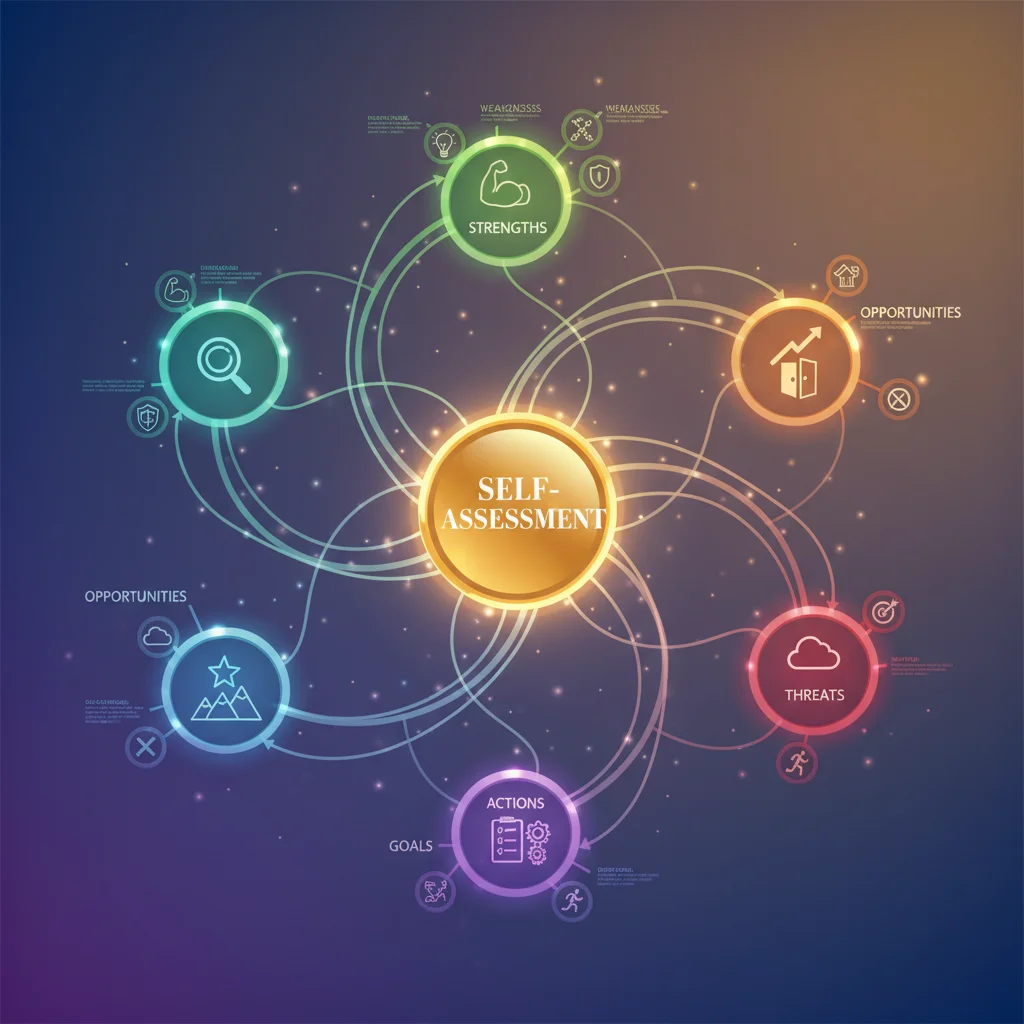
2. SWOT Analysis (15 Minutes)
A personal SWOT (Strengths, Weaknesses, Opportunities, Threats) analysis, even a brief one, can provide immense clarity. How did the past week highlight any of these?
- Strengths: What did I do well? What skills did I utilize effectively?
- Weaknesses: Where did I fall short? What areas need improvement?
- Opportunities: What new possibilities or avenues emerged?
- Threats: What potential challenges or risks did I identify?
3. Values Alignment Check (10 Minutes)
Are your actions aligned with your core values? This is a deeper level of weekly self-assessment. If you value integrity, did you act with integrity? If you value growth, did you seek learning opportunities? Discrepancies here can be a source of unease or dissatisfaction. Reflect on:
- Did my actions this week reflect my most important values?
- Where were there misalignments? What caused them?
- How can I better align my actions with my values next week?
Phase 3: Planning for the Future (30 Minutes)
The final, and arguably most crucial, phase of your weekly self-assessment is translating your insights into concrete plans for the upcoming week and beyond. This ensures your reflection leads to tangible progress.
1. Setting SMART Goals for the Next Week (15 Minutes)
Based on your review and analysis, set 1-3 Specific, Measurable, Achievable, Relevant, and Time-bound (SMART) goals for the upcoming week. These should directly address your identified learnings and desired improvements.
- What is one key area I want to focus on improving next week?
- What specific actions will I take to achieve this?
- How will I measure my progress?
- When will I check in on this goal?
2. Action Plan for Challenges and Opportunities (10 Minutes)
For each significant challenge or opportunity you identified, brainstorm 1-2 actionable steps you can take. This could be scheduling a conversation, researching a new tool, or allocating specific time for a task.
- What is the single most impactful action I can take to address a key challenge?
- How can I leverage a newly identified opportunity?
3. Schedule Your Next Self-Assessment (5 Minutes)
Before you conclude, schedule your next two-hour weekly self-assessment session. Consistency is paramount. Treat this appointment with yourself as non-negotiable.
Tools and Techniques to Enhance Your Weekly Self-Assessment
While the framework provides structure, certain tools and techniques can significantly enhance the depth and effectiveness of your weekly self-assessment.
Journaling: The Timeless Companion
A physical or digital journal remains one of the most powerful tools for self-reflection. The act of writing helps to clarify thoughts, process emotions, and record insights. Consider using guided prompts or free-form writing to capture your reflections. A journaling practice, particularly when combined with your two hours of weekly self-assessment, can lead to profound breakthroughs.
Mind Mapping for Clarity
When you feel overwhelmed by thoughts or ideas, mind mapping can be incredibly useful. Start with a central theme (e.g., “My Week” or “Project X Performance”) and branch out with related ideas, challenges, solutions, and insights. This visual approach can help you see connections and patterns that might otherwise remain hidden.
Feedback Loops and External Perspectives
While self-assessment is internal, incorporating external feedback can provide valuable additional perspectives. This doesn’t mean seeking feedback every week, but perhaps every few weeks, intentionally asking a trusted colleague, mentor, or friend for their observations on your performance or behavior in a specific area. This complements your internal weekly self-assessment, offering a more rounded view.
Digital Tools and Apps
A plethora of apps are designed to aid reflection and goal setting. Tools like Notion, Evernote, Day One, or specialized journaling apps can help you organize your thoughts, track progress, and even provide prompts for reflection. Experiment to find what works best for your style.
The “Start, Stop, Continue” Framework
This simple yet effective framework is perfect for the planning phase of your weekly self-assessment. Ask yourself:
- Start: What new behaviors, habits, or projects should I start doing?
- Stop: What should I stop doing because it’s no longer serving me or is counterproductive?
- Continue: What am I doing well that I should continue and perhaps even amplify?
Overcoming Common Obstacles to Consistent Weekly Self-Assessment
Even with the best intentions, maintaining a consistent weekly self-assessment practice can be challenging. Here are some common hurdles and how to overcome them:
1. Lack of Time
Solution: Treat your two hours as a non-negotiable appointment. Block it out in your calendar and protect it fiercely. Explain its importance to colleagues or family if necessary. Remember, this isn’t “extra” time; it’s an investment that will save you time and effort in the long run by making your other hours more productive.
2. Feeling Overwhelmed or Unsure Where to Start
Solution: Follow the structured framework outlined above. If two hours feels too long initially, start with 30-60 minutes and gradually increase as you become more comfortable. Use guided prompts or templates to ease into the process. The key is to start somewhere.
3. Fear of Self-Criticism or Negative Feelings
Solution: Reframe self-assessment as an act of self-compassion and growth, not judgment. The goal is learning and improvement, not perfection. Focus on “what can I learn?” rather than “what did I do wrong?” Celebrate small wins and acknowledge that setbacks are part of any growth journey.
4. Inconsistency
Solution: Make it a habit. Anchor your weekly self-assessment to an existing routine – perhaps every Friday afternoon, Sunday morning, or Monday morning before the week truly begins. Choose a quiet, distraction-free environment. Consistency builds momentum.
5. Not Seeing Immediate Results
Solution: Personal growth is a marathon, not a sprint. The benefits of weekly self-assessment accumulate over time. Trust the process. Keep a “growth log” where you periodically review your past reflections to see how far you’ve come. This long-term perspective will provide motivation.
The Long-Term Impact of Consistent Weekly Self-Assessment
Adopting a consistent practice of weekly self-assessment isn’t just about optimizing your next week; it’s about fundamentally transforming your approach to life and work. Over months and years, this dedicated reflection time can lead to:
- Accelerated Skill Development: By regularly identifying areas for improvement and acting on them, your learning curve becomes significantly steeper.
- Enhanced Emotional Intelligence: A deeper understanding of your own emotions and their triggers allows for better self-regulation and empathy towards others.
- Stronger Relationships: Improved self-awareness often translates into more conscious and effective communication, strengthening both personal and professional bonds.
- Greater Career Satisfaction: By aligning your work with your values and continually honing your contributions, you’ll find more meaning and fulfillment in your career trajectory.
- Increased Innovation and Creativity: Reflection creates mental space for new ideas and novel solutions to old problems.
- A Sense of Purpose and Direction: Regular check-ins ensure you’re always moving towards goals that truly matter to you, fostering a powerful sense of purpose.
In 2026, where the world demands continuous evolution, the reflective practitioner will not just survive but thrive. Your two hours of weekly self-assessment become a powerful ritual, a sacred time dedicated to your most important asset: yourself.
Making Weekly Self-Assessment a Habit for 2026 and Beyond
To truly embed weekly self-assessment into your life, consider these final tips:
- Find Your “Why”: Connect your reflection practice to your biggest goals and aspirations. When you understand the profound impact it can have, motivation will be easier to sustain.
- Create a Dedicated Space: Designate a specific, quiet place for your self-assessment. This could be a corner of your home, a local library, or even a park bench. A consistent environment can help signal to your brain that it’s time to reflect.
- Eliminate Distractions: Turn off notifications, close unnecessary tabs, and inform others that you need uninterrupted time. Treat this as a sacred period for introspection.
- Be Patient and Kind to Yourself: There will be weeks when your self-assessment feels incredibly insightful, and others when it feels like a chore. Don’t judge the process. Show up consistently, and the benefits will unfold.
- Review Periodically: Every quarter or half-year, take a larger chunk of time (e.g., half a day) to review your accumulated weekly self-assessment notes. Look for macro trends, celebrate significant milestones, and adjust your long-term vision.
Conclusion: Your Investment in a Brighter Future
In a world obsessed with doing more, the true secret to success in 2026 lies in thinking more deeply, learning more effectively, and growing more intentionally. Two hours of weekly self-assessment is not a luxury; it’s a strategic imperative for anyone committed to personal excellence and sustained well-being. It’s an investment that pays dividends not just in productivity and achievement, but in clarity, peace of mind, and a profound sense of purpose.
Embrace this practice, tailor it to your unique needs, and watch as you transform from simply navigating the future to actively creating the future you desire. Your journey of continuous personal growth starts with that dedicated two-hour appointment with yourself. Make it count.