Sustainable Growth Strategies: Comparing 3 Leading Models for U.S. Enterprises

In an increasingly dynamic and interconnected global economy, U.S. enterprises face unprecedented pressure to not only generate profits but also to demonstrate a commitment to long-term sustainability. The traditional paradigm of growth at any cost is rapidly giving way to a more holistic approach, where economic prosperity is inextricably linked with environmental stewardship and social equity. This shift has given rise to numerous sustainable growth models, each offering a unique framework for businesses to navigate the complexities of the 21st century. For U.S. enterprises, understanding and adopting these models is no longer an option but a strategic imperative for resilience, innovation, and enduring success.
This comprehensive article delves into three of the most prominent and influential sustainable growth strategies: the Circular Economy, Stakeholder Capitalism, and ESG Integration. We will explore the core tenets of each model, analyze their benefits and inherent challenges, and provide actionable insights for U.S. businesses looking to implement these frameworks. By comparing and contrasting these approaches, we aim to equip business leaders with the knowledge necessary to make informed decisions that align with their organizational values, market demands, and the broader societal good. The journey towards sustainable growth is multifaceted, requiring a blend of strategic foresight, operational excellence, and a genuine commitment to creating shared value. Let’s embark on this exploration to uncover how these leading growth models can reshape the future of business in America.
The Circular Economy Model: Redefining Value and Resource Use
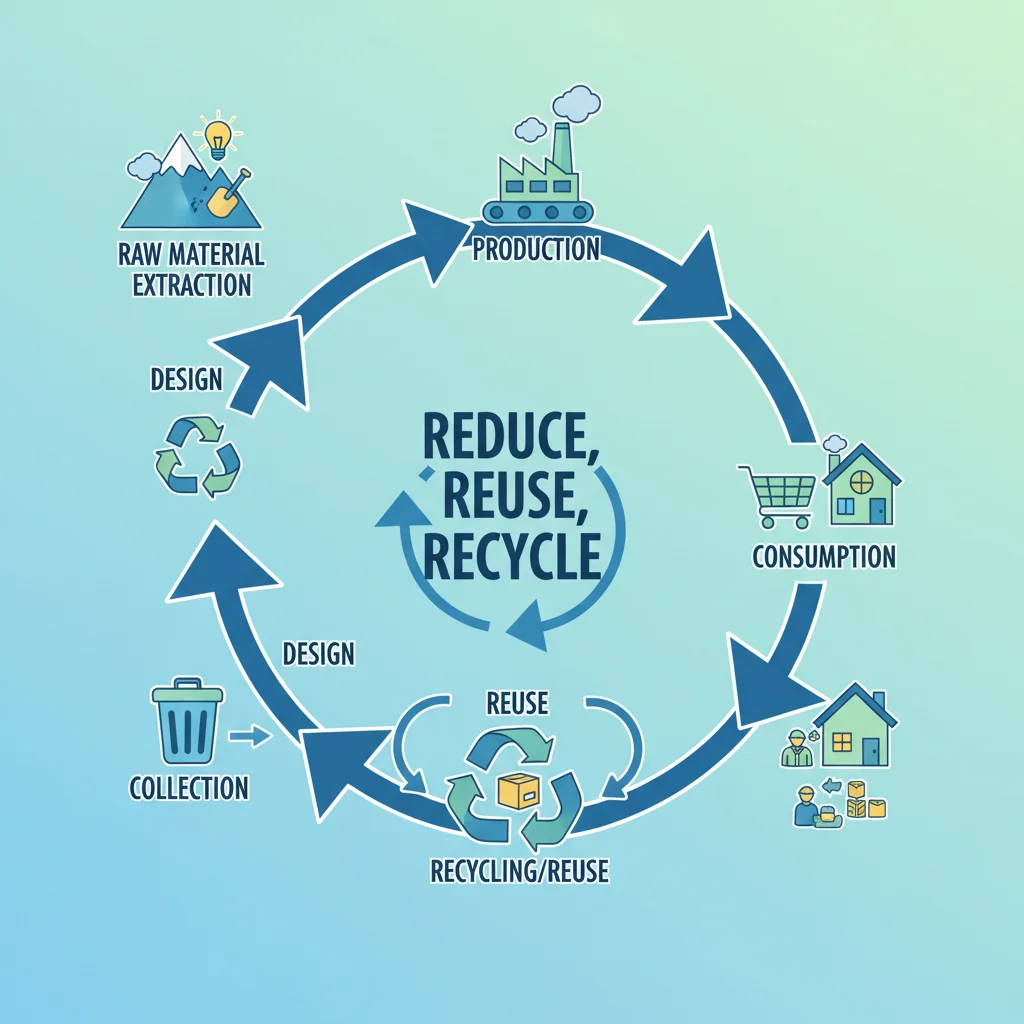
The concept of the Circular Economy stands in stark contrast to the traditional linear ‘take-make-dispose’ model of production and consumption. At its core, the Circular Economy aims to eliminate waste and pollution, circulate products and materials at their highest value, and regenerate natural systems. For U.S. enterprises, embracing this model represents a fundamental shift in how they design, manufacture, use, and recover products and services. It’s about creating closed-loop systems where resources are kept in use for as long as possible, extracting the maximum value from them whilst in use, then recovering and regenerating products and materials at the end of each service life.
Core Tenets of the Circular Economy
The Circular Economy is built upon three foundational principles:
- Design out waste and pollution: This principle emphasizes proactive measures to prevent waste and pollution from the outset. It involves rethinking product design, material selection, and process engineering to minimize environmental impact. For U.S. enterprises, this means designing products that are durable, repairable, recyclable, or compostable.
- Keep products and materials in use: This involves extending the lifespan of products and components through maintenance, repair, reuse, remanufacturing, and upgrading. It also includes optimizing resource yields by circulating materials in technical and biological cycles. Businesses can achieve this through leasing models, product-as-a-service offerings, and robust take-back schemes.
- Regenerate natural systems: This principle focuses on returning biological materials to the earth in a way that regenerates natural capital, and on fostering conditions for nature to thrive. For instance, using renewable energy, supporting regenerative agriculture, and restoring biodiversity are key aspects.
Benefits for U.S. Enterprises
Adopting a Circular Economy model offers numerous compelling benefits for U.S. businesses:
- Reduced Costs and Resource Dependency: By reusing, recycling, and remanufacturing, companies can significantly lower their raw material costs and reduce reliance on volatile global supply chains. This enhances operational efficiency and cost predictability.
- Enhanced Innovation and Competitive Advantage: The need to design for circularity fosters innovation in product development, business models, and technological solutions. This can lead to the creation of unique value propositions and a stronger competitive edge in the market.
- Improved Brand Reputation and Customer Loyalty: Consumers are increasingly conscious of environmental issues. Companies demonstrating a commitment to sustainability through circular practices can attract and retain environmentally aware customers, boosting brand image and loyalty.
- New Revenue Streams: Circular business models can unlock new revenue opportunities through selling services (e.g., product-as-a-service), remanufactured goods, or recovered materials.
- Compliance with Evolving Regulations: Governments worldwide, including in the U.S., are increasingly introducing regulations promoting circularity. Early adoption helps enterprises stay ahead of compliance requirements and mitigate future risks.
- Increased Resilience: Diversifying material sources and reducing reliance on virgin resources enhances supply chain resilience against disruptions and price fluctuations.
Challenges and Implementation for U.S. Enterprises
While the benefits are substantial, transitioning to a Circular Economy is not without its challenges:
- Upfront Investment: Shifting to circular processes often requires significant initial investment in new technologies, infrastructure, and redesigning existing systems.
- Supply Chain Complexity: Establishing reverse logistics, collection, sorting, and reprocessing networks can be complex and require collaboration across the value chain.
- Consumer Behavior Change: Encouraging consumers to embrace new consumption patterns, such as leasing instead of owning, or actively participating in take-back programs, can be difficult.
- Lack of Standardized Metrics: Measuring the impact and success of circular initiatives can be challenging due to a lack of universally adopted metrics and reporting standards.
- Regulatory and Policy Support: While growing, comprehensive policy frameworks to support the Circular Economy are still evolving in many parts of the U.S.
Implementation Steps: U.S. enterprises can begin by conducting a material flow analysis to identify waste hotspots, redesigning products for durability and recyclability, exploring product-as-a-service models, and collaborating with suppliers and customers to create closed-loop systems. Investing in R&D for sustainable materials and processes is also crucial.
Stakeholder Capitalism: Reimagining Corporate Purpose Beyond Shareholder Value
Stakeholder Capitalism represents a significant departure from the traditional shareholder primacy model, which solely prioritizes maximizing returns for shareholders. Instead, Stakeholder Capitalism argues that a company’s long-term success is best achieved by creating value for all stakeholders, including employees, customers, suppliers, communities, and the environment, in addition to shareholders. This approach recognizes the interconnectedness of these groups and their collective influence on a company’s ability to thrive sustainably.
Core Tenets of Stakeholder Capitalism
The fundamental principles of Stakeholder Capitalism include:
- Broader Purpose: Companies exist not just to make profits but to serve a broader purpose that benefits society. This involves defining a clear mission that goes beyond financial metrics.
- Inclusive Value Creation: Value is created for and shared among all stakeholders, not just shareholders. This means considering the impact of business decisions on every group.
- Long-Term Perspective: Focus on long-term sustainability and resilience over short-term financial gains. This often involves making investments that may not yield immediate returns but are crucial for future success.
- Ethical Governance: Strong ethical leadership and transparent governance structures that ensure accountability to all stakeholders.
- Engagement and Dialogue: Actively engaging with stakeholders to understand their needs, concerns, and perspectives, and incorporating this feedback into strategic decision-making.
Benefits for U.S. Enterprises
Embracing Stakeholder Capitalism offers several strategic advantages for U.S. businesses:
- Enhanced Employee Engagement and Retention: Employees who feel valued and believe their company has a positive impact are more engaged, productive, and less likely to leave. This reduces recruitment costs and fosters a stronger company culture.
- Stronger Customer Relationships: Customers are increasingly loyal to brands that align with their values. A stakeholder-centric approach builds trust and fosters deeper connections with consumers.
- Improved Risk Management: By considering a wider range of impacts, companies can better identify and mitigate risks related to environmental issues, social unrest, regulatory changes, and reputational damage.
- Access to Capital: Investors are increasingly integrating ESG factors into their decision-making. Companies demonstrating strong stakeholder management may find it easier to attract capital from socially responsible investors.
- Innovation and Adaptability: Diverse perspectives from stakeholders can drive innovation and help companies adapt more effectively to changing market conditions and societal expectations.
- Social License to Operate: Building strong relationships with communities and demonstrating a commitment to social good enhances a company’s ‘social license to operate,’ reducing potential conflicts and fostering goodwill.
Challenges and Implementation for U.S. Enterprises
Transitioning to Stakeholder Capitalism presents its own set of hurdles:
- Balancing Conflicting Interests: Different stakeholder groups may have competing interests, making it challenging to satisfy everyone. Decision-makers must navigate these trade-offs carefully.
- Measuring and Reporting Impact: Quantifying the impact on all stakeholders beyond financial metrics can be complex and requires robust reporting frameworks.
- Cultural Shift: It requires a significant cultural shift within the organization, moving away from a profit-only mindset to one that values broader societal contributions.
- Investor Expectations: While growing, some investors may still prioritize short-term financial returns, requiring careful communication and education about the long-term benefits of this approach.
- Defining ‘Stakeholder’: Clearly defining who constitutes a legitimate stakeholder and how their input will be integrated can be difficult.
Implementation Steps: U.S. enterprises can start by clearly articulating their purpose beyond profit, identifying key stakeholders and their material interests, establishing formal channels for stakeholder engagement, and integrating stakeholder considerations into governance structures and decision-making processes. Regular reporting on stakeholder impact is also vital.

ESG Integration: A Framework for Sustainable Investment and Operations
ESG Integration refers to the systematic inclusion of Environmental, Social, and Governance (ESG) factors into investment analysis and decision-making processes. While often associated with investors, ESG principles are increasingly being adopted by U.S. enterprises as a framework for managing risks, identifying opportunities, and demonstrating their commitment to sustainable growth. It provides a structured way to assess a company’s performance beyond traditional financial metrics.
Core Tenets of ESG Integration
ESG factors encompass a broad range of criteria:
- Environmental (E): This category includes a company’s impact on the natural environment, such as climate change (carbon emissions, energy efficiency), resource depletion (water usage, waste management), pollution (air, water, land), deforestation, and biodiversity.
- Social (S): This focuses on a company’s relationships with its employees, customers, suppliers, and the communities where it operates. Key areas include labor practices (worker safety, fair wages, diversity & inclusion), human rights, product safety and quality, data privacy, and community engagement.
- Governance (G): This relates to a company’s leadership, executive pay, audits, internal controls, shareholder rights, and overall corporate structure. It examines how a company is run and ensures transparency, accountability, and ethical decision-making.
Benefits for U.S. Enterprises
Integrating ESG into business operations offers significant advantages:
- Improved Financial Performance: Numerous studies suggest a positive correlation between strong ESG performance and financial returns, including higher profitability, lower cost of capital, and reduced volatility.
- Enhanced Access to Capital: The rise of ESG investing means that companies with strong ESG profiles are more attractive to a growing pool of institutional and individual investors, leading to better financing terms.
- Risk Mitigation: Proactive management of ESG risks (e.g., climate change impacts, supply chain labor issues, governance failures) can prevent costly legal battles, regulatory fines, and reputational damage.
- Operational Efficiency: Initiatives like energy efficiency improvements, waste reduction, and sustainable resource management can lead to significant cost savings and operational efficiencies.
- Talent Attraction and Retention: Companies with strong ESG commitments are more appealing to top talent, particularly younger generations who prioritize working for socially responsible organizations.
- Innovation and Growth Opportunities: Addressing ESG challenges can spark innovation in new products, services, and markets, creating new avenues for growth.
- Regulatory Preparedness: As ESG regulations become more prevalent, companies with integrated ESG strategies are better prepared for compliance and future policy changes.
Challenges and Implementation for U.S. Enterprises
Implementing ESG integration can present challenges:
- Data Collection and Reporting: Gathering accurate, comprehensive, and consistent ESG data can be complex, especially across large organizations and supply chains.
- Materiality Assessment: Identifying which ESG factors are most material (i.e., financially relevant) to a specific business and its stakeholders requires careful analysis.
- Greenwashing Concerns: Companies must genuinely integrate ESG principles to avoid accusations of ‘greenwashing’ or ‘social washing,’ which can severely damage reputation.
- Lack of Standardized Metrics: While frameworks exist (e.g., SASB, GRI, TCFD), a universal set of ESG metrics is still under development, making comparisons difficult.
- Integration Across Functions: Embedding ESG considerations across all departments and decision-making levels requires strong leadership and cross-functional collaboration.
Implementation Steps: U.S. enterprises should start by conducting a materiality assessment to identify relevant ESG issues, establishing clear ESG goals and KPIs, integrating ESG into strategic planning and risk management, collecting and disclosing ESG data transparently, and assigning clear ownership for ESG performance within the organization.
Comparing the Three Models: Synergies and Distinctions
While the Circular Economy, Stakeholder Capitalism, and ESG Integration each offer distinct lenses through which to view sustainable growth strategies, they are not mutually exclusive. In fact, they share significant synergies and can be mutually reinforcing when implemented together.
Key Similarities
- Long-Term Value Creation: All three models prioritize long-term sustainability and value creation over short-term gains, fostering resilience and adaptability.
- Beyond Financial Metrics: Each approach transcends purely financial performance, recognizing the importance of environmental and social impact.
- Risk Mitigation and Opportunity Identification: They all provide frameworks for identifying and mitigating risks (environmental, social, reputational) while uncovering new opportunities for innovation and growth.
- Increased Transparency and Accountability: A core aspect of all three is a push for greater transparency in operations and increased accountability to a broader set of constituents.
- Enhanced Reputation and Brand Value: Companies adopting these models often see improved public perception, brand loyalty, and attractiveness to talent.
Key Distinctions and Focus Areas
- Primary Focus:
- Circular Economy: Primarily focuses on resource management, product design, and operational processes to minimize waste and maximize material utility. It’s very much about the ‘how’ of production and consumption.
- Stakeholder Capitalism: Primarily focuses on corporate governance, purpose, and the ethical responsibility of a company to create value for all its constituents, not just shareholders. It’s about the ‘who’ and ‘why’ of business.
- ESG Integration: Serves as a comprehensive framework for measuring, managing, and reporting on a company’s environmental, social, and governance performance, often driven by investor and regulatory demands. It’s about the ‘what’ and ‘measurement’ of sustainability performance.
- Scope of Application:
- Circular Economy: Most directly impacts product design, manufacturing, supply chain, and waste management functions.
- Stakeholder Capitalism: Influences overall corporate strategy, governance, culture, and relationships with all internal and external groups.
- ESG Integration: Applies across all business functions (operations, finance, HR, legal) and is crucial for external reporting and investor relations.
- Driver for Adoption:
- Circular Economy: Often driven by resource scarcity, cost reduction opportunities, environmental regulations, and innovation potential.
- Stakeholder Capitalism: Driven by evolving societal expectations, ethical considerations, and a belief that broader value creation leads to superior long-term performance.
- ESG Integration: Heavily influenced by investor demand, regulatory pressure, and the need for transparent sustainability reporting.
Strategic Implementation for U.S. Enterprises
For U.S. enterprises, the most effective approach to sustainable growth models is often not to choose one over the others, but to integrate elements from all three. A holistic strategy leverages the strengths of each model to create a robust and resilient business.
- Start with Purpose and Values (Stakeholder Capitalism): Define your company’s core purpose beyond profit. Identify your key stakeholders and understand their material concerns. This foundation will guide all other sustainability initiatives.
- Integrate ESG into Strategy and Operations: Use ESG as a diagnostic tool to assess your current performance, identify risks and opportunities, and set measurable goals. Embed ESG metrics into performance reviews and executive compensation where appropriate. This provides the ‘what’ and ‘how to measure’ for your sustainable journey.
- Embrace Circularity in Product and Process Design: Once your purpose is clear and ESG factors are assessed, look at your operational footprint. How can you design out waste, keep materials in use, and regenerate natural systems? This is where the Circular Economy provides practical, tangible actions for resource efficiency and innovation.
- Foster a Culture of Sustainability: Leadership commitment is paramount. Educate employees, incentivize sustainable practices, and ensure sustainability is woven into the company culture.
- Collaborate Across the Value Chain: Sustainable growth is rarely achieved in isolation. Partner with suppliers, customers, and even competitors to drive systemic change, especially for circular economy initiatives and addressing complex social issues.
- Transparent Reporting and Communication: Regularly communicate your progress and challenges to all stakeholders. Use recognized frameworks (e.g., GRI, SASB) for ESG reporting to ensure credibility and comparability.
Case Studies in Action
Numerous U.S. enterprises are already demonstrating leadership in these areas:
- Patagonia (Stakeholder Capitalism & Circular Economy): Renowned for its commitment to environmental and social causes, Patagonia actively engages its employees, customers, and environmental groups. Its Worn Wear program exemplifies circularity by encouraging repair and reuse of its products, reducing consumption, and extending product lifecycles.
- Microsoft (ESG Integration & Circular Economy): Microsoft has set ambitious goals to be carbon negative, water positive, and zero waste by 2030, demonstrating strong commitments across all ESG pillars. They are actively working on circular design principles for their hardware products and data centers, aiming to reuse and recycle materials.
- Interface (Circular Economy & Stakeholder Capitalism): A pioneer in modular carpet tiles, Interface built its business on circular principles (Mission Zero) and has a strong stakeholder focus, aiming to have a restorative impact on the planet while providing fulfilling work for its employees. Their ‘ReEntry’ program takes back old carpet tiles for recycling.
The Future of Sustainable Growth in U.S. Enterprises
The landscape for U.S. enterprises is undeniably shifting towards a future where sustainable growth is not just a niche concept but a fundamental requirement for business continuity and success. The integration of sustainable growth models like the Circular Economy, Stakeholder Capitalism, and ESG Integration will become increasingly commonplace, driven by a confluence of factors: escalating environmental challenges, evolving consumer and employee expectations, increasing investor scrutiny, and a dynamic regulatory environment.
Looking ahead, we can anticipate several key trends:
- Increased Regulatory Pressure: Expect more stringent regulations from federal and state governments concerning carbon emissions, waste management, supply chain due diligence, and corporate governance. This will further accelerate the adoption of sustainable practices.
- Technological Innovation: Advancements in AI, blockchain, and material science will play a critical role in facilitating circularity, improving ESG data collection and transparency, and enabling more sophisticated stakeholder engagement.
- Mainstreaming of Sustainable Finance: ESG investing will continue its rapid growth, becoming an even more dominant force in capital allocation and company valuation.
- Supply Chain Transformation: Companies will increasingly focus on building resilient, transparent, and sustainable supply chains, pushing for higher environmental and social standards upstream and downstream.
- Shift from Compliance to Competitive Advantage: While initially driven by compliance, sustainable practices will increasingly be viewed as a source of competitive advantage, driving innovation, attracting top talent, and opening new market opportunities.
- Greater Collaboration: Solving complex sustainability challenges will necessitate unprecedented levels of collaboration among businesses, governments, NGOs, and academia.
The journey towards full sustainability is continuous, requiring ongoing adaptation and commitment. For U.S. enterprises, embracing these leading growth models is not merely about fulfilling a social obligation; it’s about building businesses that are more resilient, innovative, and ultimately, more profitable in the long run. By thoughtfully integrating the principles of the Circular Economy, Stakeholder Capitalism, and ESG, American companies can not only safeguard their future but also lead the way in creating a more equitable and sustainable world for all.
The imperative for sustainable growth strategies is clear. The models discussed herein provide robust frameworks for U.S. enterprises to navigate this imperative, transforming challenges into opportunities and securing a prosperous future for themselves and for generations to come. The time for action is now, and the path forward is illuminated by these powerful and interconnected approaches to business.