Cultivating Innovation Culture: A 4-Step Framework for U.S. Organizations

Cultivating Innovation Culture: A 4-Step Framework for U.S. Organizations
In today’s rapidly evolving global landscape, the ability to innovate is no longer a luxury but a fundamental necessity for survival and growth, especially for U.S. organizations navigating dynamic markets and fierce competition. A robust innovation culture framework is the bedrock upon which sustained success is built. It’s about more than just generating new ideas; it’s about embedding a mindset and a set of practices that encourage creativity, risk-taking, continuous learning, and adaptability throughout every level of an organization. Without a deliberate effort to cultivate such a culture, even the most brilliant individual ideas can wither on the vine, stifled by bureaucracy, fear of failure, or a lack of support.
Many U.S. businesses recognize the critical importance of innovation. From Silicon Valley startups to established Fortune 500 companies, the mantra of ‘innovate or die’ resonates deeply. However, the path to truly embedding an innovation culture can be fraught with challenges. It requires a significant shift in leadership philosophy, organizational structure, and employee empowerment. It demands a move away from traditional hierarchical models towards more agile, collaborative, and experimental approaches. This article will delve into a comprehensive, practical 4-step innovation culture framework designed specifically for U.S. organizations seeking to foster an environment where innovation thrives, leading to sustainable competitive advantage and long-term prosperity. We’ll explore each step in detail, providing actionable insights and strategies to help you transform your organization into a hub of continuous innovation.
The journey to cultivate a strong innovation culture framework is not a one-time project but an ongoing commitment. It requires consistent effort, clear communication, and a willingness to adapt. This framework is designed to provide a structured approach, breaking down a complex organizational transformation into manageable and actionable steps. Let’s embark on this journey to unlock your organization’s full innovative potential.
Step 1: Define Your Innovation Vision and Strategy
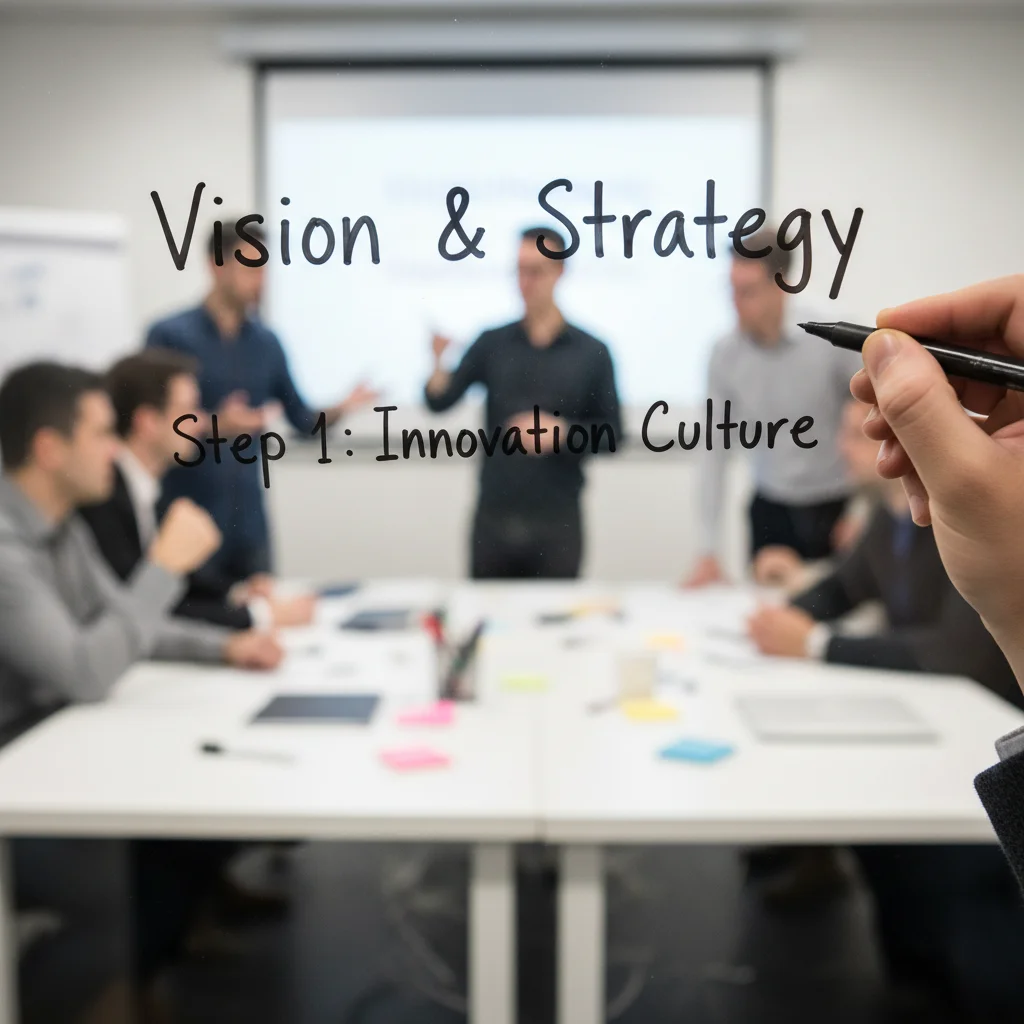
The first and arguably most crucial step in establishing an effective innovation culture framework is to clearly define your organization’s innovation vision and strategy. Without a clear direction, innovation efforts can become fragmented, unfocused, and ultimately unproductive. This step involves articulating what innovation means for your specific organization, why it’s important, and how it aligns with your overarching business goals. It’s about creating a North Star that guides all innovation-related activities.
Articulating a Compelling Vision
An innovation vision is more than just a statement; it’s an inspiring declaration of where your organization aims to be through innovation. It should answer questions like: What kind of future are we trying to create? What problems are we solving for our customers or society? What new markets or opportunities are we seeking to explore? For a U.S. organization, this vision might be rooted in concepts like technological leadership, customer-centric solutions, operational efficiency, or even social impact. The vision needs to be ambitious, yet achievable, and most importantly, it must resonate with every employee.
To articulate this vision effectively, leadership must be deeply involved. Workshops involving senior management, department heads, and even a selection of frontline employees can be incredibly valuable. These sessions should focus on brainstorming possibilities, identifying core organizational strengths, and pinpointing areas where innovation can create the most significant impact. Remember, a compelling vision acts as a powerful motivator, unifying employees towards a common innovative purpose.
Developing a Strategic Roadmap
Once the vision is clear, the next stage is to develop a strategic roadmap for innovation. This involves translating the broad vision into concrete goals, objectives, and key performance indicators (KPIs). A well-defined strategy outlines the specific areas where innovation will be prioritized, the types of innovation that will be pursued (e.g., product innovation, process innovation, business model innovation), and the resources that will be allocated. For U.S. companies, this often means considering market trends, competitive landscapes, regulatory environments, and technological advancements unique to the American context.
Key elements of an innovation strategy include:
- Focus Areas: Identify 2-3 key areas where innovation will deliver the most value. This prevents scattered efforts and ensures resources are concentrated on high-impact initiatives.
- Innovation Metrics: How will you measure the success of your innovation efforts? This could include metrics like the number of new ideas generated, speed to market for new products, revenue from new offerings, employee engagement in innovation programs, or even patent applications.
- Resource Allocation: Clearly define the budget, talent, and time dedicated to innovation. This demonstrates a tangible commitment from leadership and provides the necessary support for innovative projects.
- Risk Tolerance: Establish a clear understanding of the level of risk the organization is willing to take. Innovation inherently involves risk, and a well-defined risk tolerance helps in making informed decisions about which projects to pursue.
- Communication Plan: How will the innovation vision and strategy be communicated throughout the organization? Transparency and consistent messaging are vital for building buy-in and engagement.
Leadership plays an indispensable role in this step. They must not only champion the vision and strategy but also actively participate in its creation and communication. Their commitment sets the tone for the entire organization, signaling that innovation is a core business imperative, not just a fleeting trend. This foundational step ensures that all subsequent efforts to build an innovation culture framework are aligned and purposeful.
Step 2: Empower and Enable Your Workforce
An innovation culture cannot flourish in a vacuum; it requires the active participation and empowerment of every employee. Step 2 of our innovation culture framework focuses on creating an environment where employees feel safe, supported, and motivated to contribute their ideas and take calculated risks. This involves fostering psychological safety, providing the right tools and training, and recognizing innovative contributions.
Fostering Psychological Safety and a Growth Mindset
One of the biggest barriers to innovation is the fear of failure. If employees believe that making a mistake will lead to reprimand or negative consequences, they will naturally shy away from proposing new ideas or experimenting with untested approaches. Cultivating psychological safety means creating an environment where employees feel comfortable expressing ideas, asking questions, and even admitting errors without fear of humiliation or punishment. This is particularly crucial in U.S. corporate settings where performance metrics can sometimes inadvertently discourage risk-taking.
Leaders must model this behavior by openly discussing their own learning experiences from past failures and emphasizing that experimentation is a vital part of the innovation process. Encourage a ‘growth mindset,’ where challenges are seen as opportunities for learning and development, rather than insurmountable obstacles. This shift in perspective is instrumental in building an adaptable and resilient workforce capable of continuous innovation.
Providing Tools, Training, and Time for Innovation
Ideas are only as good as the resources available to develop them. To truly empower your workforce within an innovation culture framework, organizations must provide the necessary tools, training, and dedicated time. This isn’t just about expensive software; it includes:
- Innovation Training: Offer workshops and training programs on design thinking, agile methodologies, problem-solving techniques, brainstorming facilitation, and rapid prototyping. These skills equip employees with structured approaches to innovation.
- Dedicated Time: Implement initiatives like ‘20% time’ (as famously done by Google) or innovation sprints, where employees are allocated a percentage of their workweek to pursue innovative projects of their choosing. This signals a serious commitment to fostering an innovation culture.
- Access to Resources: Provide access to internal and external experts, research materials, collaboration platforms, and even dedicated innovation labs or spaces where employees can experiment freely.
- Cross-Functional Collaboration Tools: Implement digital platforms that facilitate seamless communication and collaboration across different departments and teams. This breaks down silos and encourages diverse perspectives to converge on innovative solutions.
By investing in these areas, U.S. organizations can ensure that their employees not only have the desire to innovate but also the capability and opportunity to do so effectively.
Recognizing and Rewarding Innovation
While intrinsic motivation is powerful, extrinsic recognition and rewards play a significant role in sustaining an innovation culture framework. It’s important to celebrate both successful innovations and the learning that comes from ‘failed’ experiments.
- Public Recognition: Acknowledge innovative contributions through company-wide announcements, internal newsletters, awards ceremonies, or even informal shout-outs from leadership.
- Career Development: Link participation in innovation initiatives to career growth opportunities, demonstrating that innovation is valued in professional advancement.
- Incentives: Consider offering tangible incentives for successful innovations, such as bonuses, equity, or even dedicated project funding for further development.
- Learning from Failure: Create a culture where ‘intelligent failures’ are analyzed for lessons learned, shared openly, and celebrated as steps towards future success, rather than being penalized.
By actively empowering and enabling your workforce, you transform your organization from a top-down idea factory into a vibrant ecosystem where creativity and initiative are encouraged at all levels, solidifying the foundation of your innovation culture framework.
Step 3: Implement Structured Processes for Idea Generation and Development
Ideas are the lifeblood of innovation, but without structured processes to capture, refine, and develop them, even the most brilliant concepts can get lost. Step 3 of our innovation culture framework focuses on establishing clear, repeatable mechanisms for idea generation, evaluation, and progression. This ensures that innovation is not left to chance but is systematically nurtured and brought to fruition.
Establishing Idea Generation Mechanisms
For U.S. organizations, diverse perspectives are a significant asset. Effective idea generation mechanisms tap into this diversity, ensuring a continuous flow of novel concepts. Consider implementing a mix of approaches:
- Innovation Challenges/Hackathons: Organize internal challenges focused on specific business problems or opportunities. Hackathons encourage rapid idea generation and prototyping in a competitive yet collaborative environment.
- Suggestion Boxes (Digital & Physical): While traditional, modern digital suggestion platforms can be highly effective. These platforms allow employees to submit ideas, comment on others’ suggestions, and even vote on the most promising concepts. Ensure there’s a clear process for feedback and follow-up.
- Brainstorming Sessions & Design Sprints: Facilitate structured brainstorming sessions using techniques like mind mapping, SCAMPER, or reverse brainstorming. Design sprints offer a five-day framework for answering critical business questions through design, prototyping, and testing new ideas.
- Cross-Departmental Forums: Create regular opportunities for employees from different departments to interact and share insights. Often, the most innovative ideas emerge at the intersection of different disciplines.
- Customer Feedback Loops: Actively solicit and analyze customer feedback through surveys, focus groups, and social media monitoring. Customers often provide invaluable insights into unmet needs and potential areas for innovation.
The key here is to make idea submission easy, accessible, and transparent. Employees need to know their ideas are being heard and considered, which reinforces the value of their contributions to the innovation culture framework.
Developing an Idea Evaluation and Prioritization System
Once ideas are generated, the next challenge is to evaluate and prioritize them effectively. Not every idea is viable, and organizations have limited resources. A robust evaluation system helps filter out less promising concepts and focuses attention on those with the highest potential impact.
An effective system typically involves:
- Clear Criteria: Define objective criteria for evaluating ideas, such as alignment with the innovation strategy, potential market impact, feasibility, resource requirements, and potential ROI.
- Multi-Stakeholder Review: Involve a diverse group of stakeholders in the evaluation process, including technical experts, business leaders, marketing specialists, and even potential end-users. This provides a holistic assessment.
- Phased Approach (Stage-Gate Process): Implement a stage-gate process where ideas progress through distinct phases (e.g., concept, feasibility, development, launch). Each gate requires a review and approval before moving to the next stage, ensuring due diligence at every step.
- Prototyping and Testing: Encourage rapid prototyping and small-scale testing of promising ideas before significant investment. This allows for early validation, learning, and iteration, reducing the risk of large-scale failures.
Transparency in the evaluation process is crucial. Even if an idea is not selected, providing constructive feedback helps employees understand the decision and encourages them to continue contributing to the innovation culture framework.
Managing and Scaling Innovation Projects
The final part of this step involves establishing clear processes for managing and scaling selected innovation projects. This often means integrating innovation initiatives with existing project management methodologies, while maintaining the flexibility inherent in innovative endeavors.
- Dedicated Innovation Teams: For significant projects, consider forming dedicated, cross-functional innovation teams with clear mandates, resources, and timelines.
- Agile Methodologies: Adopt agile project management principles (e.g., Scrum, Kanban) that emphasize iterative development, continuous feedback, and adaptability. This is particularly well-suited for the uncertain nature of innovation projects.
- Pilot Programs: Before a full-scale launch, implement pilot programs to test innovations in a controlled environment. This allows for real-world feedback and adjustments.
- Knowledge Management: Create systems to capture lessons learned from both successful and unsuccessful innovation projects. This institutional knowledge is invaluable for future innovation efforts and strengthens the overall innovation culture framework.
By implementing these structured processes, U.S. organizations can move beyond sporadic creativity to build a systematic and sustainable engine for innovation, ensuring that good ideas don’t just emerge but are also effectively transformed into tangible value.

Step 4: Measure, Learn, and Adapt Continuously
The final step in cultivating a robust innovation culture framework is not an end point, but a continuous cycle of measurement, learning, and adaptation. Innovation is an iterative process, and an organization’s approach to it must also evolve. This step ensures that the innovation culture remains vibrant, effective, and responsive to internal and external changes, particularly relevant for U.S. businesses operating in dynamic markets.
Defining and Tracking Innovation Metrics
As established in Step 1, defining clear metrics is crucial. However, merely defining them isn’t enough; they must be consistently tracked and analyzed. These metrics should go beyond traditional financial indicators to encompass qualitative aspects of the innovation process. For a U.S. organization, these might include:
- Input Metrics: Number of ideas submitted, participation rate in innovation challenges, investment in R&D, employee training hours in innovation.
- Process Metrics: Speed of idea validation, number of prototypes developed, cross-functional collaboration rates, time taken to move from concept to pilot.
- Output Metrics: Number of new products/services launched, revenue generated from new offerings, patents filed, cost savings from process innovations, customer satisfaction with new solutions.
- Cultural Metrics: Employee perception of innovation support, psychological safety scores, feedback on innovation processes, leadership’s commitment to innovation (measured through surveys or observations).
Regularly reviewing these metrics allows organizations to identify bottlenecks, pinpoint successful practices, and understand where the innovation culture framework is performing well and where adjustments are needed. Dashboards and regular reporting can make this data accessible and actionable for all stakeholders.
Fostering a Learning Organization
A true innovation culture thrives on learning, not just from successes but, perhaps more importantly, from failures. U.S. organizations must actively cultivate a learning organization mindset, where every project, every experiment, and every outcome is viewed as an opportunity to gain insights.
- Post-Mortem Analyses: Conduct thorough reviews of both successful and unsuccessful innovation projects. What went well? What could have been done differently? What were the unforeseen challenges? Document these learnings systematically.
- Knowledge Sharing Platforms: Create accessible internal platforms or forums where employees can share their experiences, best practices, and lessons learned from innovation initiatives. This democratizes knowledge and prevents the same mistakes from being repeated.
- Feedback Loops: Establish robust feedback mechanisms, not just for ideas, but for the innovation processes themselves. Regularly solicit input from employees on how the innovation framework can be improved, made more efficient, or more inclusive.
- Continuous Improvement Mindset: Encourage a culture of continuous improvement (Kaizen), where small, incremental changes are constantly being made to optimize processes and outcomes related to innovation.
By actively learning from every experience, organizations can refine their innovation culture framework, making it more resilient and effective over time.
Adapting and Iterating the Framework
The business environment, technology, and even your own organizational capabilities are constantly changing. Therefore, your innovation culture framework cannot be static. It must be a living system that adapts and iterates based on internal learnings and external shifts.
- Regular Review Cycles: Schedule annual or bi-annual reviews of the entire innovation culture framework with key stakeholders and leadership. Assess its effectiveness against strategic goals and make necessary adjustments.
- Benchmarking: Look at other leading innovative companies, both within and outside your industry, especially in the U.S. and globally. What are they doing well? What can your organization learn and adapt?
- Pilot New Approaches: Don’t be afraid to experiment with new tools, methodologies, or organizational structures for innovation. Treat the framework itself as a product that can be continuously improved through iteration.
- Leadership Buy-in and Recommitment: Continuous adaptation requires ongoing leadership commitment. Leaders must consistently champion the importance of innovation and be willing to invest in necessary changes to the framework.
This continuous cycle of measurement, learning, and adaptation ensures that your innovation culture framework remains relevant, powerful, and a true engine for sustainable growth for your U.S. organization. It transforms innovation from a buzzword into an ingrained operational reality.
Conclusion: Building a Future-Ready U.S. Organization with an Innovation Culture Framework
Cultivating a vibrant innovation culture framework is not merely about adopting a few new practices; it’s about undergoing a fundamental transformation of an organization’s DNA. For U.S. businesses striving for leadership in an increasingly competitive global arena, this transformation is paramount. The 4-step framework—defining vision and strategy, empowering the workforce, implementing structured processes, and continuously learning and adapting—provides a clear, actionable roadmap to achieve this.
By intentionally defining your innovation vision and strategy, you provide a clear sense of purpose and direction. By empowering and enabling your workforce, you unlock a reservoir of untapped creativity and problem-solving potential. By implementing structured processes for idea generation and development, you ensure that good ideas don’t just appear but are systematically nurtured into tangible value. And by committing to continuous measurement, learning, and adaptation, you ensure that your innovation culture remains dynamic, resilient, and perpetually relevant.
The benefits of a strong innovation culture framework extend far beyond new products or services. It fosters greater employee engagement, enhances organizational agility, improves problem-solving capabilities, and ultimately drives sustainable competitive advantage. It prepares your U.S. organization not just to react to future challenges, but to proactively shape its own future. Embracing this framework is an investment in your organization’s long-term success, ensuring it remains at the forefront of its industry, capable of navigating change and continuously delivering value in an ever-evolving world.
Start your journey today. Assess where your organization stands on each of these four steps, identify areas for improvement, and begin implementing the changes necessary to build a thriving innovation culture. The future of your U.S. organization depends on it.